Storage for Apartments with No Pantry: Smart Kitchen Solutions That Work
If you’ve moved into an apartment only to discover there’s zero pantry space, you’re not alone. Millions of renters across the USA and Canada live in kitchens that offer little more than a few base cabinets and a handful of upper shelves — leaving canned goods, dry pasta, small appliances, and cleaning supplies with nowhere to go. Finding a workable no pantry storage apartment solution isn’t just about aesthetics. It’s about making your kitchen actually functional for everyday life.
The good news is that a missing pantry doesn’t mean you’re stuck with cluttered counters or a disorganized mess. With the right combination of freestanding units, vertical storage, and modular systems, you can build a kitchen storage setup that rivals a built-in pantry — without drilling a single hole. Whether you’re working with a compact studio, a narrow galley kitchen, or a small one-bedroom, these strategies will help you reclaim your space. For a broader look at organizing your entire apartment, the guide to small apartment organization and space-saving storage solutions is a great place to start.
This article walks through every practical, renter-approved approach to kitchen storage without a pantry — from tall freestanding shelving and rolling carts to over-the-door organizers and magnetic fridge systems. You’ll also find specific product-type recommendations, smart organizational principles, and layout strategies that work even in the tightest kitchens.
Why So Many Apartments Skip the Pantry
Pantries were once a standard feature in American and Canadian homes, but as urban apartment construction shifted toward smaller footprints and open-concept layouts, dedicated pantry storage became one of the first casualties. Developers prioritize square footage efficiency, and a dedicated pantry closet is a room expense most small-unit floor plans simply don’t budget for.
Older buildings often have quirky layouts — galley kitchens, awkward nooks, or kitchenettes that were retrofitted into spaces never designed for full cooking. Newer builds lean on minimalist cabinetry and open shelving to look sleek in listings, but leave renters scrambling once the groceries arrive. Understanding this context matters because it frames your approach: you’re not solving a niche problem. You’re solving a near-universal one, and there are dozens of products and systems designed specifically for it.
The solutions in this article are built around three core principles: freestanding systems that require no permanent installation, vertical use of wall and door space, and modular flexibility so your setup can evolve as your needs change. Let’s break it all down.
Freestanding Pantry Units: The Closest Thing to a Real Pantry

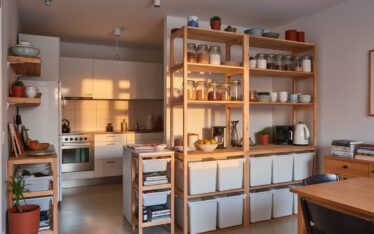
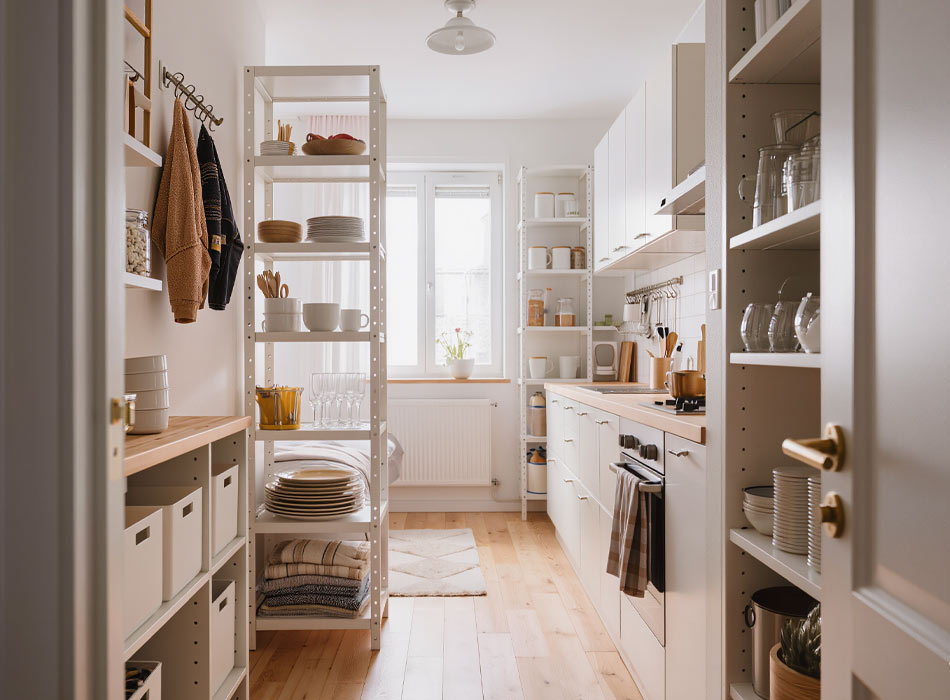
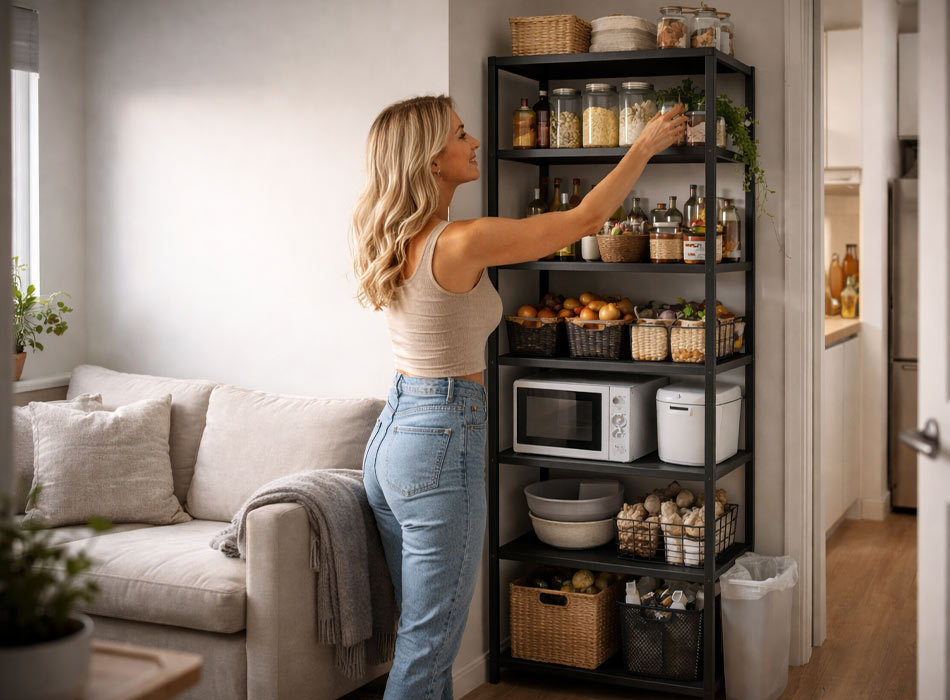
The most direct substitute for a missing pantry is a tall freestanding shelving unit or cabinet placed in or near your kitchen. These units come in open-shelf, closed-door, and mixed configurations. They require no wall anchoring, no drilling, and can be moved when you relocate — making them the gold standard for renters who need serious storage capacity.
A narrow vertical tower unit in the 12–16-inch depth range can slide into the gap beside your refrigerator, at the end of a kitchen counter run, or just outside the kitchen in a dining corner or hallway. Look for units with adjustable shelves so you can accommodate tall cereal boxes, olive oil bottles, and bulkier items alongside smaller cans and spice jars. Units with a mix of open and closed shelving are especially useful: closed lower sections hide cleaning supplies or less attractive items, while open upper shelves keep everyday pantry staples visible and accessible.
If your floor plan allows it, a tall bookcase — especially the classic 5-shelf, 72-inch format — can serve an exceptional double duty as a pantry. Use fabric bins or baskets on some shelves to corral loose items, and label everything. The goal is a system that looks intentional rather than improvised.
Rolling Carts as a Flexible Pantry Solution
A slim rolling cart is one of the most versatile pieces of furniture a no-pantry renter can own. Originally popularized as a kitchen island alternative, these carts — typically 3–4 tiered and about 6 inches wide — can tuck beside the refrigerator, roll under a counter overhang, or live in an adjacent room and be wheeled in when cooking.
Use the top tier for items you grab constantly: cooking oils, salt, pepper, and a small cutting board. Middle tiers work well for canned goods, dry staples in clear containers, and small appliances you use weekly. The bottom tier is ideal for heavier items like bags of rice, canned beverages, or a slow cooker you don’t use daily. Many rolling carts include a side hook rail, which is perfect for hanging a dish towel, a small utensil holder, or even a roll of paper towels.
The mobility factor is a genuine advantage in small apartments. If your kitchen feels cramped on cooking days, roll the cart out into the dining area or hallway. If you have guests and need floor space, roll it into the bedroom temporarily. This adaptability is something a fixed pantry can never offer. For more ideas on flexible, movable storage systems, explore this guide to modular storage for small apartments.
Vertical Wall Space and Open Shelving in the Kitchen
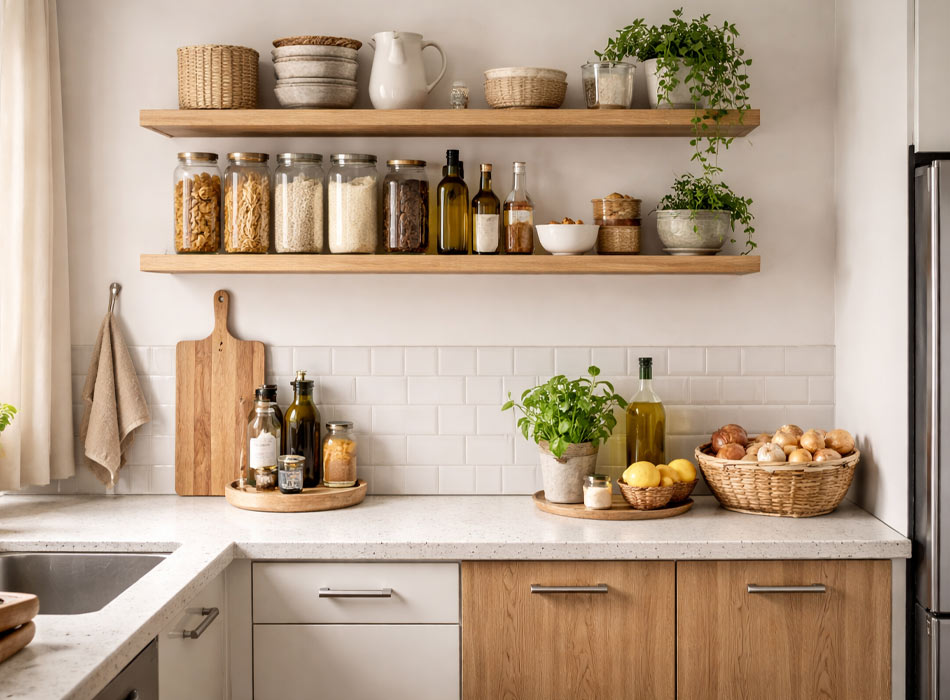
The walls in and around your kitchen are almost certainly underused. Open shelving mounted above the counter or on an adjacent wall gives you pantry-equivalent storage without consuming any floor space. In rental situations where you’d prefer not to put holes in walls, there are several no-drill approaches worth knowing about.
Freestanding ladder shelves leaned against the wall work well in kitchens that have a blank wall nearby. A storage ladder in a warm wood or matte black finish can hold everything from cookbooks to jars of dried goods on the upper rungs, with bulkier items on the lower steps. Peel-and-stick adhesive shelves are a lower-weight option for holding spices, small jars, or a few lightweight cans near the cooking area — just be sure to stay within the rated weight limits, which typically max out around 5–10 lbs per shelf.
Magnetic fridge organizers deserve a special mention here. These mount directly to the side or front of your refrigerator using strong magnets — no adhesive, no drilling, completely removable. A magnetic side-of-fridge shelf or caddy can hold spice jars, cooking spray, foil boxes, and other flat items that would otherwise clutter your counters. Paired with a fridge-top organizer bin, the exterior of your refrigerator essentially becomes a free storage wall. For more ideas on making the most of vertical space, this resource on vertical storage ideas for small apartments covers a wide range of applications.
Related Storage Ideas:
- Small Kitchen Organization for Apartments
- Vertical Storage Ideas for Small Apartments
- Storage Solutions for Small Apartments That Save Space
Over-the-Door Organizers for Instant Pantry Space
One of the most overlooked storage surfaces in any kitchen is the back of the pantry door — except, of course, when there is no pantry door. In its absence, the back of a kitchen cabinet door, a broom closet door, or even the inside face of an entryway closet door becomes valuable real estate for pantry overflow.
Over-the-door pocket organizers — especially those with clear or mesh pockets — are ideal for holding snack packs, seasoning packets, cooking oils, canned goods, and small boxed items. Most hook over the top of a standard door without any hardware installation. Adjustable door-mounted racks with wire shelves can hold heavier items like canned goods and jarred sauces. For narrow cabinet interiors, a tiered door organizer can double or triple the storage capacity of a single door face.
If you have a closet near your kitchen — even a coat closet or utility closet — consider dedicating one wall or the door of that closet to food storage. A set of stackable clear storage boxes on the closet floor can hold bulk dry goods, extra paper towels, or cleaning supplies. An over-the-door spice rack on the closet door handles seasonings. With a few well-chosen additions, a standard closet becomes a surprisingly functional pantry proxy.
Stackable Bins, Baskets, and Modular Cube Units
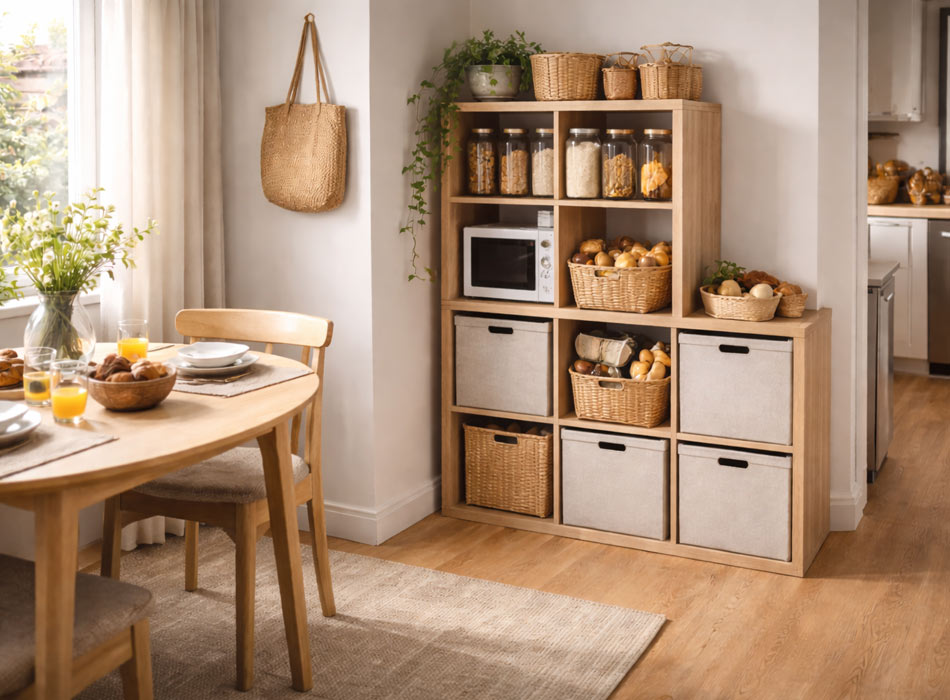
Organization within any no-pantry system depends heavily on how well you contain and categorize items. Loose cans rolling around on a shelf, pasta boxes tumbling when you open a cabinet, and unlabeled bins that require digging — these are the habits that make pantry-free kitchens feel chaotic. Stackable clear storage boxes and modular container sets solve this immediately.
Stackable cube organizers — the kind you might more typically see in a living room or bedroom — work remarkably well as kitchen pantry alternatives when paired with fabric bins or labeled baskets. A 4-cube or 6-cube unit placed in a dining corner or just outside the kitchen provides significant pantry-scale capacity. Assign each bin a category: baking supplies, canned goods, snacks, breakfast items, and so on. This zoning approach means you always know where to look.
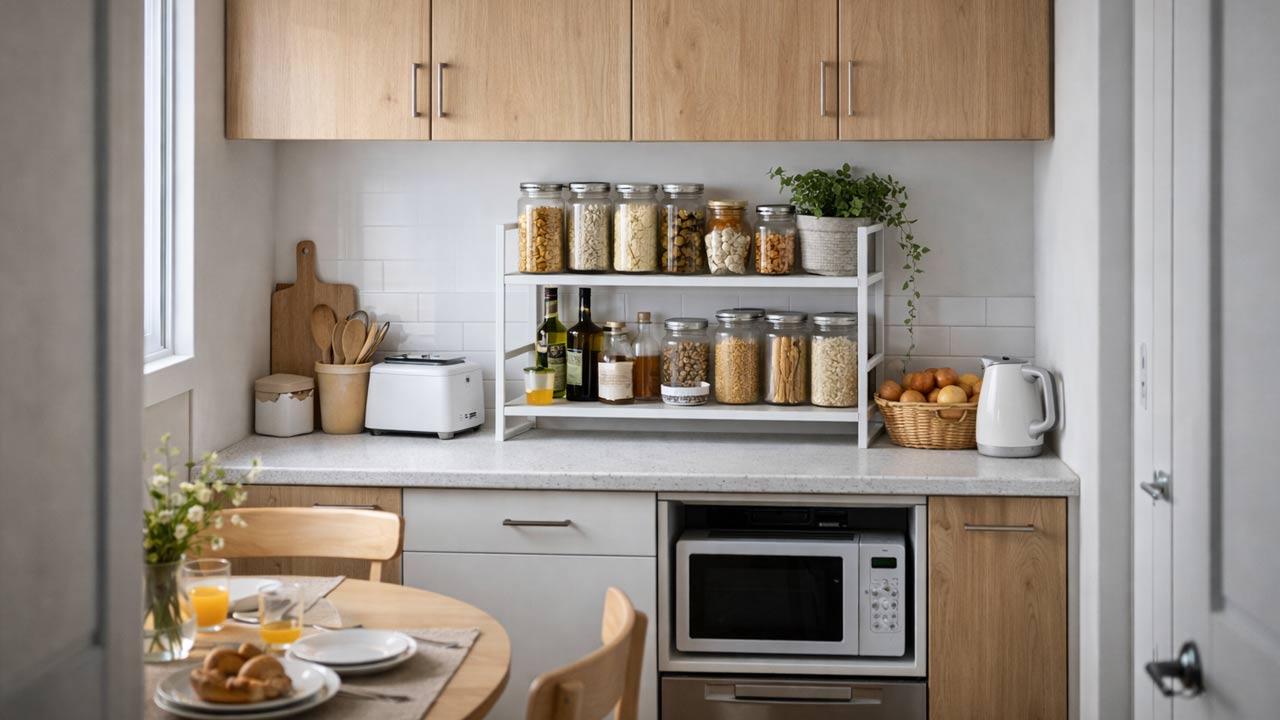
For countertop zones, a countertop tiered shelf — a two or three-step riser that fits on a counter — lets you store items at multiple heights without requiring more horizontal space. These are especially effective for spices, small canned goods, and frequently used ingredients. Pair with a turntable (lazy Susan) on the same counter zone to access items at the back of the shelf without hunting. For a broader approach to apartment-wide storage systems, the guide to storage solutions for small apartments offers a comprehensive overview.
Utilizing the Space Above and Below Cabinets
Standard kitchen cabinets rarely go all the way to the ceiling, which means there’s often 6–18 inches of dead space above the upper cabinet line. This zone is ideal for storing items you don’t access daily: bulk purchases, large pots, baking trays, or seasonal appliances. Use closet top-shelf storage bins — lidded, stackable containers — to keep these items dust-free and organized. Label each bin on the front face so you don’t have to pull everything down to find the waffle iron.
Below the cabinets, an under-shelf hanging basket can dramatically expand what each cabinet shelf handles. These baskets hook onto the underside of a cabinet shelf and hang below it, creating an entirely new storage tier without any drilling. Use them for holding produce, kitchen towels, foil and wrap boxes, or small containers of snacks. They’re inexpensive, widely available, and completely renter-safe.
The space under the kitchen sink — often squandered as a dark, disorganized abyss — can also contribute meaningfully. An under-sink storage system with pull-out drawers or tiered organizers around the pipes can hold cleaning supplies, dish soap, trash bags, and extra sponges, freeing up cabinet space above for actual food storage. Slim rolling carts designed to fit beside the under-sink plumbing are a particularly smart option for older kitchens where the pipe configuration makes standard organizers awkward.
Extending Storage into Adjacent Rooms
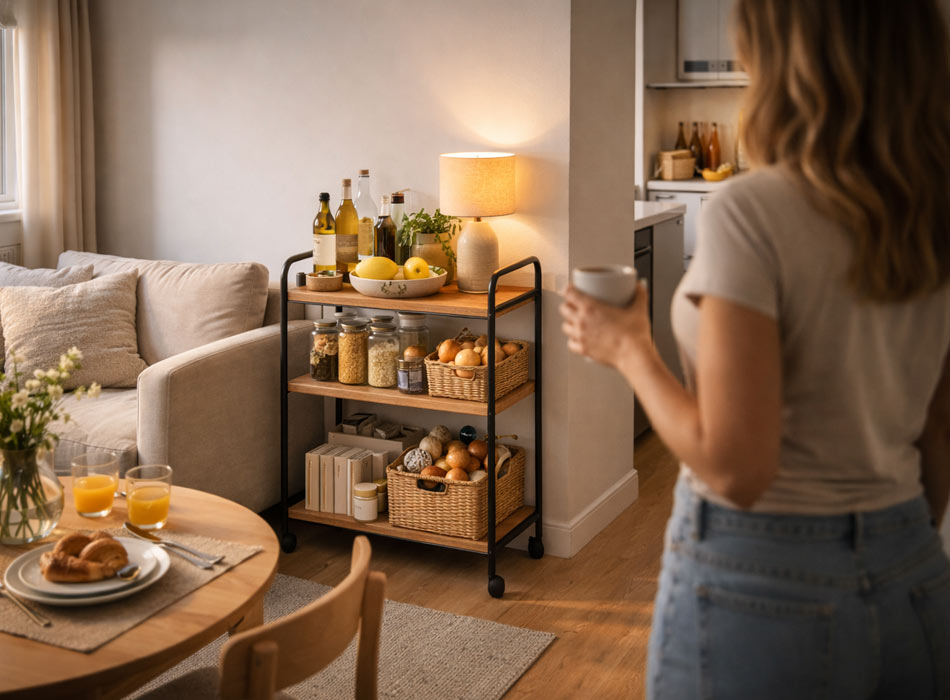
When the kitchen truly has no room to grow, the solution sometimes lies just outside it. Hallways, dining rooms, entryways, and even bedroom corners can absorb kitchen overflow if the storage system is thoughtful and contained.
A bar cart used as storage is a classic example of this approach. Positioned in a dining area just off the kitchen, a two-tiered bar cart can hold everything from wine glasses and a bottle of olive oil to stacked containers of dry pasta and a small appliance. It looks intentional and stylish, reads as part of the dining space, and keeps kitchen essentials within reach without cluttering the kitchen itself.
In a studio apartment especially, a modular room divider with storage can serve as both a spatial partition and a pantry. Open-backed cube units used as a divider between the kitchen zone and the living zone give you pantry-adjacent storage that’s accessible from the kitchen side. This is a dual-function approach that studio renters in particular will find transformative. For studio-specific ideas, the guide to studio apartment storage ideas goes into this in much more depth.
Building a Smart Small Appliance Storage System
Small appliances — toasters, coffee makers, air fryers, instant pots — consume a disproportionate amount of counter and cabinet space in kitchens without pantries. Without a pantry to push them into, they compete directly with food storage for limited real estate. Managing this well makes a significant difference in how functional your kitchen feels.
Assign your appliances to tiers based on frequency of use. Daily-use items like your coffee maker and toaster earn counter space. Weekly-use appliances — the blender, the instant pot — belong on a lower shelf of your freestanding pantry unit or the bottom tier of a rolling cart, with their cords coiled and stored on top or tucked behind. Monthly-use appliances should be boxed, labeled, and stored in the above-cabinet zone or in a closet.
A freestanding garment rack with shelves — one of those multi-tier units typically used in laundry areas — can be repurposed for appliance and overflow storage. The hanging bar isn’t relevant for a kitchen use case, but the lower shelves accommodate bulk items, small appliances, and pantry bins with ease. Placed in a nearby utility nook or just outside the kitchen, it’s a high-capacity solution that requires no permanent installation and costs far less than custom cabinetry.
Spice Storage Without a Pantry
Spices present a particular challenge in pantry-free kitchens because there are so many small items to organize, they need to be accessible quickly during cooking, and they take up far more space than their size suggests when poorly stored. The right spice system can free up surprising amounts of cabinet and counter space.
A magnetic spice rack mounted to the side of the refrigerator using magnetic backing is one of the cleanest solutions. Uniform magnetic spice jars line up neatly on a metal surface and stay completely off the counter. Fridge magnetic organizers designed specifically for this function are widely available and require no tools. Alternatively, a wall-mounted spice shelf above the stove (if your lease and wall material allow light adhesive or removable strips) keeps spices at eye level and immediately accessible.
For cabinet interiors, a tiered spice rack insert — essentially a stair-step riser that fits inside a cabinet — immediately solves the “hidden in the back” problem. Every jar becomes visible. Turntables (lazy Susans) work similarly, though they allow slightly more chaos than tiered inserts. Whatever system you choose, decanting bulk spices into uniform labeled containers before implementing any spice system will make the final result look dramatically better and function more efficiently.
Conclusion: Building a Pantry-Free Kitchen That Actually Works
Living without a pantry is a constraint, not a limitation you can’t overcome. With the right kitchen storage solutions for apartments without a pantry, you can organize dry goods, small appliances, cleaning supplies, and overflow items in a system that’s every bit as functional as a built-in pantry — and far more flexible. The key is treating the challenge architecturally: find your vertical space, identify your overflow zones, and commit to a modular system that can grow with you.
Whether you choose a tall freestanding unit beside the fridge, a rolling cart tucked under the counter, an over-the-door organizer on a nearby closet, or a combination of all three, the best no pantry storage apartment system is the one that matches your actual cooking habits and daily routines. Start with your highest-friction problem — whether that’s cluttered counters, inaccessible canned goods, or spice chaos — and solve that first. Build outward from there.
These small apartment pantry alternatives aren’t workarounds. They’re a legitimate storage architecture for the way modern renters actually live. You don’t need a pantry to have an organized, functional kitchen. You need a plan — and now you have one.
For a complete system, explore the full guide to small apartment organization and space-saving storage solutions, or continue with ideas for small kitchen organization in apartments and modular storage systems that adapt to any layout.
Ready to reclaim your kitchen? Explore the complete collection of small apartment storage guides on Smart Space Living — practical, renter-approved ideas organized by room, problem, and budget so you can build the setup that actually works for your space.