
Kids Closet Organization for Small Spaces: Smart Storage Ideas That Actually Work
Keeping a child’s closet organized in a compact apartment or small bedroom can quickly become frustrating when clothing, shoes, toys, and seasonal items all compete for limited storage space. Many parents dealing with kids closet organization small space challenges find that standard closet layouts simply do not provide enough flexibility for growing children and changing storage needs. Small closets often become overcrowded, making it difficult for kids to independently access their clothing or maintain organization long term.
In smaller apartments throughout the USA and Canada, maximizing every inch of available closet space becomes essential. Smart organization strategies can transform even a tight closet into a highly functional system that supports daily routines while reducing clutter. Whether you are dealing with a shared bedroom, a compact reach-in closet, or a limited storage layout, the right setup can dramatically improve functionality.
Many solutions for small bedroom closet kids setups rely on vertical organization, modular storage systems, and renter-friendly solutions that adapt as children grow. If you are building a complete apartment storage strategy, exploring closet wardrobe optimization for small apartments can help create a more efficient overall organization system throughout the home.
Use Vertical Space to Expand Kids Closet Storage
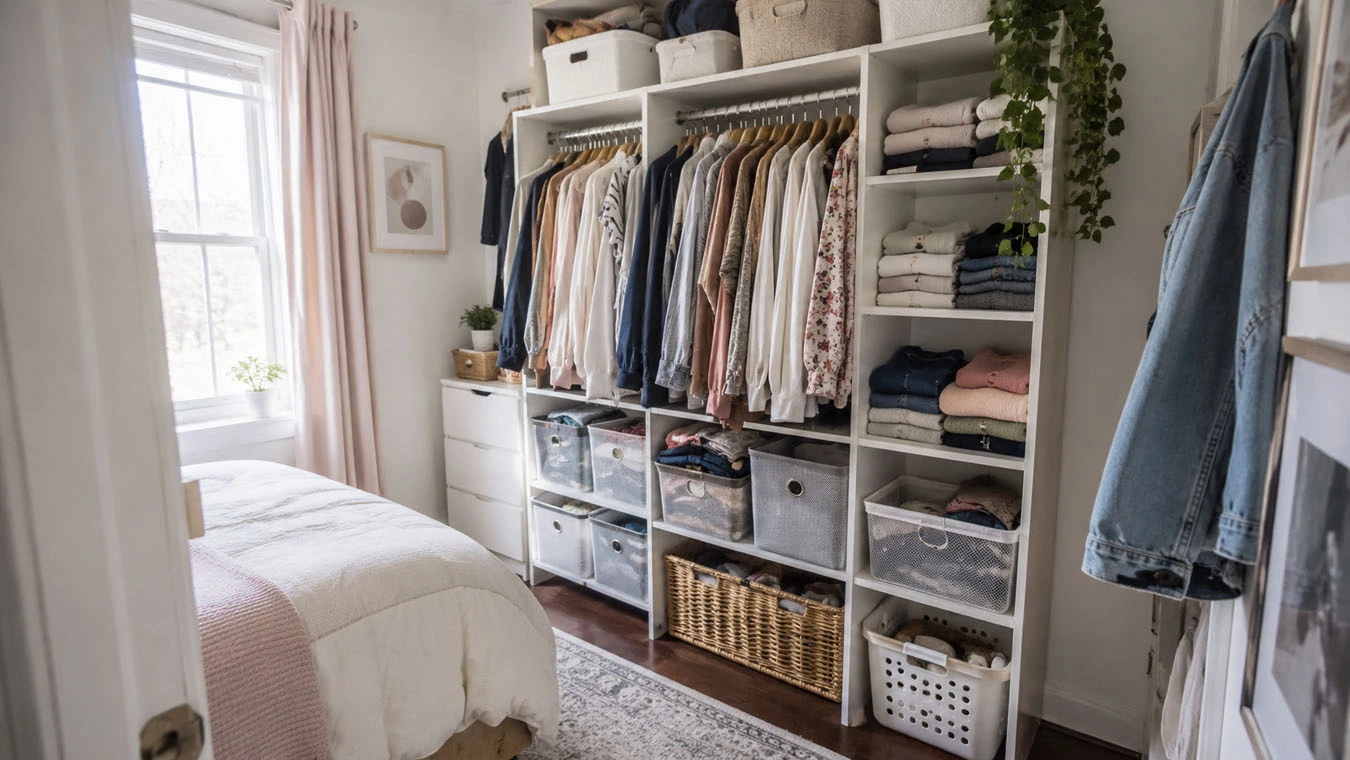
Freestanding Vertical Shelving provides clothing & wardrobe overflow in a compact 1-bedroom apartment closet interior.
One of the biggest mistakes parents make with children closet storage ideas is focusing only on the lower hanging section while ignoring the full height of the closet. Vertical space often provides the largest untapped storage opportunity in small bedrooms and apartments. Adding stackable shelving, top-shelf bins, or modular cube organizers can dramatically increase usable storage without requiring major modifications.
In many apartments, closet rods are installed higher than children can comfortably reach. This unused lower area becomes ideal for small dressers, stackable drawers, or rolling bins. Meanwhile, upper shelving can store off-season clothing, extra bedding, keepsakes, or bulk diaper and supply storage for younger children. Vertical systems also make it easier to separate categories, which helps children maintain organization independently.
Parents dealing with limited apartment space often benefit from combining shelving with hanging organizers. Soft hanging pocket systems can store socks, folded shirts, accessories, or small toys while using minimal closet depth. These lightweight systems work especially well in rental apartments because they do not require drilling or permanent installation.
For families trying to maximize every inch of vertical storage, exploring vertical storage ideas for small apartments can provide additional strategies that extend beyond the closet itself and help reduce overflow throughout the bedroom.
Create Adjustable Storage Systems That Grow With Kids
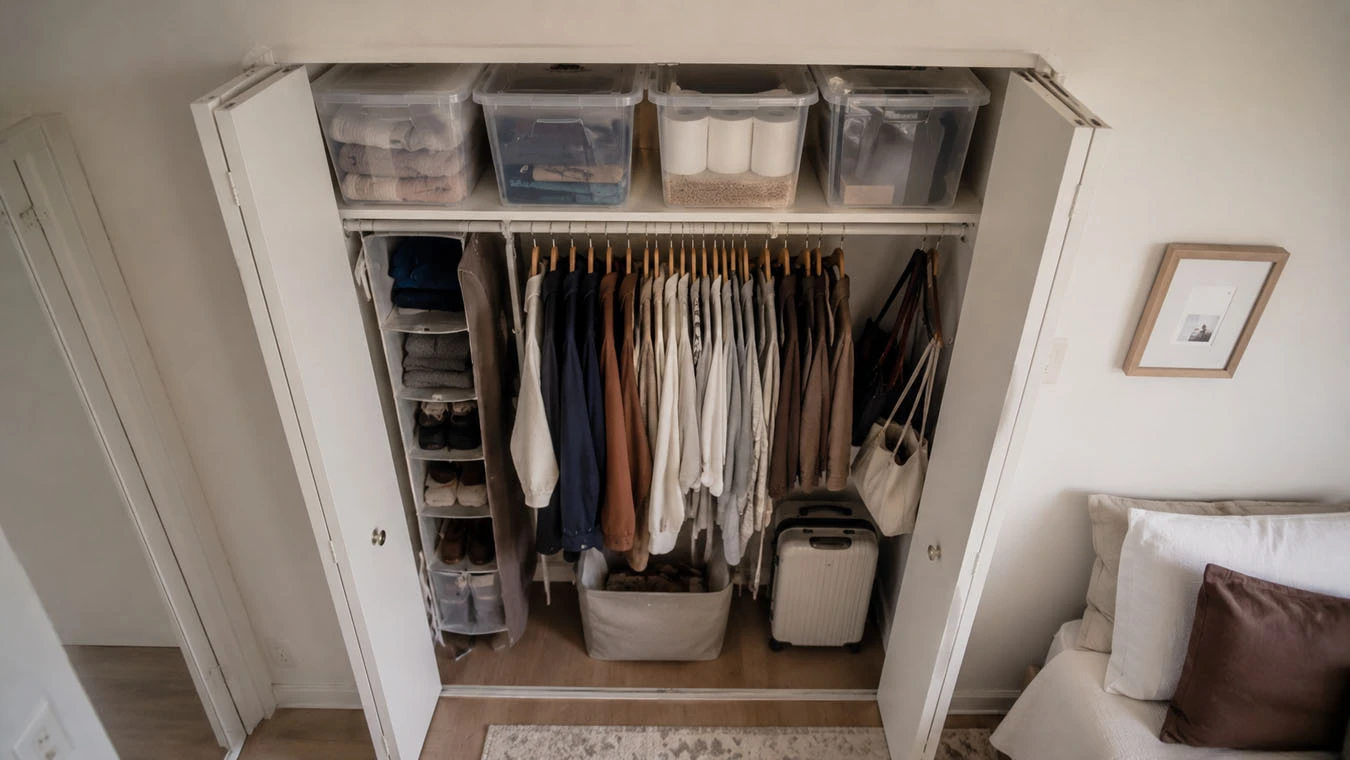
Average 1-Bedroom Rental Open Closet / Wardrobe Wall Clothing & Wardrobe Overflow
Children outgrow storage systems surprisingly fast, which is why adjustable organization systems work particularly well for small apartment closets. What works for toddlers may become completely ineffective for school-aged children or teenagers. Flexible modular systems allow parents to adapt the closet over time without replacing the entire setup.
Adjustable shelving makes it easier to change storage zones as clothing sizes increase. Lower shelves can initially hold diapers, baskets, or folded baby clothes before transitioning into shoe storage or school supply organization later. Modular drawer cubes also allow storage categories to evolve naturally as children’s routines change.
Another advantage of flexible systems is that they reduce wasted space. Fixed shelving often creates awkward gaps that cannot efficiently accommodate growing clothing sizes or larger storage containers. Modular systems allow families to reconfigure sections based on seasonal needs, school supplies, sports equipment, or toy storage fluctuations.
Families living in apartments with limited storage often benefit from systems that can eventually transition into other rooms later. Many modular organizers used in children’s closets can later function in home offices, entryways, or living rooms. For more adaptable storage solutions, modular storage for small apartments offers flexible organization ideas that work well in evolving family spaces.
Separate Daily Clothing From Seasonal Storage
Average 1-Bedroom Rental Open Closet / Wardrobe Wall Clothing & Wardrobe Overflow
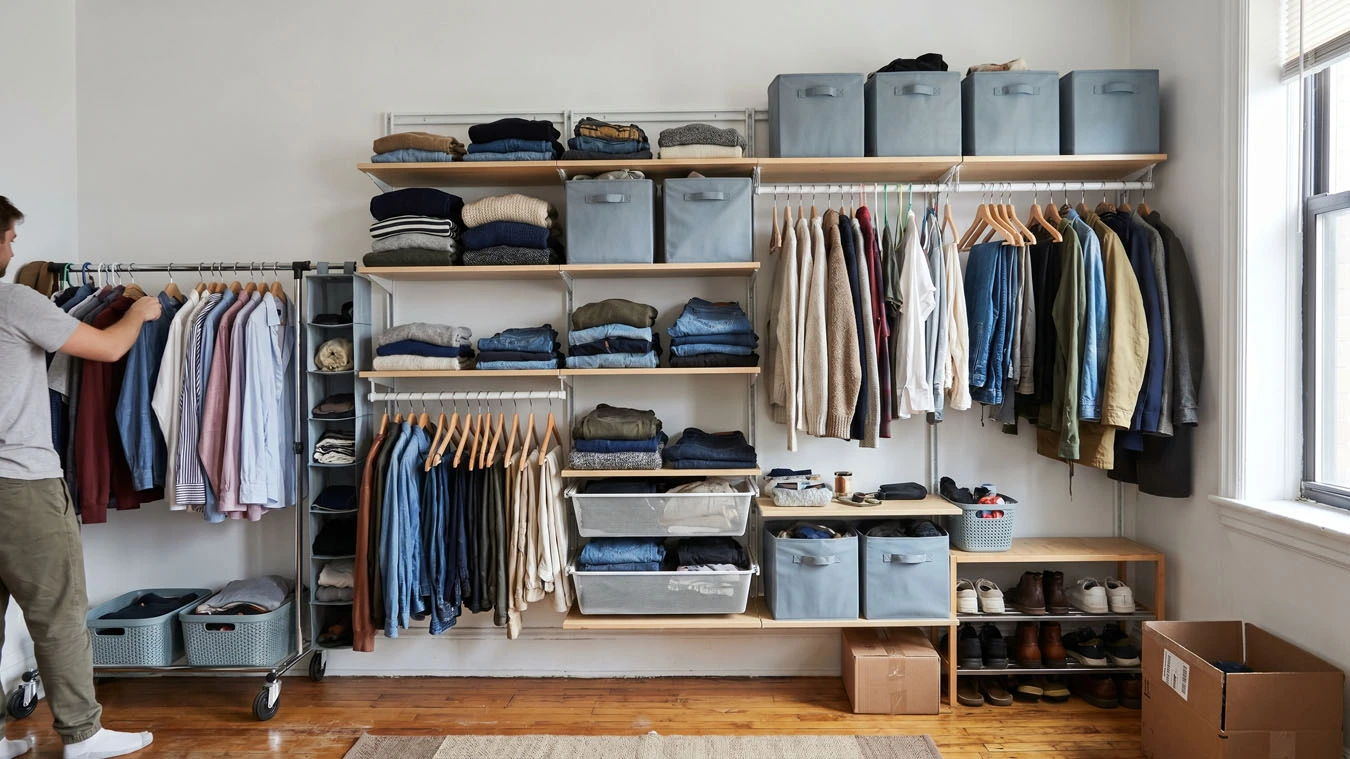
Small Studio Apartment Closet Interior Seasonal & Bulk Storage
One of the fastest ways to overwhelm a small kids closet is storing every season of clothing at the same time. Winter coats, boots, snow pants, summer outfits, and special occasion clothing can quickly overcrowd even well-designed closets. Creating a seasonal rotation system helps maintain accessibility while reducing visual clutter.
Daily-use clothing should remain within easy reach for both parents and children. Seasonal items, however, can move into labeled upper bins, under-bed containers, or secondary apartment storage areas. Rotating clothing every few months creates significantly more breathing room inside the active closet area.
Clear storage containers work especially well because parents can quickly identify contents without opening every bin. Labeling systems also make transitions easier between seasons, particularly in regions with major weather changes like Canada or northern USA climates. Compact apartments benefit greatly from keeping only currently needed clothing accessible.
Seasonal organization also prevents forgotten clothing from piling up in hidden corners of the closet. Families wanting a more complete approach can explore seasonal closet rotation systems to better manage changing wardrobes throughout the year.
Related Storage Ideas:
Use Bins and Categories to Simplify Organization
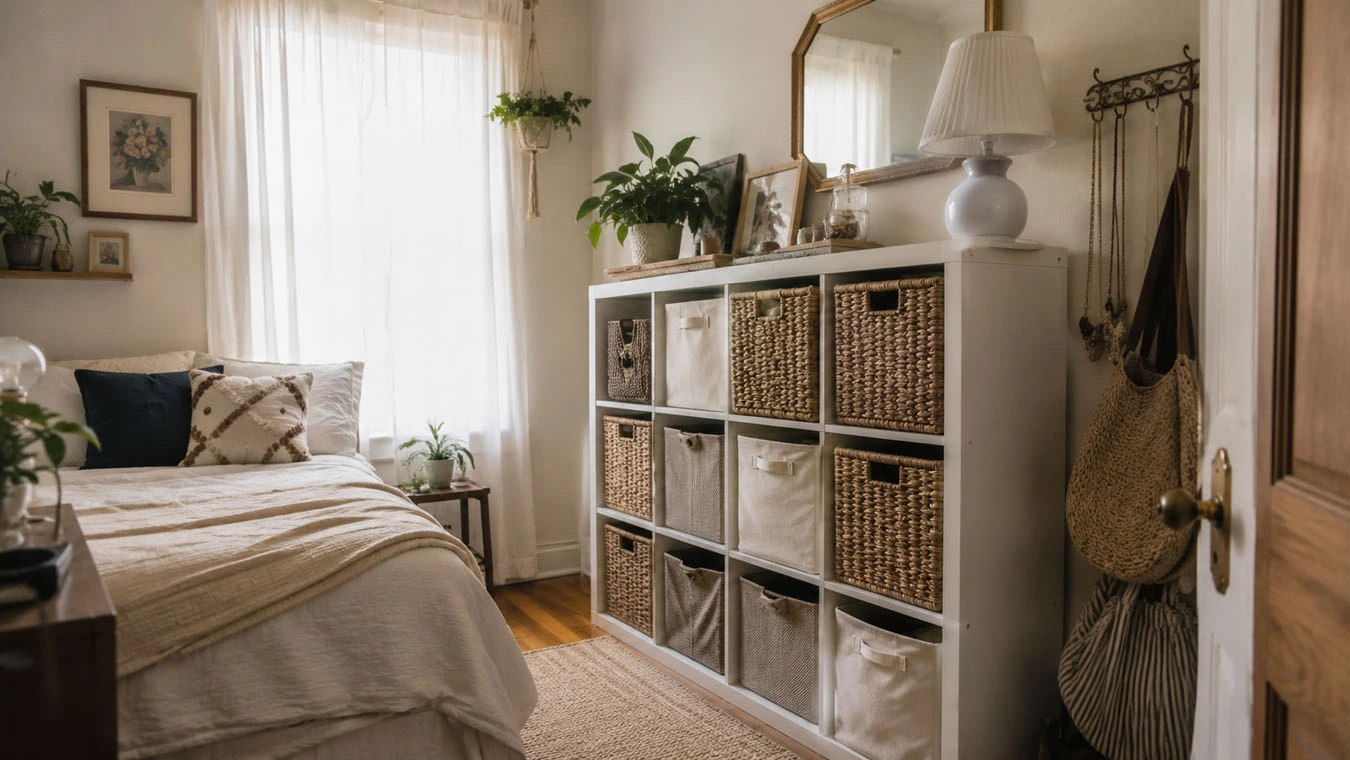
Open Shelving With Fabric Bins provide decorative + functional hybrid storage in a compact 1-bedroom apartment bedroom.
Children closets become difficult to maintain when too many unrelated items are stored together. Mixing clothing, toys, school supplies, shoes, and accessories in the same space often creates visual clutter and confusion. Categorizing storage zones helps both parents and children maintain consistency over time.
Bins provide structure while hiding visual mess that naturally occurs in children’s spaces. Soft fabric bins work well for younger children because they are lightweight and safe to handle independently. Clear bins may work better for older children who want faster visibility and access to specific categories.
One effective approach is assigning individual zones for clothing types, school items, pajamas, accessories, and shoes. Even in very compact closets, category separation reduces daily frustration and helps children develop organizational habits earlier. Labeling bins with words or icons can also encourage younger kids to participate in cleanup routines.
Apartment families often benefit from combining closet bins with additional room storage systems. When closets remain too overloaded, nearby vertical shelving or storage towers can help distribute categories more efficiently. Families struggling with overflow may also benefit from small bedroom closet organization ideas that complement closet-based storage.
Maximize Small Closet Hanging Space Efficiently
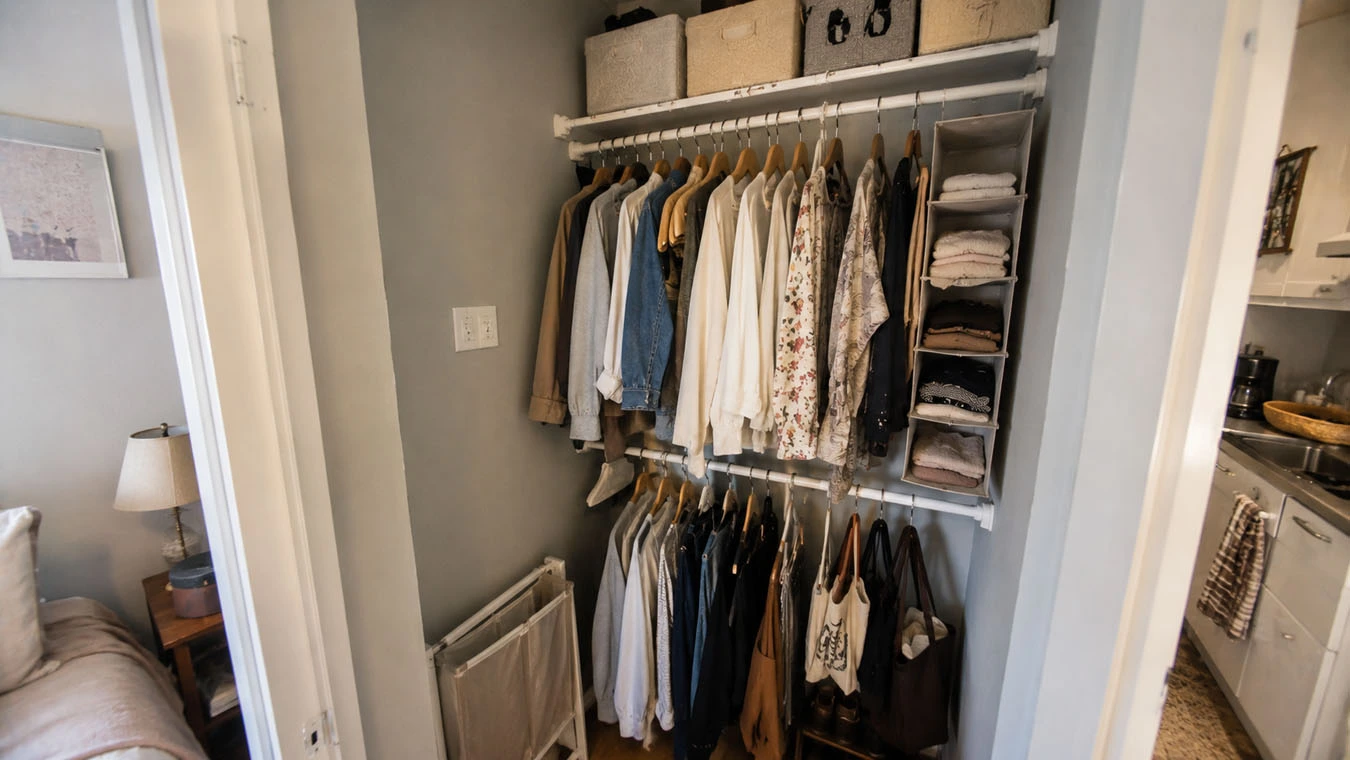
Expandable Closet Rods provide vertical hanging storage in a older rental with limited storage closet interior.
Children’s clothing takes up less vertical hanging space than adult garments, which creates an opportunity to double closet capacity using lower hanging rods. Many standard closets waste valuable lower space that could support additional organization systems for shirts, jackets, dresses, or uniforms.
Expandable closet rods work particularly well in apartments because many models install without permanent modifications. Lower rods can hold daily outfits while upper rods store formal clothing or seasonal items. This type of vertical layering instantly increases usable storage without expanding the closet footprint.
Families with multiple children sharing a room can also divide hanging zones by child, which reduces confusion during busy mornings. Color-coded hangers or simple labels can help maintain separation inside compact shared closets. This strategy becomes especially useful when siblings have different schedules, uniforms, or extracurricular storage needs.
Parents trying to maximize limited hanging capacity may also benefit from closet rod extender ideas that double hanging space for even more efficient vertical organization strategies in small apartment closets.
Add Shoe Storage That Keeps Floors Clear
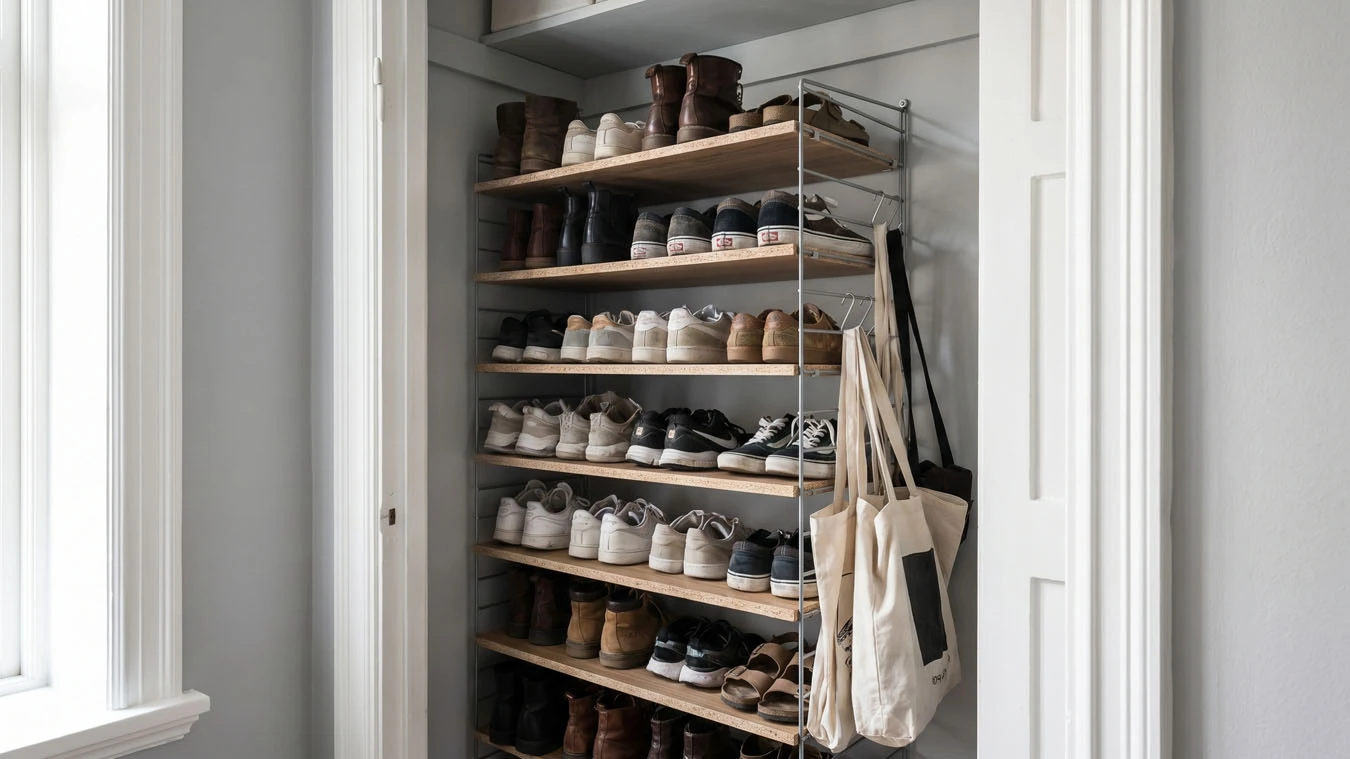
Tiered Shoe Rack provides shoe organization system in a compact 1-bedroom apartment closet interior.
Shoes often become one of the biggest sources of clutter in children’s closets because they are frequently kicked off quickly and stored inconsistently. In small bedrooms, scattered shoes can consume valuable floor space and make closets appear more chaotic than they actually are.
Tiered shoe racks help maximize vertical floor storage while keeping pairs visible and easy to access. Younger children benefit from simple open systems that allow independent retrieval, while older children may prefer labeled cubbies or stackable organizers that separate school shoes, sports shoes, and seasonal boots.
Over-the-door shoe systems can also work well in apartments where floor space is extremely limited. Lightweight hanging systems use otherwise wasted vertical space without interfering with hanging clothing or shelf organization. Slim-profile organizers are particularly effective in narrow reach-in closets.
Maintaining a limit on the number of actively stored shoes also helps reduce clutter. Off-season footwear can rotate into under-bed storage or top-shelf bins when not needed. Families needing more compact footwear organization strategies can also explore shoe storage in small closets for additional apartment-friendly ideas.
Create Shared Closet Zones for Multiple Children
Tiered Shoe Rack provides shoe organization system in a compact 1-bedroom apartment closet interior.
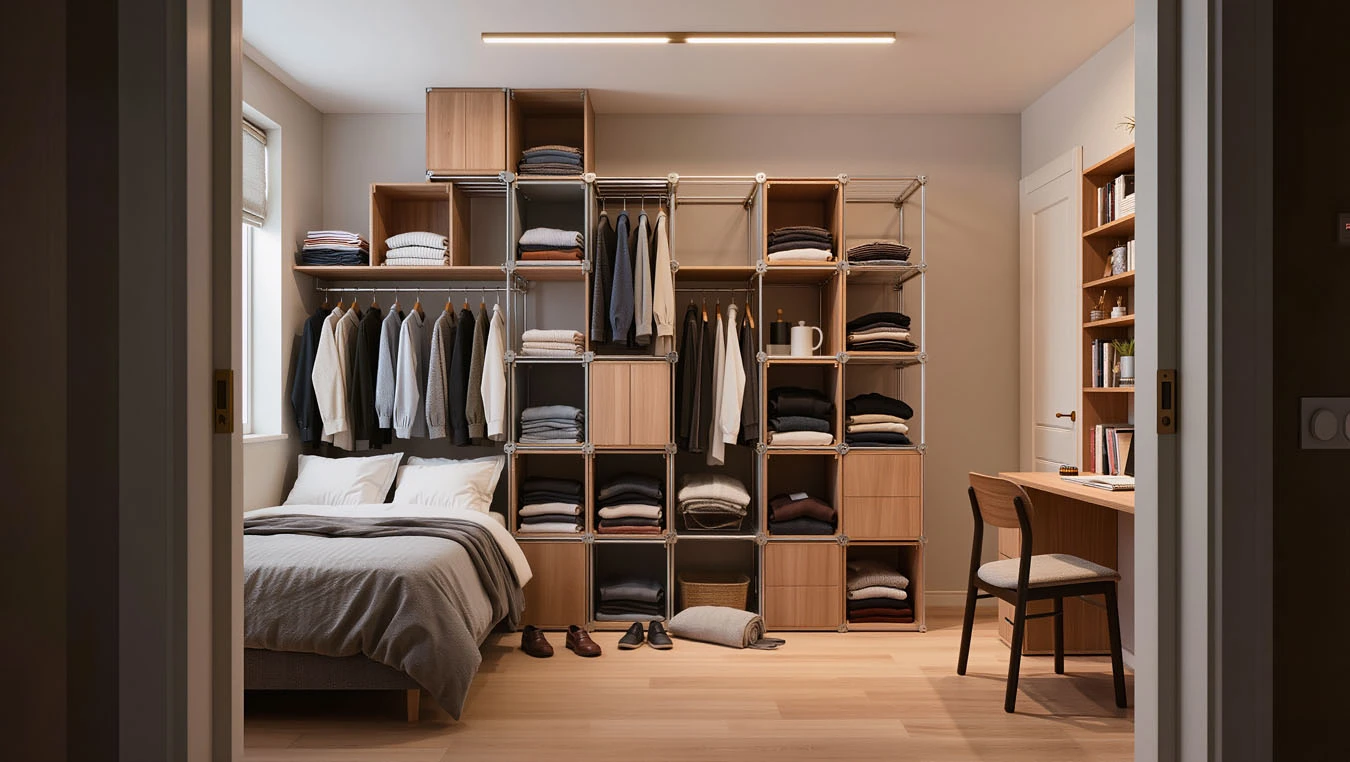
Stacked Cube Organizers provide clothing & wardrobe overflow in a open-concept small apartment bedroom.
When siblings share a small bedroom closet, organization becomes even more important. Without clear separation systems, clothing and personal items quickly become mixed together, creating frustration and clutter. Defining individual storage zones helps maintain structure while making the closet easier for children to navigate independently.
Color coding is one of the simplest ways to establish clear ownership within shared closets. Matching bins, hangers, or drawer labels help children identify their sections quickly. Vertical dividers can also separate hanging zones while maintaining efficient use of limited closet width.
Shared closets benefit greatly from standardized storage sizes and systems. Using identical bins or drawers creates a cleaner visual appearance while simplifying future adjustments. Consistency also makes it easier for parents to reorganize storage as children grow or routines change throughout the school year.
In very compact apartments, families sometimes need to supplement closet storage with nearby shelving or room-based modular furniture. Additional ideas for managing shared living situations can be found in shared apartment storage ideas and roommate storage ideas for small apartments, many of which also apply well to children sharing bedrooms.
Conclusion
Creating an effective system for kids closet organization small space challenges requires more than simply adding extra bins or hangers. The most successful setups combine vertical storage, adjustable systems, categorized organization, and renter-friendly flexibility that adapts as children grow. Even very compact closets can become highly functional when every section is intentionally designed around daily use and accessibility.
Families dealing with small bedroom closet kids storage problems often see the biggest improvements by simplifying categories, rotating seasonal clothing, and maximizing overlooked vertical areas. Whether you are organizing a nursery, a shared sibling bedroom, or a compact apartment closet, thoughtful systems help reduce clutter while making daily routines easier for both parents and children.
Many of these children closet storage ideas can also improve overall apartment organization by reducing overflow into bedrooms, hallways, and living areas. Small-space living becomes far more manageable when closets function efficiently and remain easy to maintain long term.
For a complete system, explore closet wardrobe optimization for small apartments, or continue with small closet organization systems and 50 small apartment storage ideas that actually work.
Looking for more renter-friendly organization solutions? Explore additional small apartment storage ideas, closet systems, and vertical organization strategies to create a cleaner, more functional home with less clutter and smarter everyday storage.


