
Seasonal Closet Rotation Apartment System for Small Spaces
Closets in small apartments rarely have enough room to hold every piece of clothing you own year-round. Heavy winter jackets, boots, sweaters, summer clothing, extra bedding, and seasonal accessories can quickly overwhelm limited storage space. Without a proper seasonal closet rotation apartment system, small closets become cluttered, difficult to manage, and frustrating to use on a daily basis.
One of the biggest challenges renters face is finding practical off-season clothing storage and small space solutions without damaging walls or investing in expensive custom closet systems. In many apartments, especially studios and compact one-bedroom rentals, closet space must serve multiple functions at once. The same closet may need to store clothing, luggage, linens, and household overflow throughout the year.
A smart seasonal rotation strategy helps reduce clutter while making your wardrobe easier to maintain. Instead of trying to fit every item into one crowded space, rotating clothing by season creates breathing room and improves organization. When combined with modular storage systems, under-bed storage, and renter-friendly closet solutions, wardrobe rotation tips can dramatically improve how your apartment functions. If you are building a complete organization system, start with this guide to closet wardrobe optimization for small apartments.
Why Seasonal Closet Rotation Works Better in Small Apartments
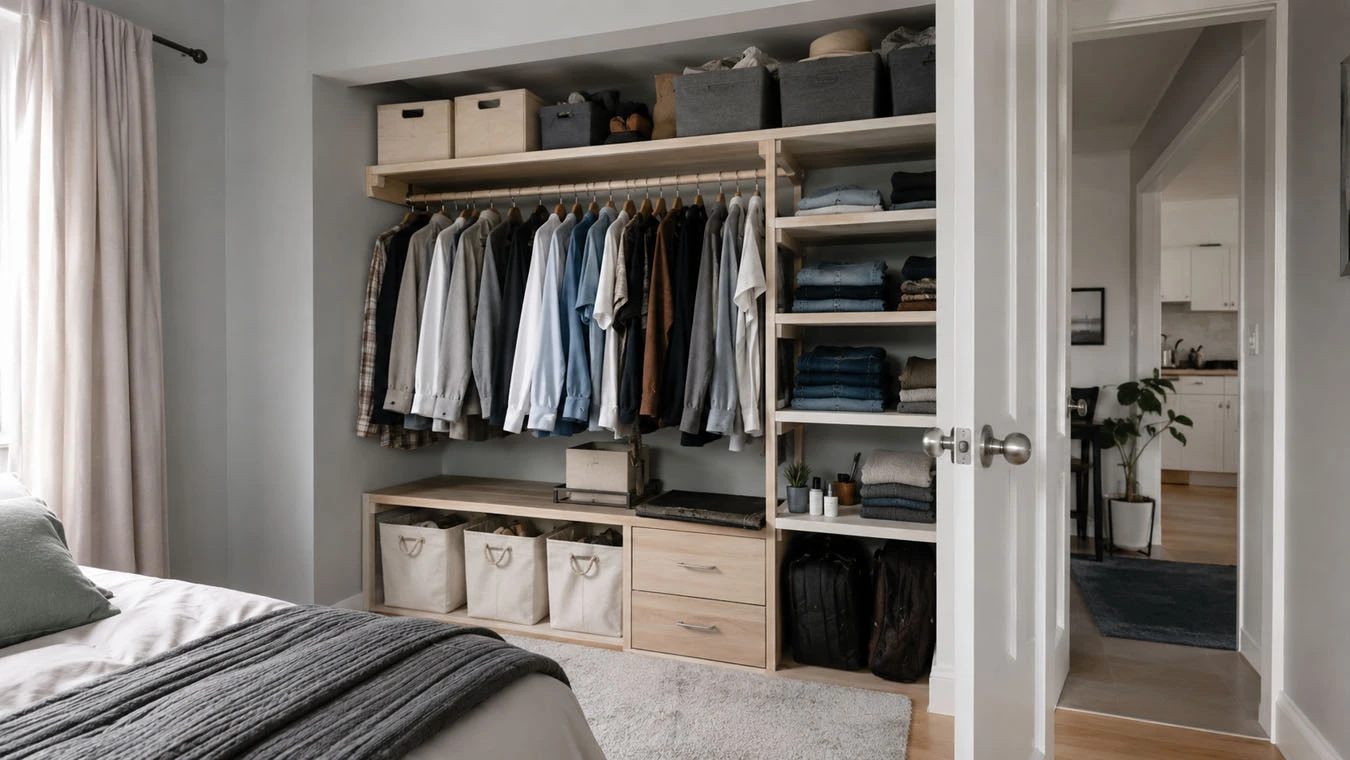
Closet Top-Shelf Storage Bins provide clothing & wardrobe overflow in a compact 1-bedroom apartment closet interior.
Seasonal clothing rotation works especially well in apartments because it reduces the amount of clothing competing for accessible closet space at any given time. Instead of storing winter coats beside summer outfits year-round, only current-season items remain within easy reach. This immediately creates a more functional and organized closet environment without requiring additional square footage.
Many renters attempt to organize overflowing closets by buying more organizers, but overcrowding often comes from trying to store too many active items simultaneously. A seasonal rotation system solves the root problem. Clothing that will not be worn for several months gets relocated into secondary storage zones such as under-bed bins, top-shelf containers, or modular storage units placed elsewhere in the apartment.
Another advantage of wardrobe rotation is visibility. Small closets become difficult to maintain when items are layered on top of one another. When only relevant seasonal clothing remains visible, it becomes easier to build outfits, identify laundry needs, and maintain organization long-term. This also reduces unnecessary duplicate purchases because clothing is easier to see and access.
For renters with extremely limited closet space, combining wardrobe rotation with small closet organization systems can significantly improve storage efficiency. Simple systems such as shelf dividers, modular bins, and expandable rods help maximize the closet once seasonal clutter is removed.
How To Sort Clothing Before Rotating Your Wardrobe
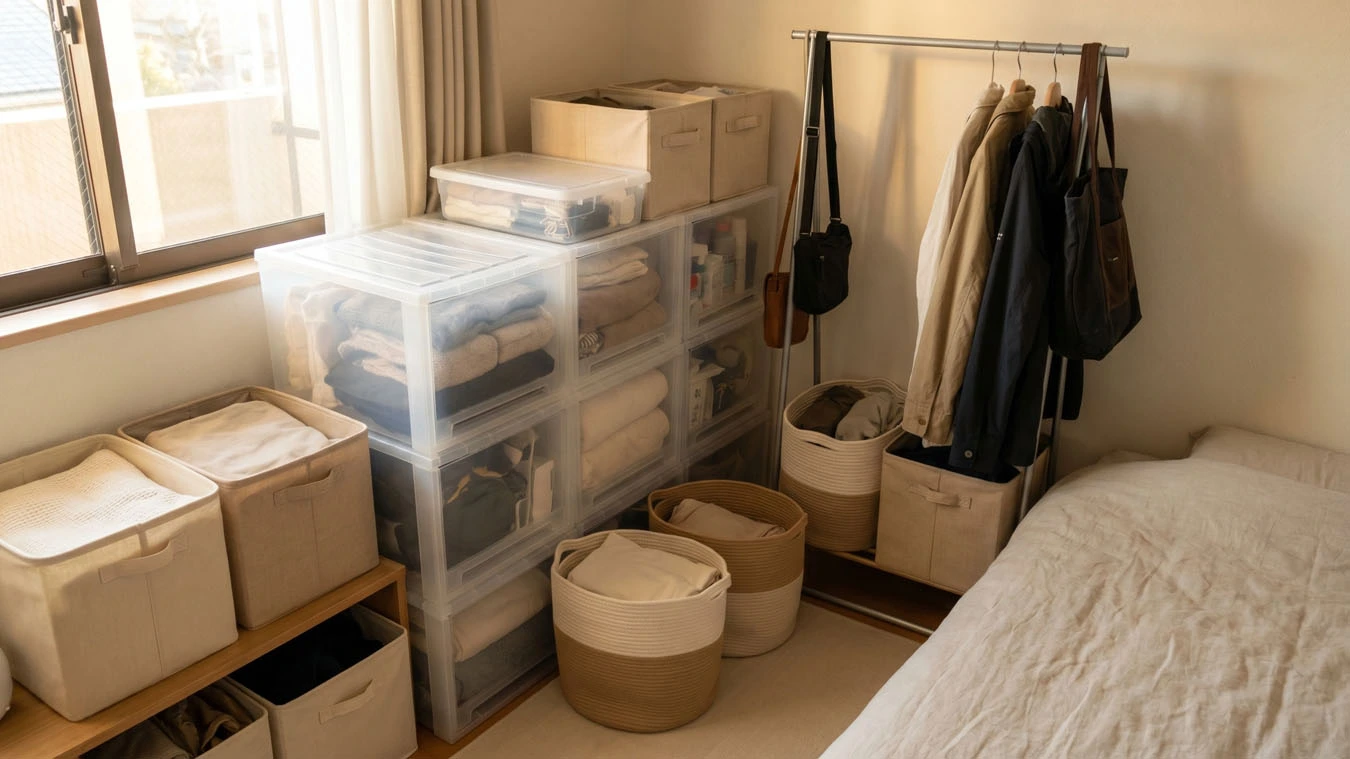
Stackable Clear Storage Boxes provide seasonal & bulk storage in a average 1-bedroom rental bedroom.
Before placing clothing into storage, the first step is sorting your wardrobe strategically. Many people rotate clothing inefficiently because they simply move everything out of the closet without evaluating what should actually remain. A proper seasonal closet rotation apartment system should reduce clutter while improving usability.
Start by separating clothing into four groups: current season essentials, next season transitional items, off-season clothing, and clothing that should be donated. Transitional items such as lightweight jackets or layering pieces may still need partial accessibility depending on your local climate. In Canada and many northern U.S. regions, weather changes quickly between seasons, so flexibility matters.
Storage containers should also reflect how frequently items are used. Bulky winter coats and boots can often move into deeper storage areas during summer months, while lightweight spring or fall clothing may stay closer to the closet for easier access. Using labeled storage bins simplifies future rotations and reduces the time required during seasonal changes.
This sorting process is also an ideal opportunity to simplify your wardrobe. Many renters benefit from pairing seasonal rotations with a more intentional clothing system such as a capsule wardrobe for small apartments. Fewer unnecessary clothing items create less storage pressure overall while making everyday organization significantly easier.
Best Off Season Clothing Storage Small Space Solutions
Stackable Clear Storage Boxes provide seasonal & bulk storage in a average 1-bedroom rental bedroom.
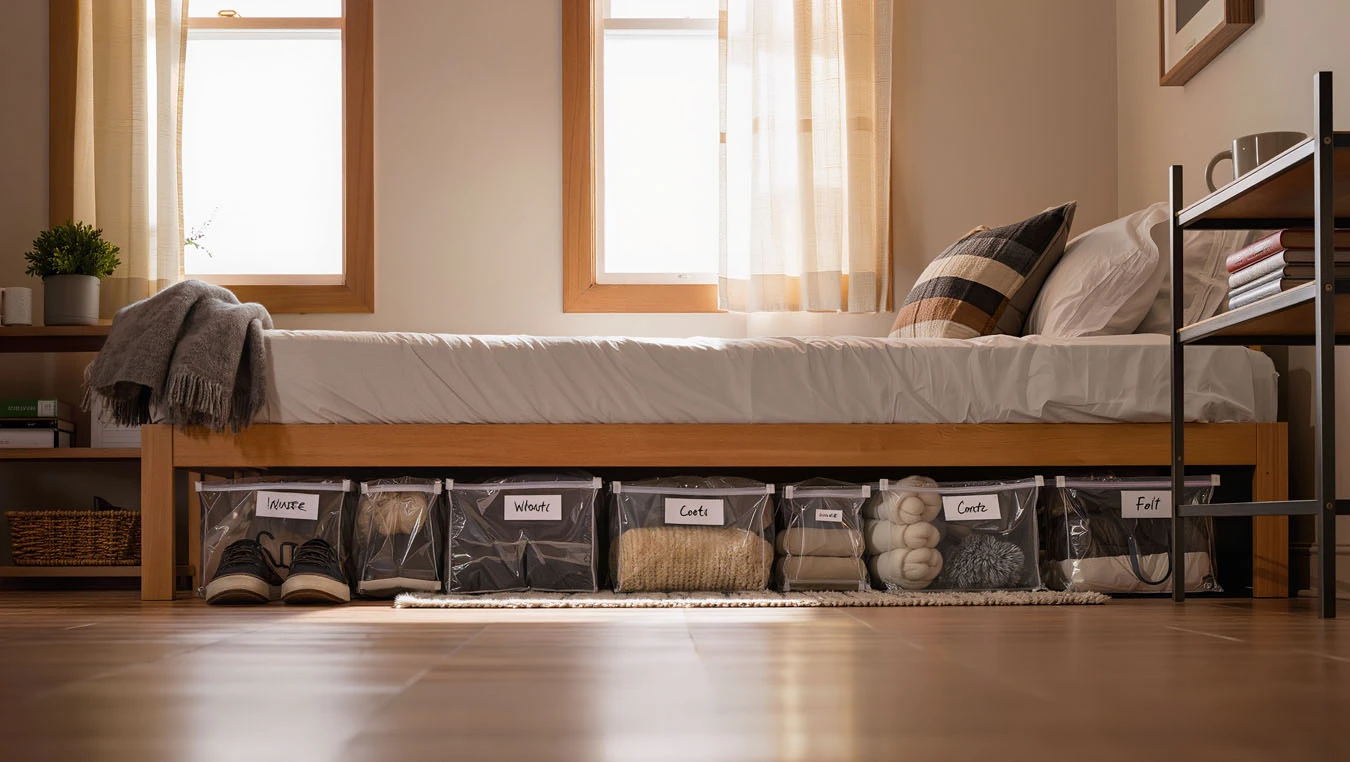
Fabric Under-Bed Storage Bags provide seasonal & bulk storage in a small studio apartment under-bed.
Finding effective off season clothing storage small space solutions is essential in apartments where closets alone cannot support year-round storage. Fortunately, many underutilized apartment zones can become highly functional seasonal storage areas without making the space feel crowded.
Under-bed storage is one of the most efficient solutions because it uses hidden space that often goes unused. Fabric storage bags or low-profile rolling bins work especially well for sweaters, jackets, thermal wear, and seasonal bedding. Vacuum-sealed storage bags may also help reduce volume, particularly for bulky winter items that consume large amounts of closet space.
Closet top shelves are another highly valuable storage zone. Instead of stacking random loose items above hanging clothing, use consistent labeled bins designed specifically for seasonal rotation. This creates a cleaner visual appearance while making future wardrobe transitions easier to manage. Renters can also combine this strategy with ceiling height storage solutions for apartments to fully utilize vertical space.
In apartments without adequate closet storage, freestanding modular systems can help store off-season clothing elsewhere in the home. Storage benches, cube organizers, and wardrobe units provide additional capacity while maintaining renter-friendly flexibility. Many people underestimate how effective a simple modular system can be when integrated carefully into a bedroom or living room layout.
Using Vertical Space To Improve Seasonal Storage
Fabric Under-Bed Storage Bags provide seasonal & bulk storage in a small studio apartment under-bed.
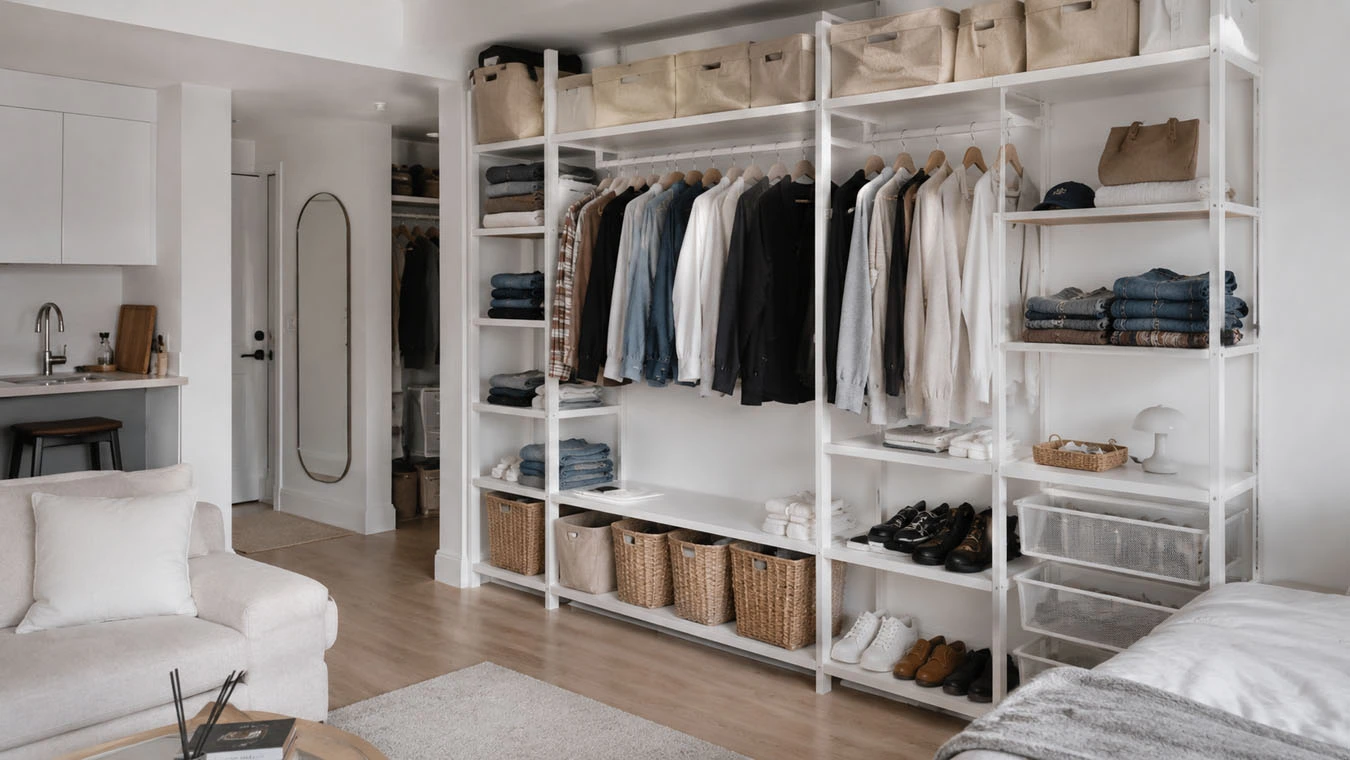
Freestanding Vertical Shelving provides overhead vertical storage in a open-concept small apartment open closet / wardrobe wall.
Vertical storage becomes extremely important when floor space is limited. Many apartment closets waste valuable upper-wall space that could support seasonal storage bins, hanging systems, or modular shelving. A strong vertical strategy allows renters to expand storage capacity without overcrowding living areas.
Freestanding vertical shelving units work particularly well beside open wardrobe systems or inside bedroom corners. These units can store labeled bins containing off-season clothing while also holding accessories, shoes, and folded linens. Because they are renter-friendly and movable, they remain practical even for temporary apartment layouts.
Another effective solution involves adding secondary hanging zones inside closets. Expandable closet rods create double-hanging sections for shorter seasonal garments such as shirts and lightweight jackets. During active seasons, these zones maximize accessibility, while during off-seasons they can help compress temporary overflow.
Renters looking to improve overall apartment organization should also explore vertical storage ideas for small apartments and closet rod extender ideas that double hanging space. These systems complement wardrobe rotation by increasing usable storage capacity without permanent modifications.
Related Storage Ideas:
How To Organize Shoes and Accessories During Seasonal Changes
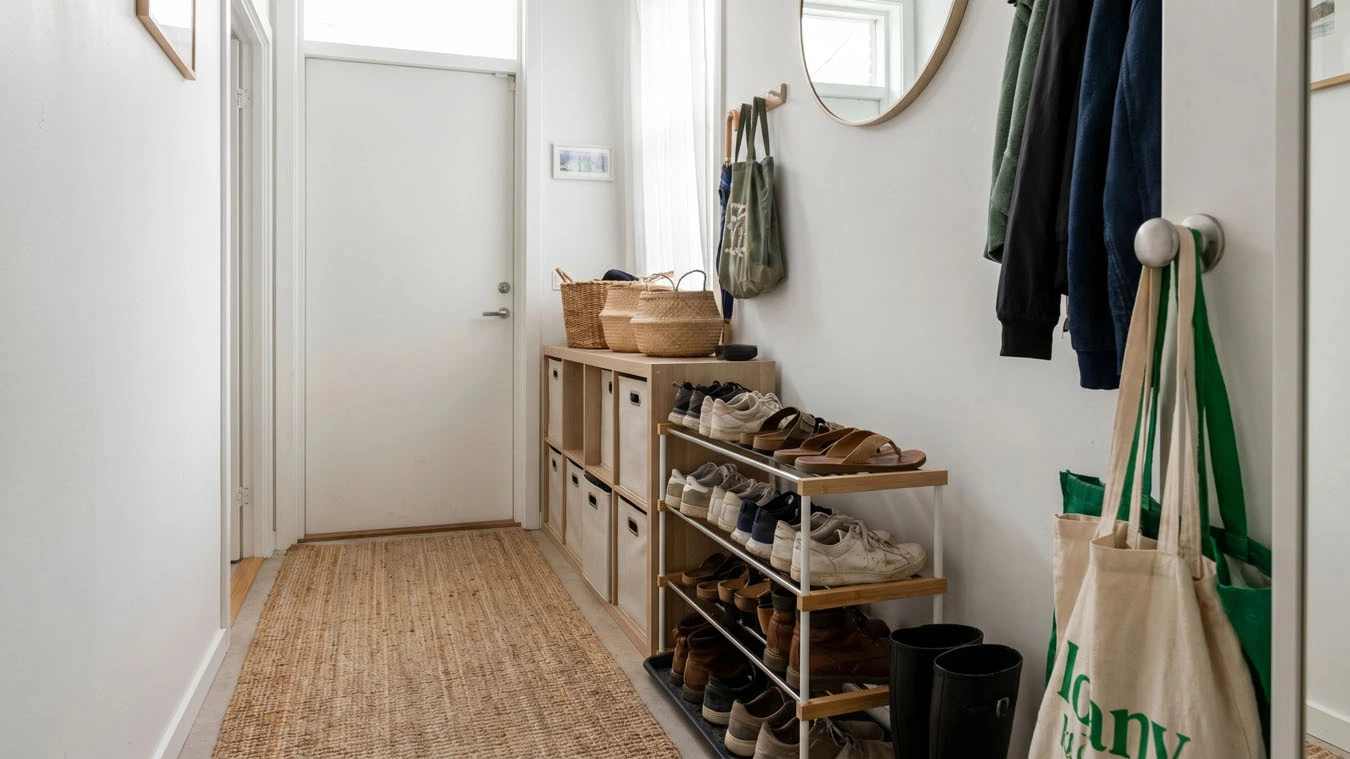
Tiered Shoe Rack provides shoe organization system in a compact 1-bedroom apartment entryway / hallway.
Seasonal closet rotation should not focus only on clothing. Shoes, scarves, hats, gloves, and seasonal accessories often consume a surprising amount of space in small apartments. Without proper organization, these items quickly create visual clutter and overcrowded entryways.
Rotating footwear seasonally is particularly important in climates with major weather shifts. Heavy winter boots occupy large amounts of floor and closet space during warmer months when they are not needed. Storing them inside labeled bins or dedicated shoe organizers helps free up valuable room for current-season footwear.
Accessories should also follow a categorized storage system. Cold-weather items such as gloves and scarves can move into compact bins during summer, while summer hats and lightweight accessories become more accessible. This prevents drawers and shelves from becoming overfilled with rarely used items.
For renters struggling with limited shoe storage, combining seasonal rotation with vertical shoe storage for apartments can dramatically reduce clutter near entrances and closets. Entryways remain cleaner, and daily routines become more efficient when only actively used footwear remains accessible.
Maintaining a Seasonal Rotation System Year-Round
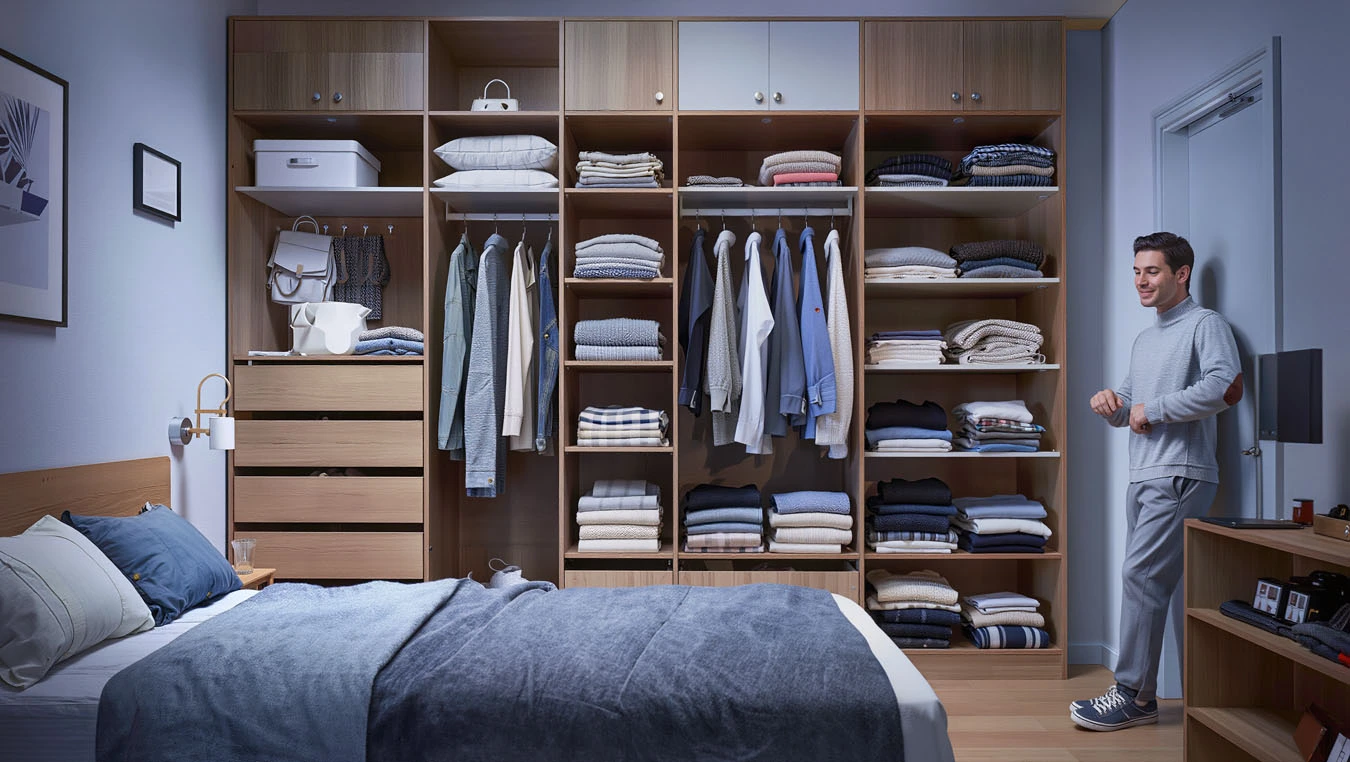
Mixed Modular System (open + Closed) provides clothing & wardrobe overflow in an average 1-bedroom rental.
The biggest reason seasonal rotation systems fail is inconsistency. Many renters perform a major closet cleanout, but eventually allow clutter to build up again. Maintaining a successful system requires small ongoing adjustments throughout the year rather than occasional extreme reorganizations.
One effective habit is scheduling seasonal wardrobe reviews at predictable intervals. Early spring and early fall are usually ideal transition periods because temperatures begin changing significantly. These reviews allow renters to swap clothing gradually while reassessing storage needs based on current lifestyle habits.
Storage labels are another important long-term strategy. Clear labeling reduces confusion and prevents bins from becoming mixed or disorganized. Categories such as “Winter Sweaters,” “Summer Athletic Wear,” or “Cold Weather Accessories” make future rotations faster and more manageable.
Maintaining visual simplicity is equally important. Apartments feel more spacious when storage systems remain clean and intentional. Pairing wardrobe rotation with broader apartment organization systems, such as small apartment organization and storage solutions, helps create a more cohesive and sustainable living environment overall.
Renter-Friendly Storage Systems That Support Seasonal Rotation
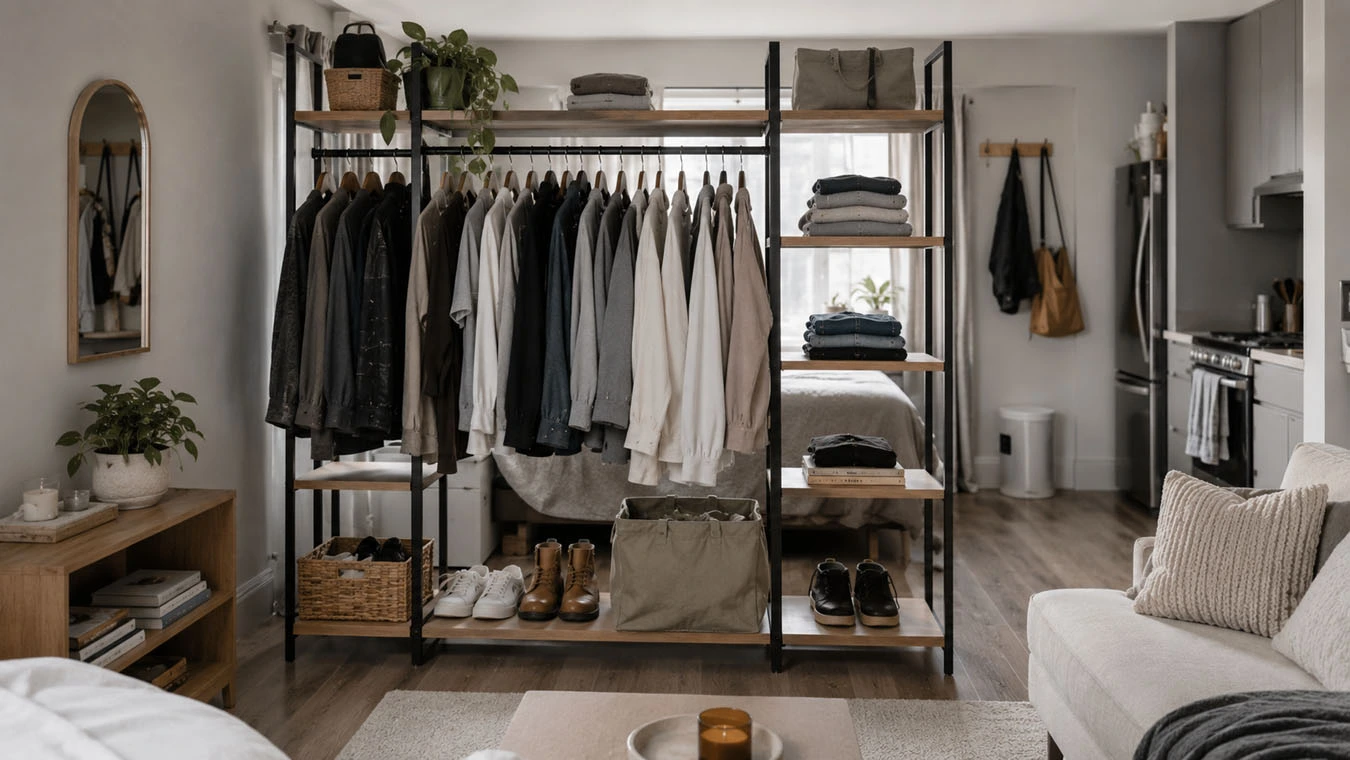
Freestanding Garment Rack With Shelves provide clothing & wardrobe overflow in a open-concept small apartment studio apartment main.
Many renters hesitate to invest in storage systems because they cannot install permanent closet modifications. Fortunately, seasonal closet rotation apartment strategies work extremely well with temporary modular storage systems designed specifically for rental spaces.
Freestanding garment racks with shelving are particularly useful in apartments with limited built-in closet space. These systems provide extra hanging capacity while also supporting bins for folded seasonal items. Because they are movable and damage-free, they adapt easily to changing apartment layouts.
Stackable cube organizers also work well for seasonal storage. Fabric bins inside cubes create hidden storage zones for off-season clothing while maintaining a cleaner visual appearance. These systems are especially effective in studio apartments where storage often remains visible within the living space.
For renters trying to maximize flexibility, combining modular systems with modular storage for small apartments and wardrobe alternatives for small apartments can create a much more adaptable long-term storage setup.
Conclusion
Creating a seasonal closet rotation apartment system is one of the most effective ways to improve storage efficiency in small living spaces. Instead of forcing every clothing item into an already crowded closet, rotating wardrobes seasonally allows renters to simplify organization while improving accessibility. Closets become easier to maintain, clothing becomes easier to find, and apartments feel less visually cluttered overall.
Effective off season clothing storage small space solutions do not require expensive renovations or custom cabinetry. Under-bed storage, vertical shelving, modular wardrobe systems, and labeled storage bins can all work together to create a practical renter-friendly system. The key is consistency, thoughtful categorization, and making sure only current-season items occupy prime closet space.
By combining wardrobe rotation tips with modular organization systems and vertical storage strategies, renters can dramatically improve the functionality of even the smallest apartment closets. Over time, seasonal rotation becomes less of a chore and more of a simple maintenance routine that keeps the entire apartment more organized year-round.
For a complete system, explore closet wardrobe optimization for small apartments, or continue with small apartment storage ideas that actually work and storage solutions for small apartments.
Want to build a more organized apartment without sacrificing space? Explore more renter-friendly storage systems, wardrobe organization ideas, and modular apartment solutions designed specifically for small-space living.


