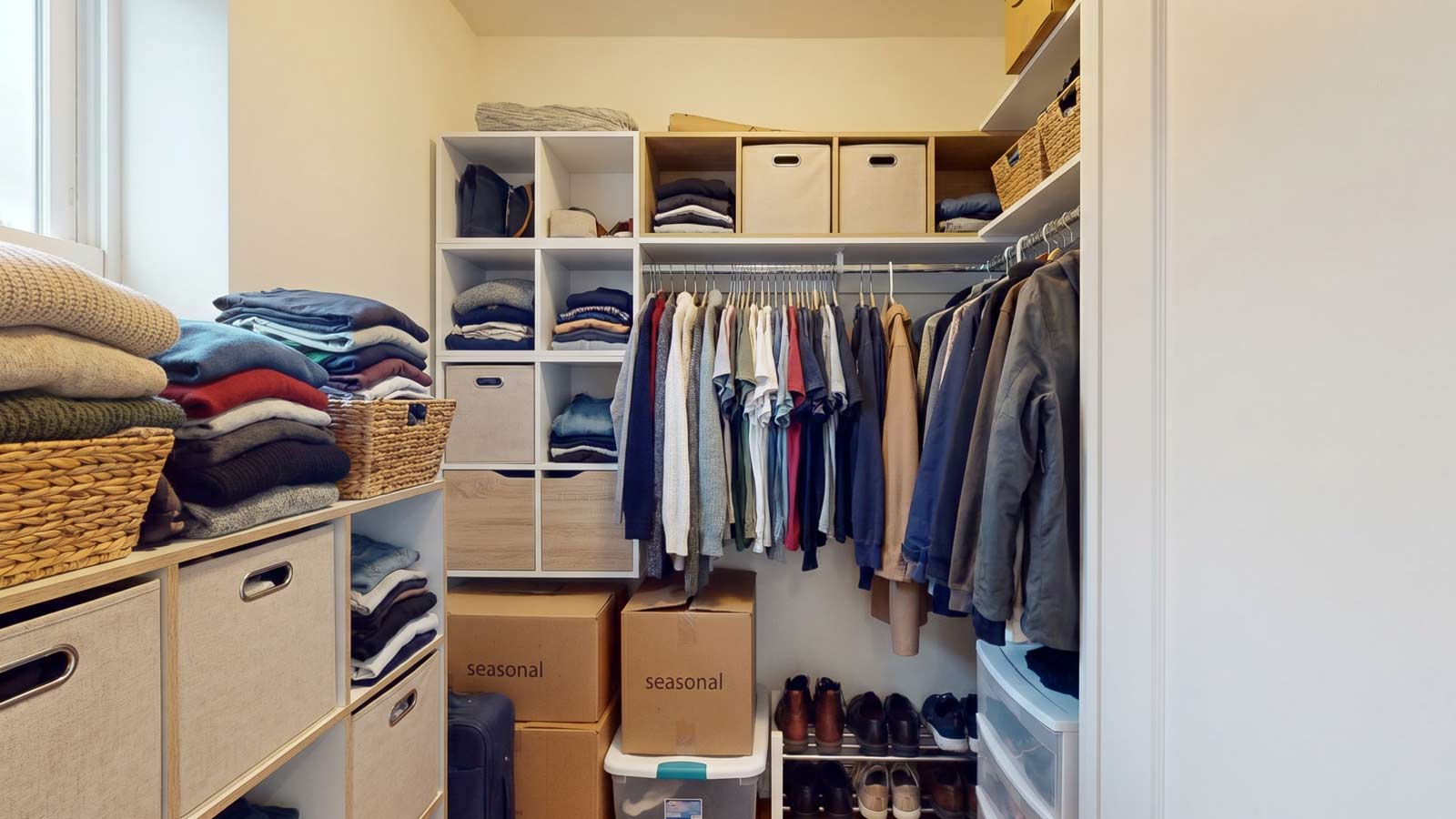
Small Closet Organization Systems That Actually Work in Apartments
If your closet feels more like a cramped storage box than a functional space, you’re not alone. Many renters struggle with limited storage, awkward layouts, and zero flexibility when it comes to modifying their space. A well-designed small closet organization system can completely change how your apartment functions—without requiring renovations or permanent installations.
In compact living environments across the USA and Canada, traditional closet setups rarely meet real storage needs. Whether you’re dealing with a narrow reach-in closet or a shared wardrobe, the key is using apartment closet systems that are modular, renter-friendly, and adaptable. The goal isn’t just to fit more items—it’s to create a system that keeps everything accessible and organized.
In this guide, you’ll learn how to build a practical compact closet storage system step by step. From vertical layering to modular components, these strategies are designed specifically for small apartments. For a full wardrobe strategy, you can also explore closet wardrobe optimization for small apartments.
Start With a Zoning Strategy Inside Your Closet
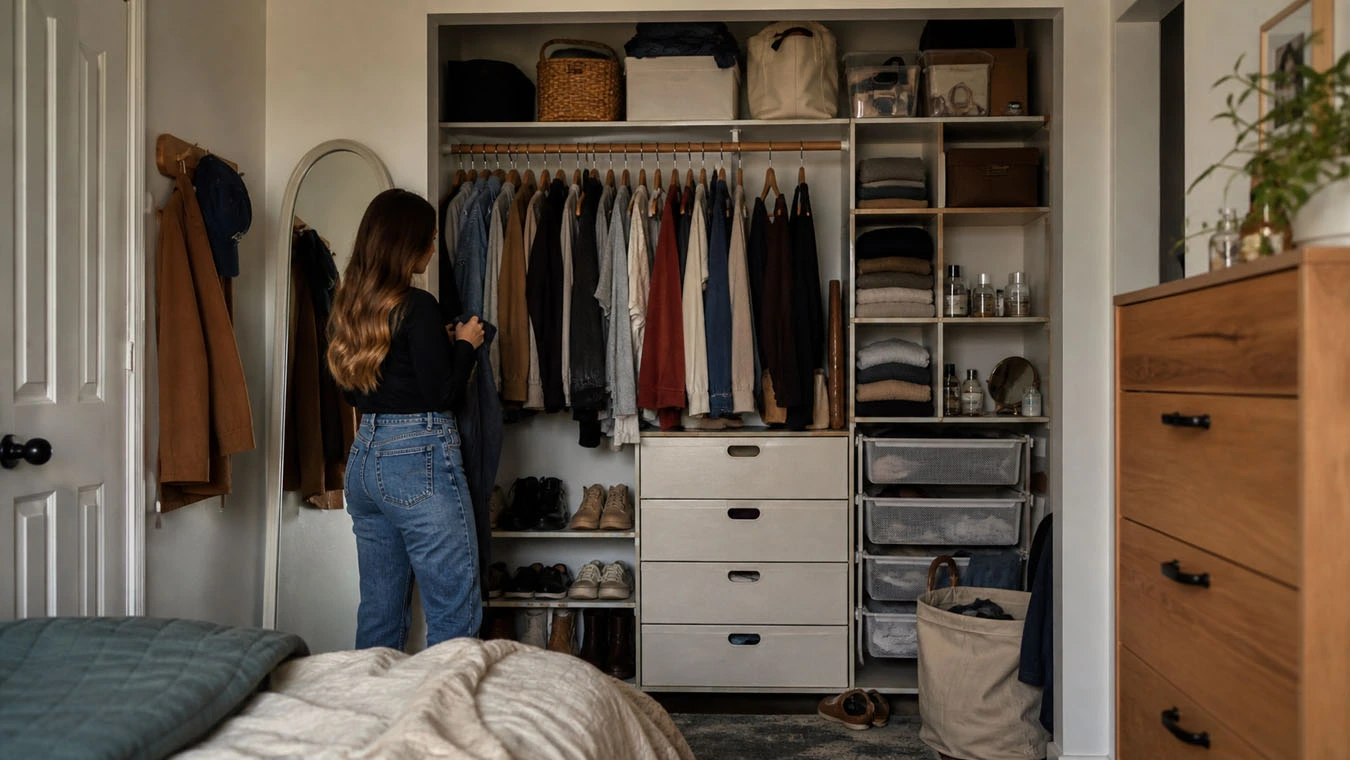
Mixed Modular System (open + Closed) provides clothing & wardrobe overflow in a compact 1-bedroom apartment closet interior.
The most effective small closet organization system always starts with zoning. Instead of treating your closet as one large space, break it down into functional areas: hanging, folded storage, accessories, and seasonal overflow. This approach eliminates clutter buildup and makes it easier to maintain order long-term.
In a typical apartment closet, the upper rod is often underutilized. By assigning specific zones—such as everyday wear at eye level and seasonal items higher up—you create a system that aligns with your daily habits. This is especially useful in compact closet storage setups where accessibility matters just as much as capacity.
Zoning also helps reduce decision fatigue. When each category has a designated space, you spend less time searching and more time using your closet efficiently. It’s a simple shift in mindset that transforms even the smallest closets into structured systems.
Use Vertical Space to Double Your Storage Capacity
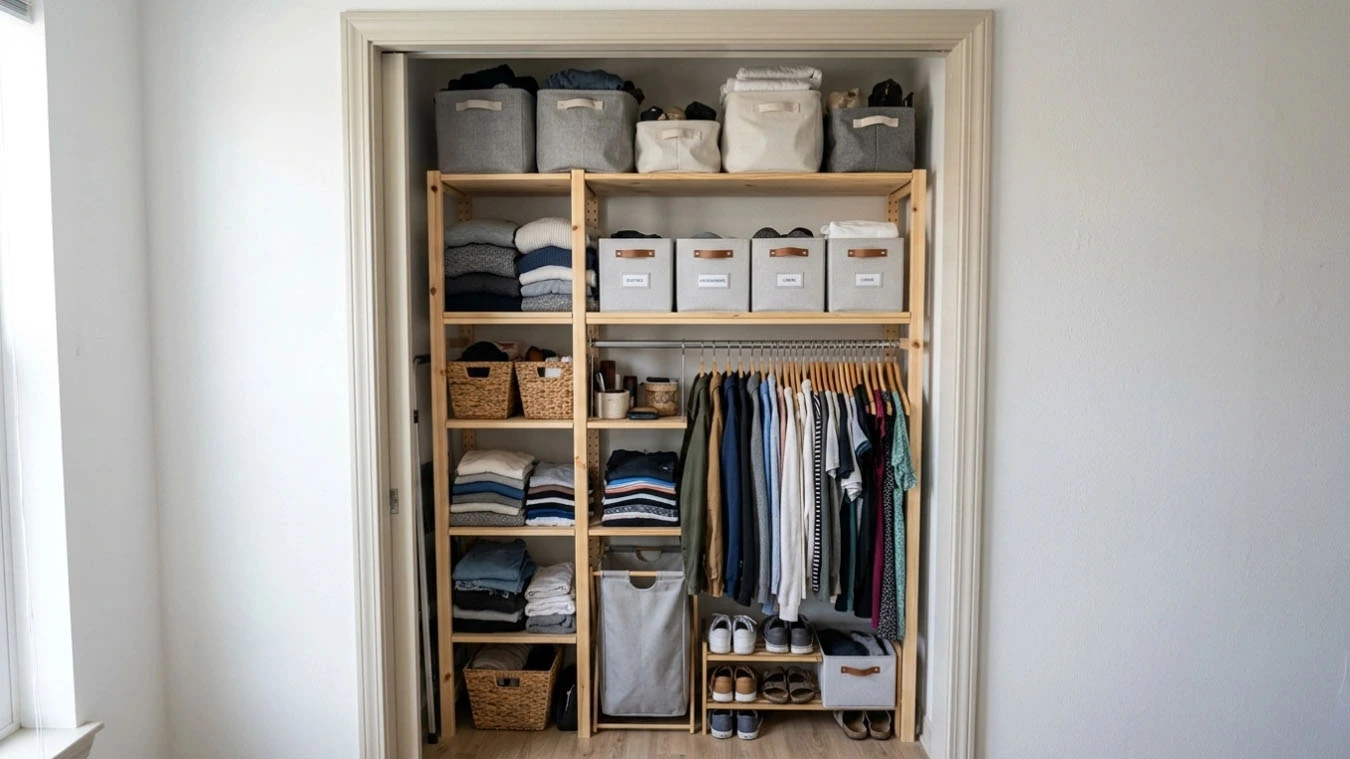
Freestanding Vertical Shelving provides overhead vertical storage in a small studio apartment closet interior.
Vertical space is the most underused asset in apartment closets. Most closets stop at a single rod, leaving significant space above unused. By introducing vertical systems—like stacked shelves or tall storage towers—you can effectively double your storage without expanding your footprint.
This strategy works particularly well in small apartments where floor space is limited. Instead of adding bulky furniture, vertical storage allows you to build upward. Solutions like stackable bins or narrow shelving units integrate seamlessly into existing closet structures.
If you want to expand beyond the closet itself, consider applying similar principles from vertical storage ideas for small apartments. The same logic applies—maximize height, minimize footprint, and keep items within reach.
Over time, vertical organization creates a layered system where every inch is functional. The result is a closet that feels larger, even though its dimensions haven’t changed.
Add Modular Components That Adapt to Your Needs
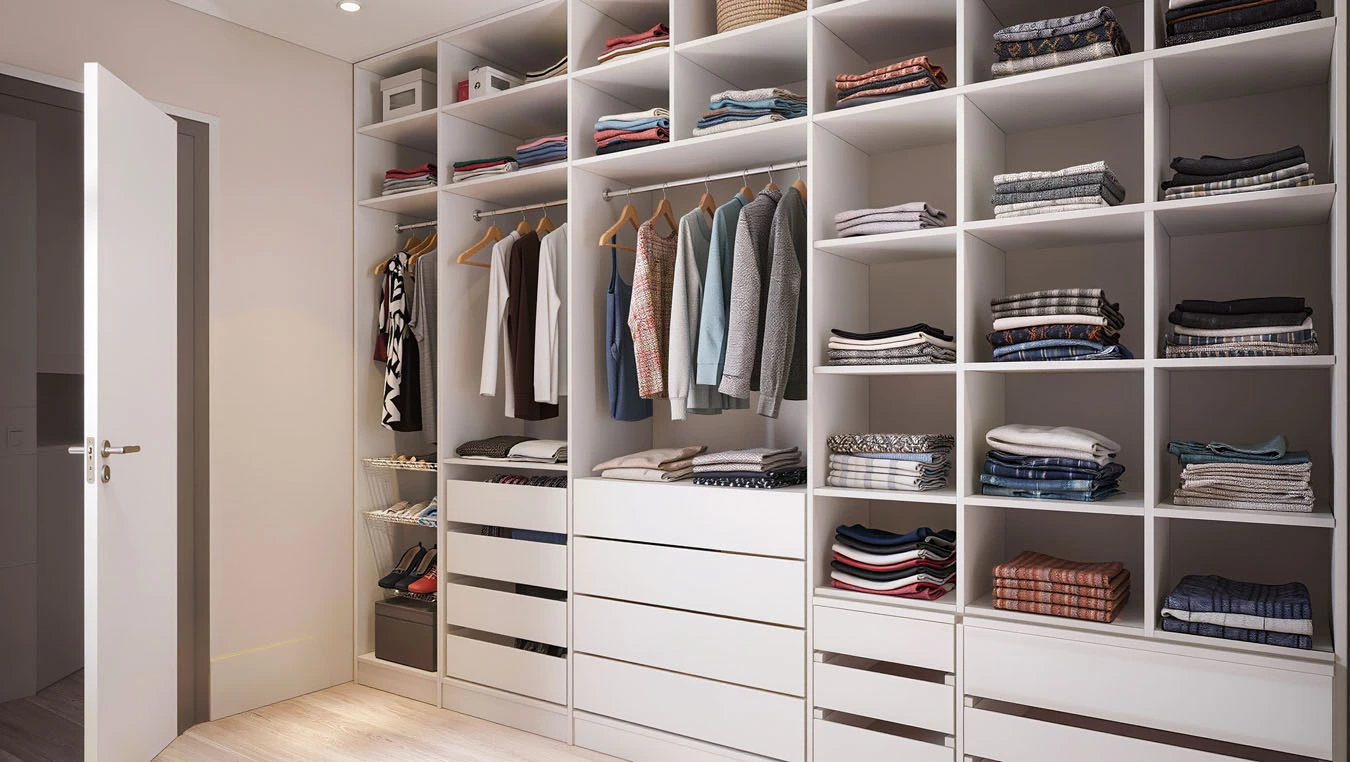
Modular Drawer Blocks provide clothing & wardrobe overflow in a average 1-bedroom rental closet interior.
A rigid closet setup rarely works in a small apartment. Your storage needs change depending on seasons, lifestyle, and even daily routines. That’s why modular systems are essential for any effective apartment closet system.
Modular drawer blocks, adjustable shelves, and stackable organizers allow you to reconfigure your closet as needed. Instead of committing to a fixed layout, you can adapt your system to accommodate bulkier winter clothing or lighter summer wardrobes.
This flexibility is especially valuable in rental spaces where permanent upgrades aren’t an option. By choosing modular solutions, you maintain full control over your layout without violating lease restrictions. For more adaptable setups, explore modular storage systems for small apartments.
Over time, modularity ensures your closet evolves with your needs, rather than becoming outdated or inefficient.
Maximize Hanging Space With Dual Rod Systems
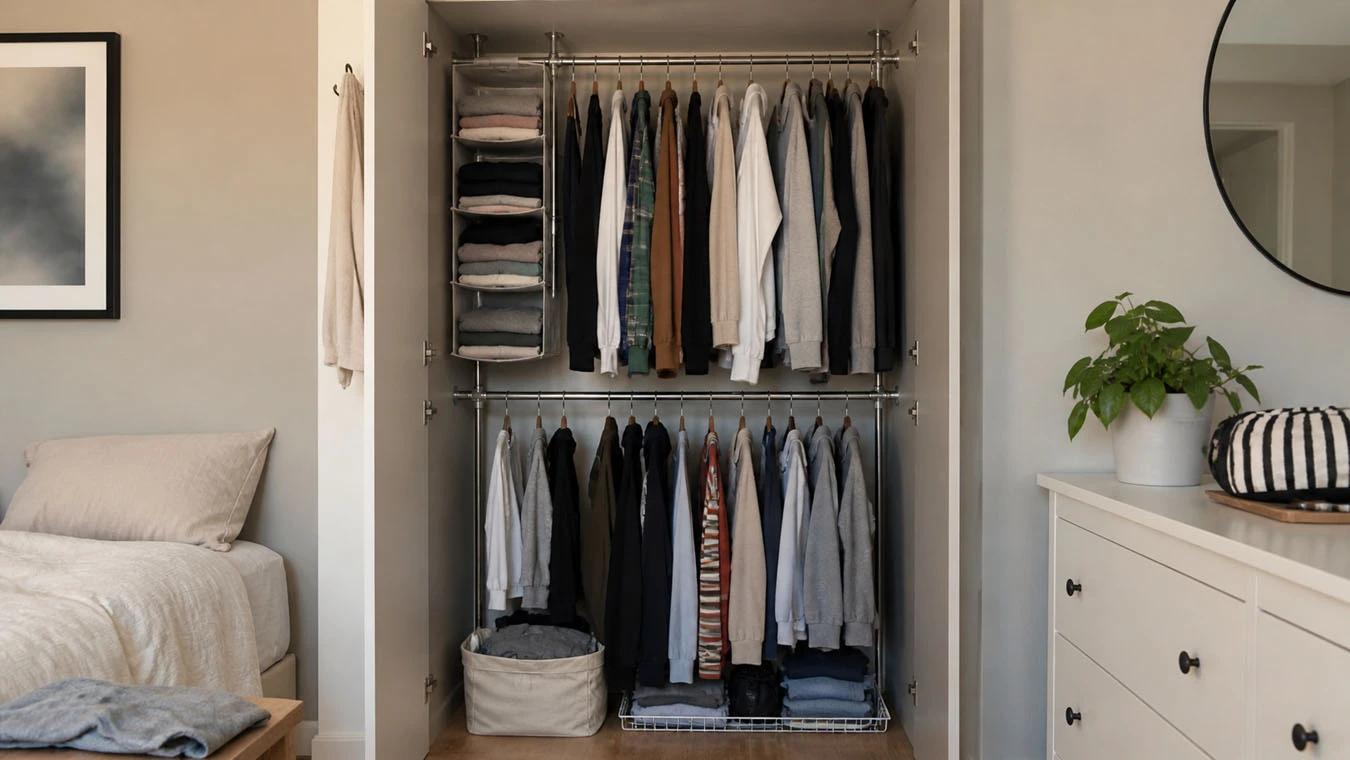
Dual Tension Rod Divider provides clothing & wardrobe overflow in a compact 1-bedroom apartment closet interior.
One of the simplest ways to improve a small closet organization system is by doubling your hanging space. A dual rod system allows you to separate shorter garments—like shirts and folded pants—from longer items such as dresses or coats.
This approach instantly increases capacity without requiring additional square footage. It’s particularly effective in apartments where closet height is limited but still sufficient to accommodate two tiers of hanging storage.
Tension rod systems are ideal for renters because they require no drilling or permanent installation. They can be adjusted or removed at any time, making them both practical and flexible.
By reorganizing how items hang, you create a more efficient layout that reduces overcrowding and improves visibility.
Incorporate Door and Wall-Based Storage Solutions
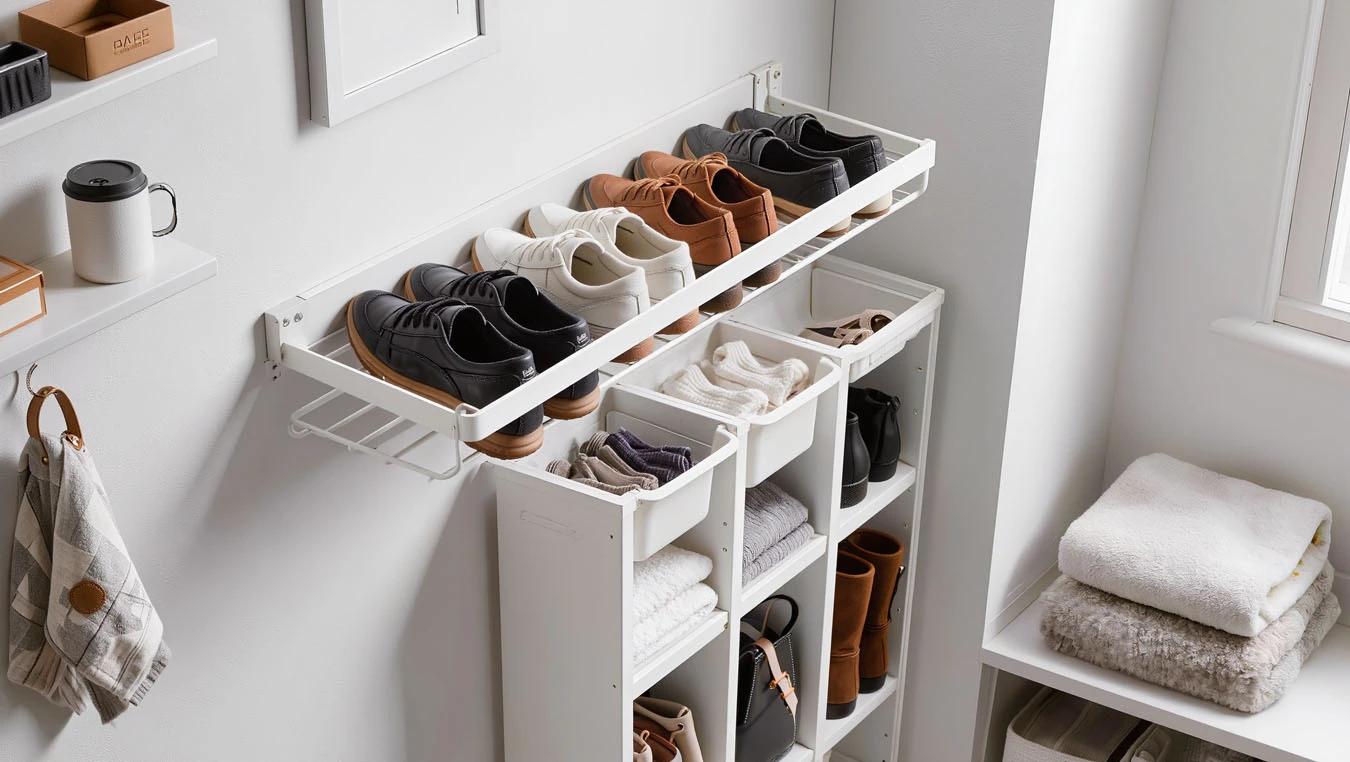
Over-The-Door Rack provides shoe organization system in a small studio apartment closet interior.
Closet doors are often overlooked, but they offer valuable storage potential. Over-the-door racks and hanging organizers can store shoes, accessories, or even folded clothing without taking up internal space.
This is especially helpful in tight closets where every inch counts. By moving smaller items onto the door, you free up shelf and rod space for bulkier items. It’s a simple addition that delivers immediate results.
If you want to expand this concept beyond closets, check out over-the-door storage solutions for apartments. These systems can be applied throughout your apartment for consistent organization.
When combined with internal zoning and vertical storage, door-based solutions create a fully optimized system.
Use Shelf Dividers and Bins to Control Clutter
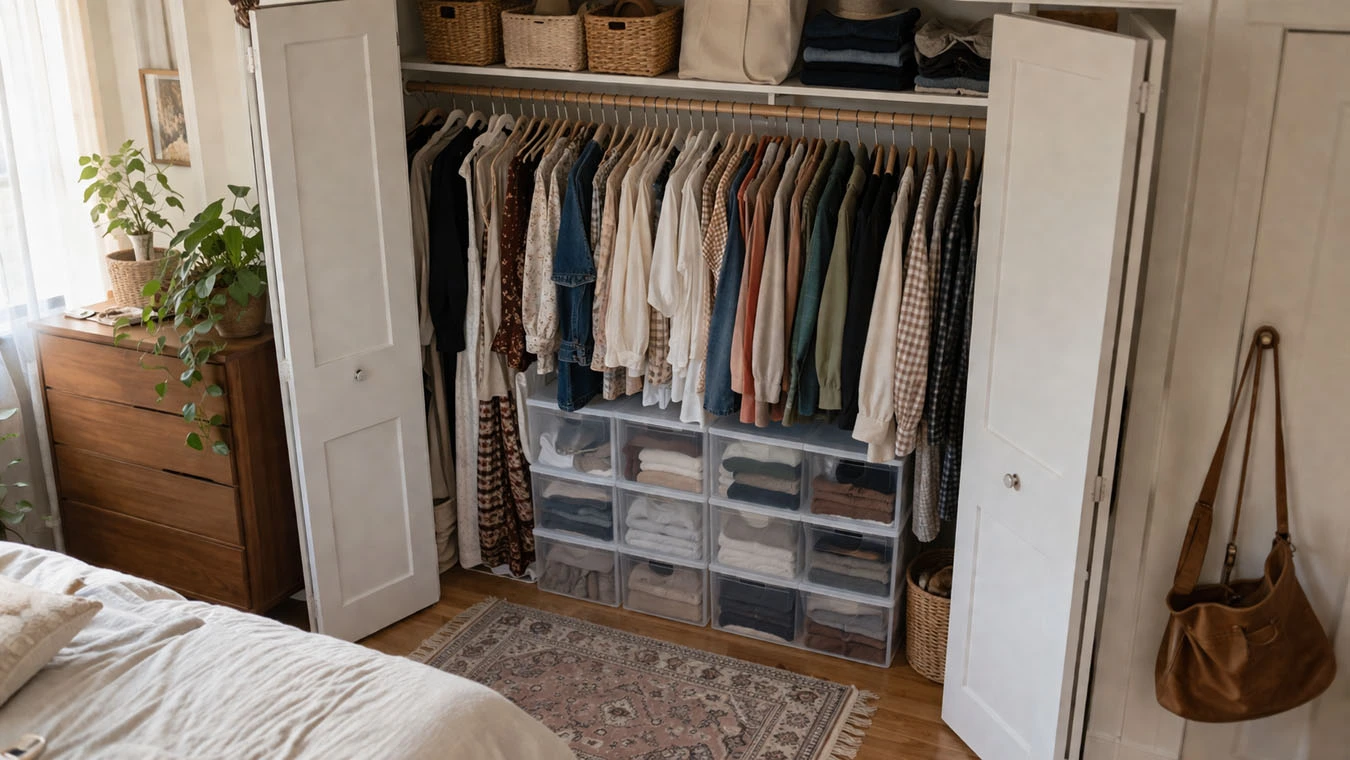
Stackable Clear Storage Boxes provide clothing & wardrobe overflow in a average 1-bedroom rental closet interior.
Even the best closet system can fail if items aren’t contained properly. Shelf dividers and storage bins help maintain structure by preventing piles from collapsing or mixing together.
Clear storage boxes are particularly useful because they allow you to see contents without opening them. This reduces unnecessary handling and keeps your system intact over time. Fabric bins, on the other hand, offer a softer aesthetic while still maintaining organization.
These tools are essential for managing compact closet storage, especially when dealing with limited shelf space. They create boundaries that keep items in place and easy to access.
Over time, this level of control minimizes clutter and ensures your closet stays functional.
Related Storage Ideas
Build a System That Works for Your Lifestyle
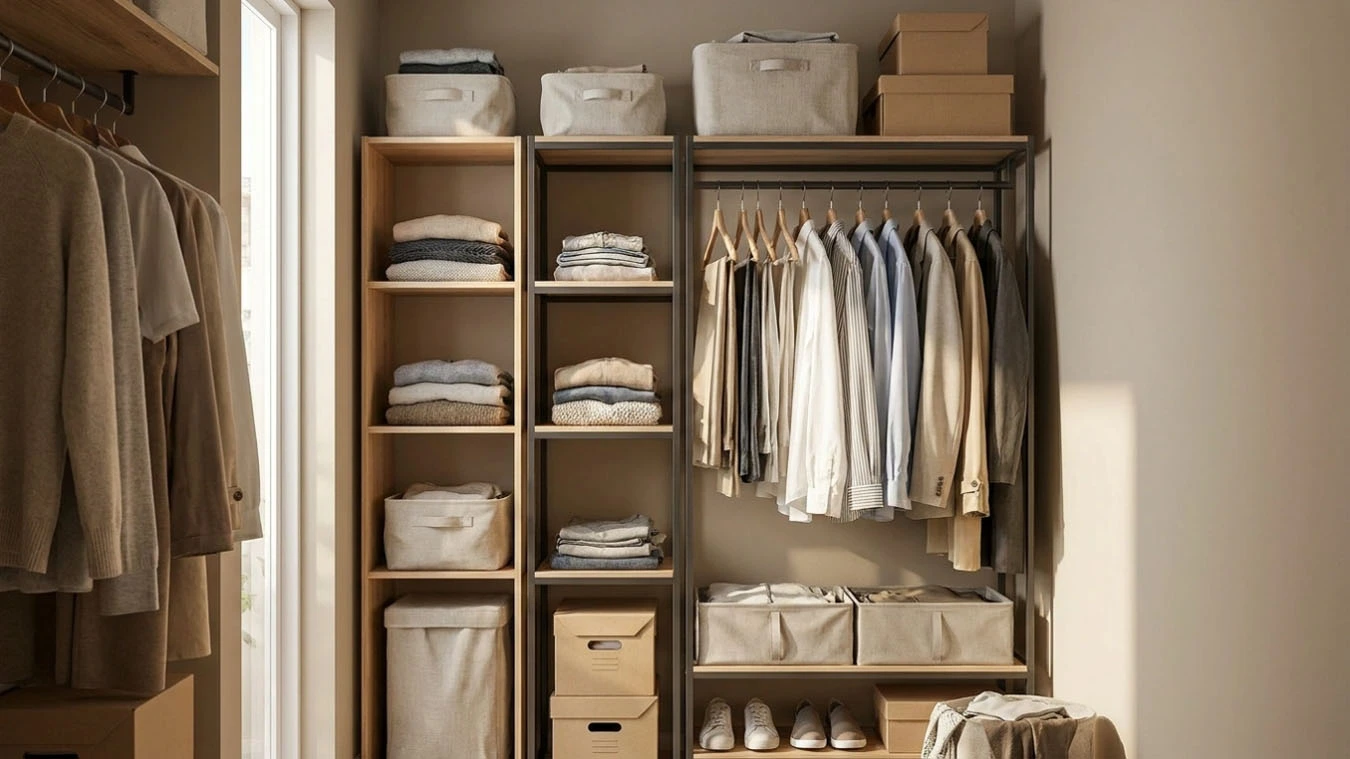
Mixed Modular System (open + Closed) provides clothing & wardrobe overflow in a compact 1-bedroom apartment closet interior.
The best small closet organization system is one that fits your lifestyle, not just your space. If you frequently rotate outfits, prioritize accessibility. If you store seasonal items, focus on vertical and hidden storage.
Your daily habits should guide your layout. For example, placing frequently used items at eye level reduces friction and improves efficiency. Less-used items can be stored higher or in bins.
This personalized approach ensures your closet remains functional over time. It also makes it easier to maintain, since everything has a logical place.
When all components—zoning, vertical storage, modular systems, and containment—work together, your closet becomes a streamlined, high-performance storage system.
Conclusion
Creating an effective small closet organization system isn’t about buying more storage—it’s about using space intelligently. By combining zoning, vertical layering, modular components, and renter-friendly solutions, you can transform even the smallest closet into a functional system.
For apartment dwellers in the USA and Canada, flexibility is key. Your closet should adapt to your needs, not the other way around. With the right approach, apartment closet systems can deliver both efficiency and simplicity.
Once you apply these strategies, your closet becomes more than storage—it becomes a system that supports your daily life.
For a complete system, explore closet wardrobe optimization for small apartments, or continue with small bedroom closet organization ideas.
Ready to upgrade your space? Start implementing these strategies today and build a closet system that actually works for your apartment.


