
Closet Organization for Couples for Small Apartments
Sharing a small apartment closet as a couple can quickly become frustrating when clothing, shoes, accessories, and seasonal items start competing for limited space. Without a proper system, even an organized closet can become overcrowded within weeks. Many renters struggle with balancing two wardrobes inside one compact storage area while still maintaining accessibility and visual order.
Creating an effective shared closet organization small apartment system requires more than simply adding extra bins or hangers. Couples need zoning strategies, storage hierarchy, vertical optimization, and realistic renter-friendly solutions that adapt to everyday routines. The challenge becomes even more important in apartments where closet space is limited or shared wardrobes spill into bedrooms and living areas.
Fortunately, practical couple closet storage ideas can dramatically improve functionality without requiring expensive renovations or permanent modifications. By combining modular systems, wardrobe planning, and smart storage layering, couples can create a closet setup that feels organized instead of cramped. If you are building a complete apartment storage strategy, explore our closet wardrobe optimization guide for small apartments for a full system approach.
Create Separate Closet Zones for Each Partner
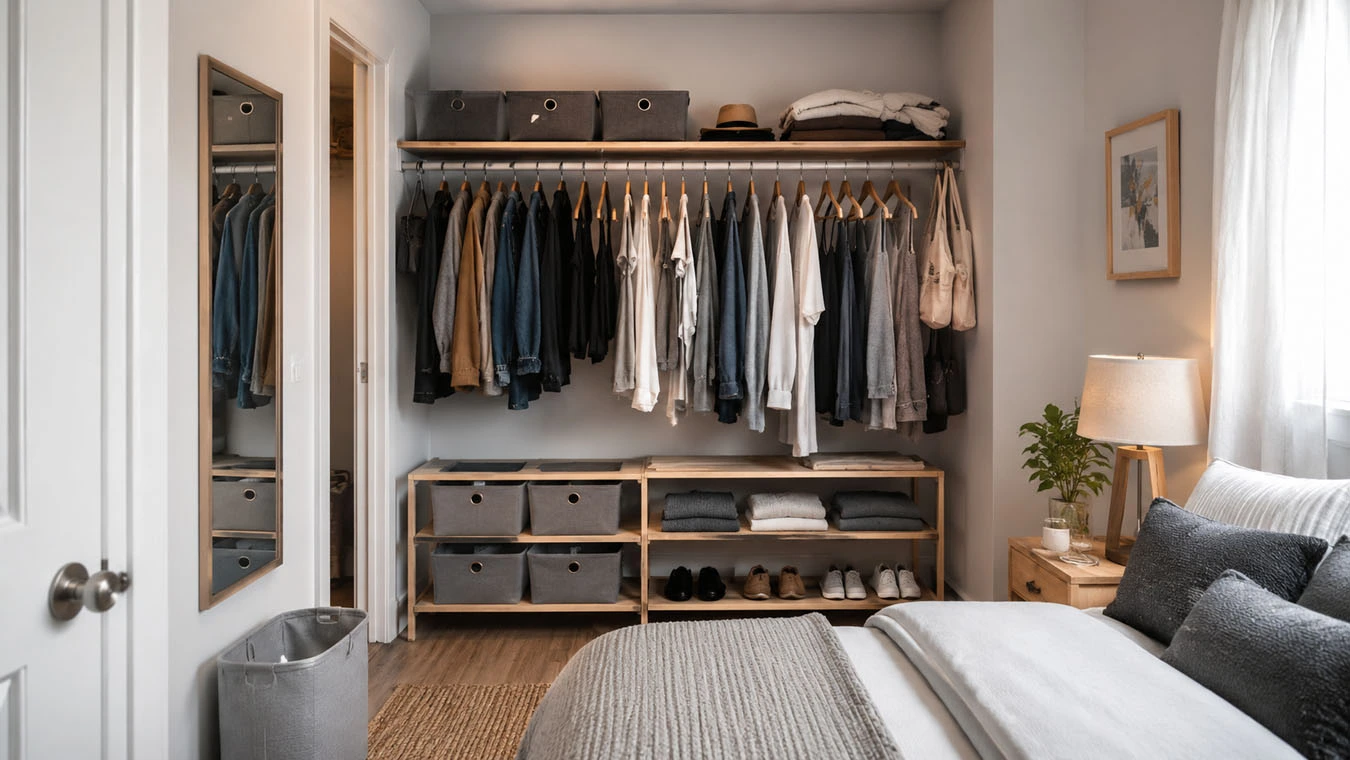
Expandable Closet Rods provide clothing & wardrobe overflow in a compact 1-bedroom apartment closet interior.
One of the most effective strategies for organizing a shared closet is assigning dedicated zones for each partner. Even in a small apartment, dividing the closet into clearly defined sections helps eliminate overlap, confusion, and clutter buildup. Couples who share shelves randomly often waste valuable space because clothing categories become mixed together and difficult to maintain consistently.
A practical setup usually starts by separating hanging space, shelving, and accessory storage according to each person’s wardrobe habits. One partner may require longer hanging space for dresses or coats, while the other may benefit from double-hanging rods for shirts and folded pants. Customizing zones based on actual clothing volume creates a more balanced and functional layout instead of forcing a symmetrical but inefficient system.
Using renter-friendly dividers, shelf organizers, and labeled storage bins can make the separation feel intentional rather than temporary. Many couples also benefit from assigning shared zones for seasonal items or overflow pieces that rotate throughout the year. This approach works especially well in apartments where storage flexibility matters more than built-in cabinetry.
If your closet feels especially tight, pairing these zoning strategies with small closet organization systems for apartments can help maximize every inch of available vertical and horizontal space.
Use Vertical Space to Double Storage Capacity

Small Studio Apartment Open Closet / Wardrobe Wall Vertical Hanging Storage
Many couples focus only on horizontal closet space while completely ignoring vertical storage opportunities. In small apartments, unused upper shelving and dead air space above hanging rods represent valuable storage potential. Maximizing height is often the difference between an overflowing shared closet and a system that feels manageable long term.
Adding stackable shelves, hanging organizers, or narrow vertical towers can dramatically improve storage density without making the closet feel visually overwhelming. Vertical systems work especially well for folded clothing, handbags, sweaters, workout gear, and accessories that otherwise consume prime hanging space. Couples who organize vertically often reduce daily clutter because every category has a defined location.
Expandable closet rods are another highly effective solution for shared wardrobes. Adding a secondary rod instantly creates more hanging capacity for shorter garments like shirts, jackets, or skirts. This is particularly useful when one partner owns more hanging items than the other. Apartment renters benefit because most rod systems can be installed without damaging walls or modifying existing closet structures.
For additional inspiration, explore these vertical storage ideas for small apartments and practical closet rod extender solutions that work especially well in compact shared wardrobes.
Reduce Closet Overcrowding With Capsule Wardrobe Planning
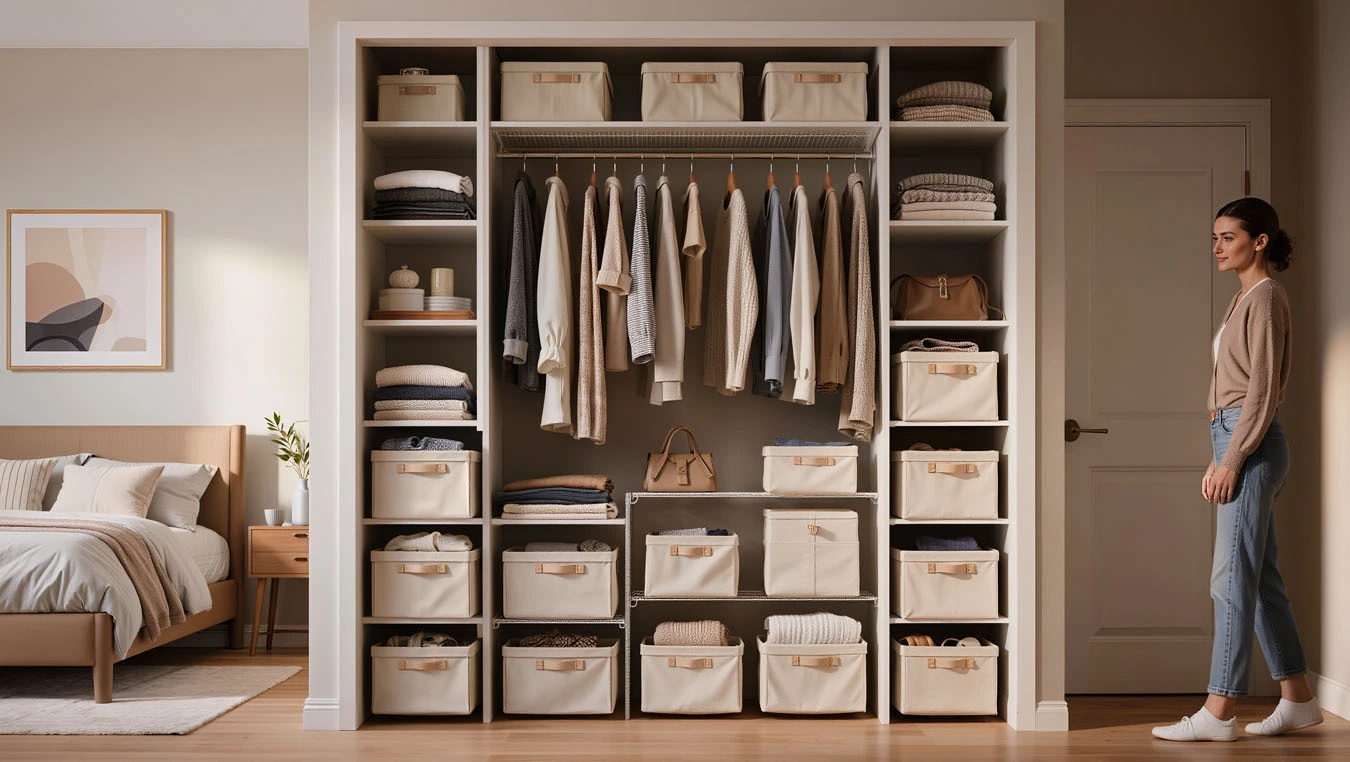
Average 1-Bedroom Rental Closet Interior Clothing & Wardrobe Overflow
Even the best closet systems eventually fail if too many clothing items compete for limited storage space. Couples living in small apartments often accumulate duplicate clothing categories, oversized seasonal collections, or rarely worn items that consume valuable real estate. Simplifying wardrobes can dramatically improve organization while making everyday routines faster and less stressful.
A capsule wardrobe approach does not require extreme minimalism. Instead, it encourages couples to prioritize versatile pieces that fit daily lifestyles while reducing unnecessary duplicates. Shared closet organization becomes much easier when both partners maintain realistic clothing volume relative to the actual storage available inside the apartment.
Rotating seasonal clothing also helps prevent overcrowding. Winter coats, heavy sweaters, or summer vacation items do not need to remain fully accessible year-round. Storing off-season clothing in under-bed containers or upper closet bins creates breathing room inside the primary wardrobe area while keeping everything organized and accessible when needed.
Many renters combine wardrobe simplification with modular storage systems to maintain visual consistency throughout the closet. If you are looking for more strategies to reduce clothing overflow, our guide on capsule wardrobes for small apartments offers practical renter-friendly methods that work in compact shared spaces.
Optimize Shared Shoe Storage Without Blocking Floor Space
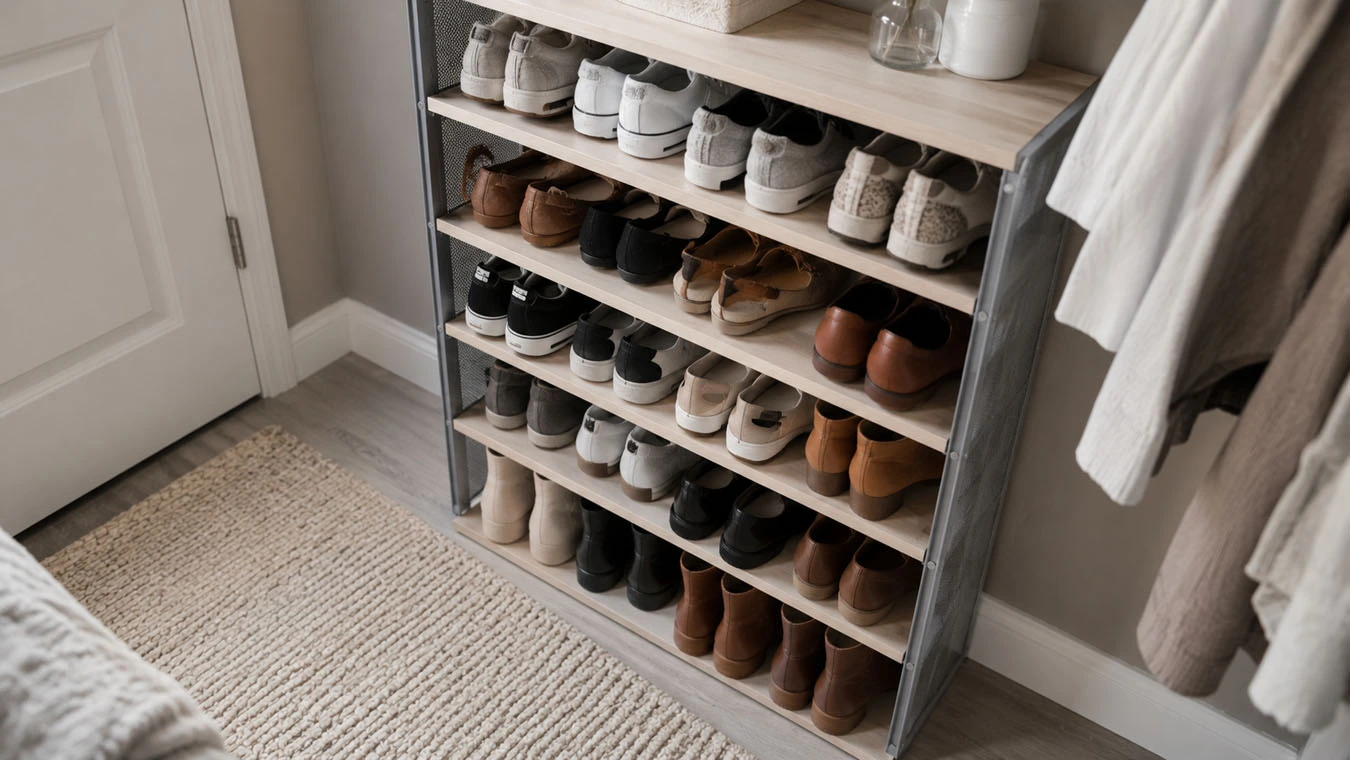
Tiered Shoe Rack provides shoe organization system in a compact 1-bedroom apartment closet interior.
Shoes are one of the biggest causes of closet congestion for couples living in apartments. Without a dedicated system, footwear often spreads across closet floors, entryways, and bedroom corners, making shared spaces feel smaller and more chaotic. The key is creating a shoe storage setup that maintains accessibility while minimizing floor obstruction.
Tiered vertical shoe racks are especially effective in narrow closets because they utilize height instead of width. Couples can assign separate shelves while still keeping the system visually cohesive. Clear stackable bins also work well for seasonal footwear or special occasion shoes that do not require daily access.
Another smart strategy involves relocating part of the shoe collection outside the closet entirely. Slim entryway cabinets, under-bed storage containers, or over-the-door organizers can reduce closet pressure significantly. This is particularly useful for apartments where the shared wardrobe already lacks adequate hanging space.
Renters with limited closet depth often benefit from combining shoe systems with vertical shelving or modular cube units. To expand your setup further, explore these shoe storage ideas for small closets and vertical shoe storage solutions for apartments.
Related Storage Ideas:
- Under Bed Storage Ideas for Small Apartments
- Over-the-Door Storage Solutions for Apartments
- Wall Storage Ideas for Small Apartment Bedrooms
Use Modular Systems That Adapt to Changing Needs
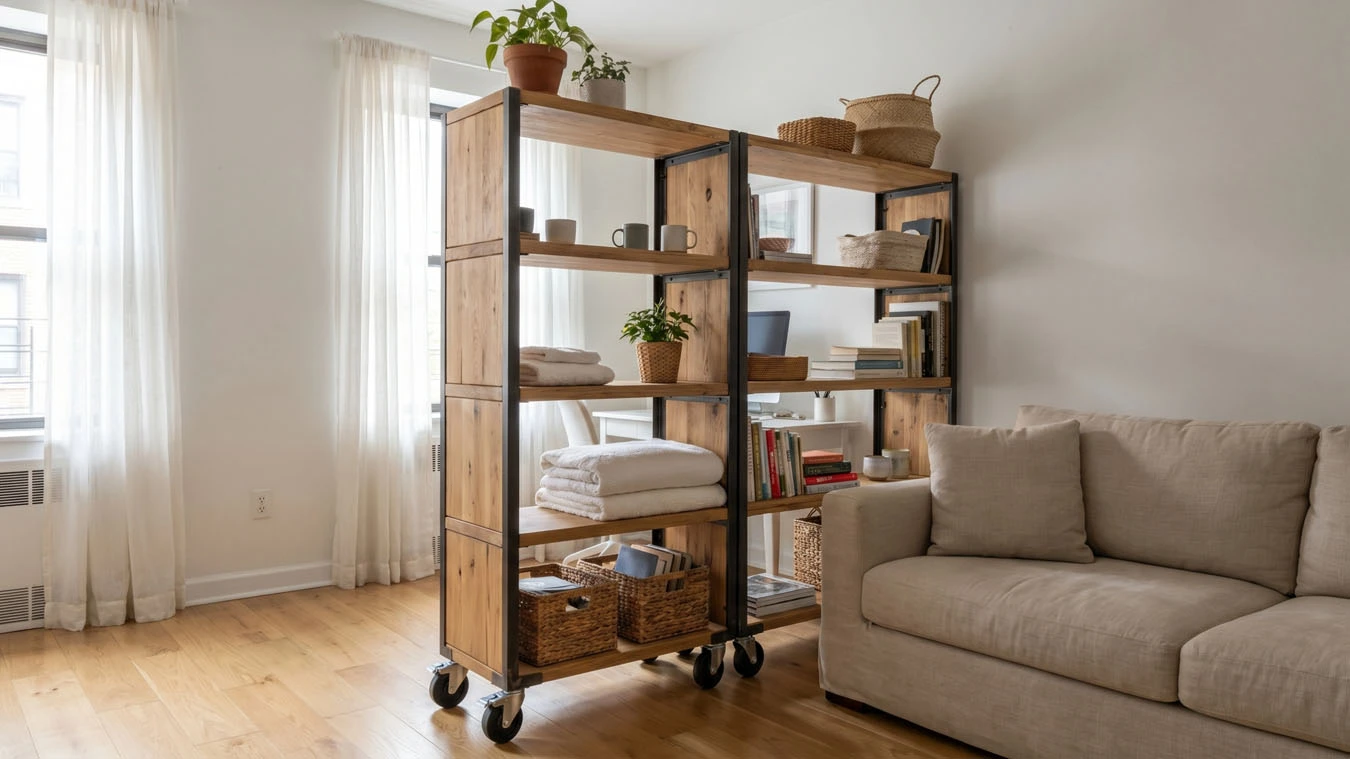
Rolling Modular Storage Units provide room divider + storage in a open-concept small apartment multi-use room divider.
Shared closet organization often changes over time as clothing habits, seasons, and apartment layouts evolve. Couples who rely on rigid storage systems frequently encounter problems when their needs shift. Modular storage offers a more flexible alternative because components can be rearranged, expanded, or relocated without major effort.
Rolling drawer units, adjustable shelving, and stackable cube systems allow couples to customize their wardrobe setup based on changing priorities. One partner may temporarily need additional workwear storage, while the other may require more seasonal organization. Modular systems make these adjustments possible without replacing the entire closet configuration.
This flexibility becomes especially valuable for renters because most modular units are freestanding and landlord-friendly. Couples can reconfigure layouts during moves or apartment upgrades without damaging walls or investing in permanent built-ins. Freestanding systems also work well when closets are unusually narrow, shallow, or awkwardly designed.
If your apartment storage needs extend beyond the closet itself, consider integrating wardrobe systems with broader apartment organization strategies. Our guides on modular storage for small apartments and small apartment storage solutions can help create a more cohesive organization system.
Manage Seasonal Clothing Before It Takes Over the Closet
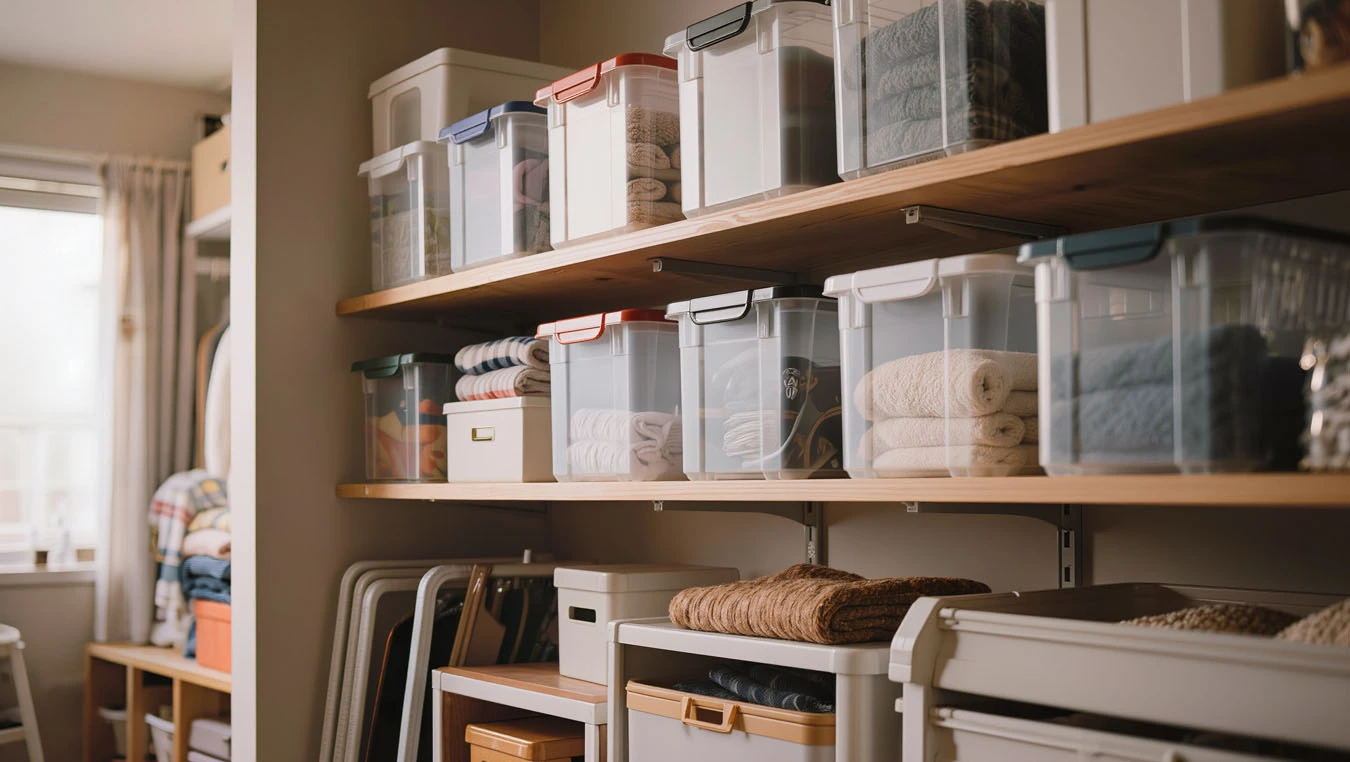
Closet Top-Shelf Storage Bins provide seasonal & bulk storage in a older rental with limited storage closet interior.
Seasonal clothing can overwhelm shared apartment closets surprisingly quickly. Winter jackets, boots, sweaters, and cold-weather accessories consume enormous amounts of space during warmer months, while summer clothing often becomes disorganized during winter. Couples who fail to rotate seasonal wardrobes typically experience constant overcrowding year-round.
Implementing a dedicated seasonal rotation system helps preserve daily accessibility inside the closet. Upper shelves, under-bed bins, and vacuum-sealed storage bags can temporarily house off-season items while maintaining organization. Labeling containers clearly prevents confusion and eliminates unnecessary digging when weather changes arrive.
Couples should also evaluate which seasonal items truly deserve permanent storage space. Duplicate outerwear, rarely used formalwear, or outdated clothing often contributes more clutter than value. Small apartments benefit from highly intentional wardrobe management because every square foot matters.
Creating a structured seasonal system works especially well when paired with ceiling-height storage or modular closet shelving. For additional ideas, explore these seasonal closet rotation systems and ceiling-height storage solutions for apartments.
Prevent Daily Clutter With Shared Closet Rules
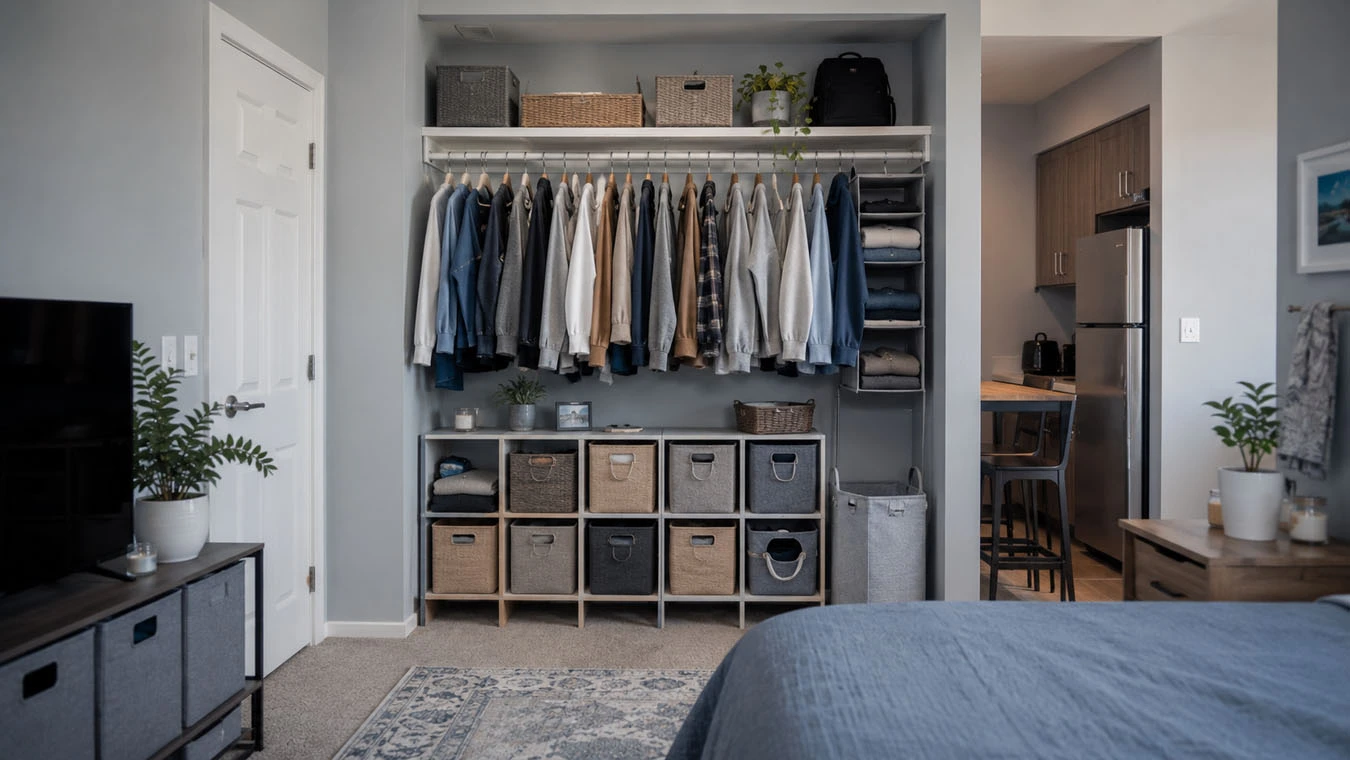
Average 1-Bedroom Rental Open Closet / Wardrobe Wall Decorative + Functional Hybrid Storage
Even well-designed storage systems eventually fail without consistent maintenance habits. Couples sharing a closet often develop clutter because items are returned inconsistently, laundry accumulates, or overflow clothing gets placed temporarily and never reorganized. Creating simple shared rules helps maintain long-term organization without constant frustration.
One effective strategy involves assigning dedicated drop zones for everyday items like work bags, jackets, or frequently worn shoes. This prevents random pileups that slowly consume valuable closet space. Couples can also establish weekly reset routines where misplaced items are reorganized before clutter becomes overwhelming.
Another useful habit is limiting overflow storage outside assigned zones. If one partner consistently exceeds their designated area, the system eventually becomes unbalanced and harder to maintain. Modular bins, shelf dividers, and labeled baskets help reinforce boundaries while still keeping the closet visually unified.
Shared organization becomes even more important in apartments with open wardrobes or limited built-in storage. If your apartment lacks sufficient closet infrastructure entirely, consider exploring wardrobe alternatives for small apartments and bedroom storage solutions without closets.
Conclusion
Creating an efficient shared closet organization small apartment system requires a combination of practical storage planning, realistic wardrobe management, and renter-friendly organization strategies. Couples who divide storage intentionally, maximize vertical space, and maintain consistent daily habits can dramatically improve functionality even inside compact apartment closets.
The most effective couple closet storage ideas focus on adaptability rather than perfection. Modular systems, seasonal rotation, shoe organization, and dedicated storage zones help prevent clutter while making shared living more comfortable. Small shared wardrobe tips become especially valuable in apartments where every square foot needs to serve multiple functions.
With the right combination of zoning, vertical optimization, and simplified wardrobe planning, couples can transform crowded closets into organized spaces that support everyday routines instead of creating daily frustration. Small apartments may have limited storage, but strategic organization can make shared living feel far more functional and manageable.
For a complete organization strategy, explore our closet wardrobe optimization guide for small apartments, or continue with small bedroom closet organization ideas and 50 small apartment storage ideas that actually work.
Looking for more renter-friendly storage strategies? Explore additional small apartment organization ideas and practical shared storage systems designed to help couples maximize limited space without sacrificing comfort or style.


