
Shoe Storage in Small Closets: Smart Apartment Shoe Organization Ideas That Save Space
Finding enough room for shoes in a small apartment closet can quickly become frustrating. Many renters deal with narrow closets, limited shelving, awkward floor layouts, and shared storage space that simply was not designed for modern shoe collections. Without a proper system, shoes often end up piled near entryways, stacked under clothing, or hidden in hard-to-reach corners that create clutter and waste valuable storage space.
Creating an effective shoe storage small closet setup is not about buying expensive custom cabinetry. In most apartments, the best solutions come from combining vertical organization, compact storage systems, and renter-friendly layouts that adapt to changing needs. Whether you are working with a compact bedroom closet or a shared apartment wardrobe, smart organization strategies can dramatically improve accessibility while keeping your closet visually cleaner and easier to maintain.
Many apartment renters also struggle with balancing daily footwear access and seasonal shoe storage. Boots, sneakers, sandals, work shoes, and formal footwear can easily overwhelm limited closet space if there is no dedicated organization method. By using practical systems like modular shelving, stackable racks, and vertical storage layouts, it becomes much easier to maintain long-term apartment shoe organization without sacrificing valuable living space. If you are building a complete closet strategy, it also helps to explore broader closet optimization solutions for small apartments.
Use Vertical Shoe Storage to Maximize Small Closet Space
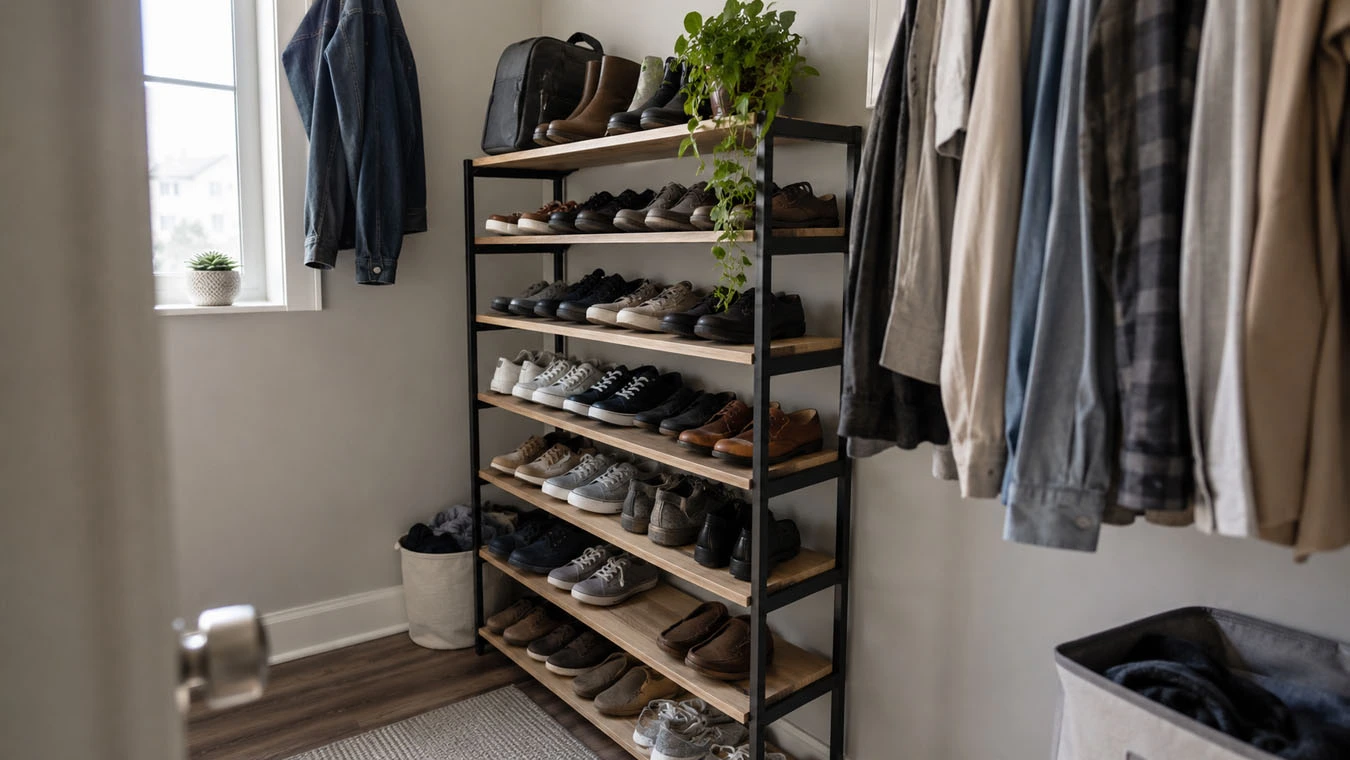
Tiered Shoe Rack provides shoe organization system in a compact 1-bedroom apartment closet interior.
One of the biggest mistakes renters make is relying entirely on floor-level shoe storage. Small closets rarely have enough horizontal space to handle multiple pairs of shoes efficiently. Vertical organization allows you to use the full height of the closet instead of overcrowding the bottom shelf area. Tiered shoe racks are especially effective because they create multiple levels of accessible storage while maintaining visibility and airflow.
Vertical storage systems work particularly well in compact apartments where closet width is limited. A narrow but tall shoe rack can often hold significantly more footwear than wide horizontal bins or scattered floor storage. This becomes especially useful for renters who rotate between seasonal footwear throughout the year. Tall systems also help separate everyday shoes from occasional-use footwear without creating clutter.
Another advantage of vertical systems is their flexibility. Freestanding shoe towers and modular racks can often be moved easily during apartment rearrangements or future moves. This flexibility is important for renters who cannot install permanent closet systems. Pairing vertical shoe storage with broader vertical storage ideas for small apartments can help create a more cohesive organization system throughout the home.
Closets with limited shelving can also benefit from combining shoe towers with upper storage bins for seasonal items. By separating shoes according to frequency of use, small closets become easier to maintain daily. This prevents the common cycle of overcrowding and disorganization that often develops in small apartment wardrobes.
Choose Modular Shoe Racks That Adapt to Apartment Layouts
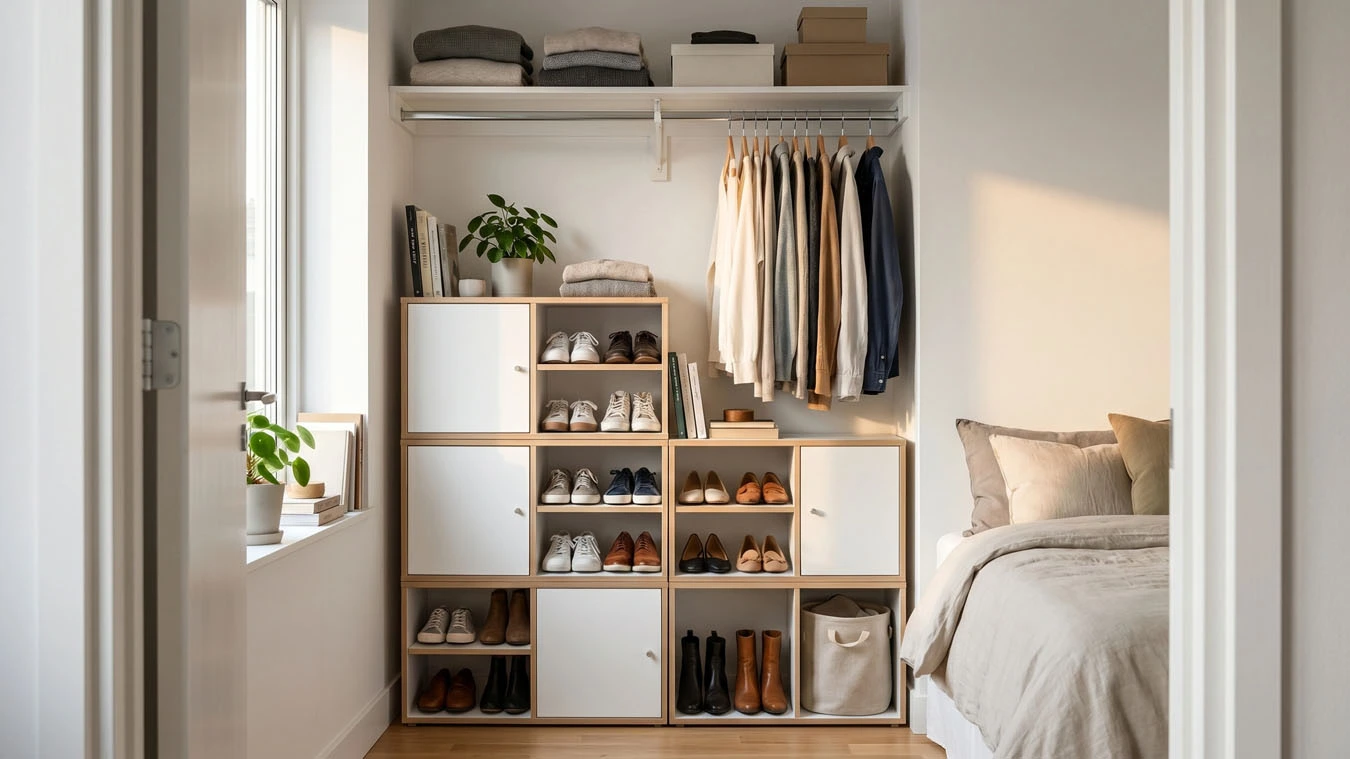
Stackable Cube Units provide shoe organization system in a small studio apartment open closet / wardrobe wall.
Modular storage systems are often the most practical solution for apartment renters because they can adapt to changing storage needs. Unlike fixed shoe racks, modular cube organizers and adjustable shelving systems allow you to expand, reduce, or rearrange storage depending on the size of your footwear collection.
This flexibility becomes valuable in apartments where closet layouts are inconsistent. Some renters deal with shallow closets, while others have narrow wardrobe systems with very little depth. Modular systems allow you to customize the arrangement to fit the actual dimensions of the closet instead of forcing a generic storage solution into the space.
Stackable cube units are especially effective for shoes because they separate pairs cleanly while preventing piles from forming. Individual compartments also improve visibility, making it easier to locate shoes quickly during busy mornings. Many renters find that compartmentalized systems naturally encourage better organization habits over time because each item has a defined location.
For apartments with limited built-in closet features, modular systems can also work alongside broader modular apartment storage solutions. Combining shoe organization with adaptable shelving creates a more efficient storage environment that can evolve with your living situation without requiring permanent modifications.
Use Over-the-Door Shoe Storage for Hidden Organization
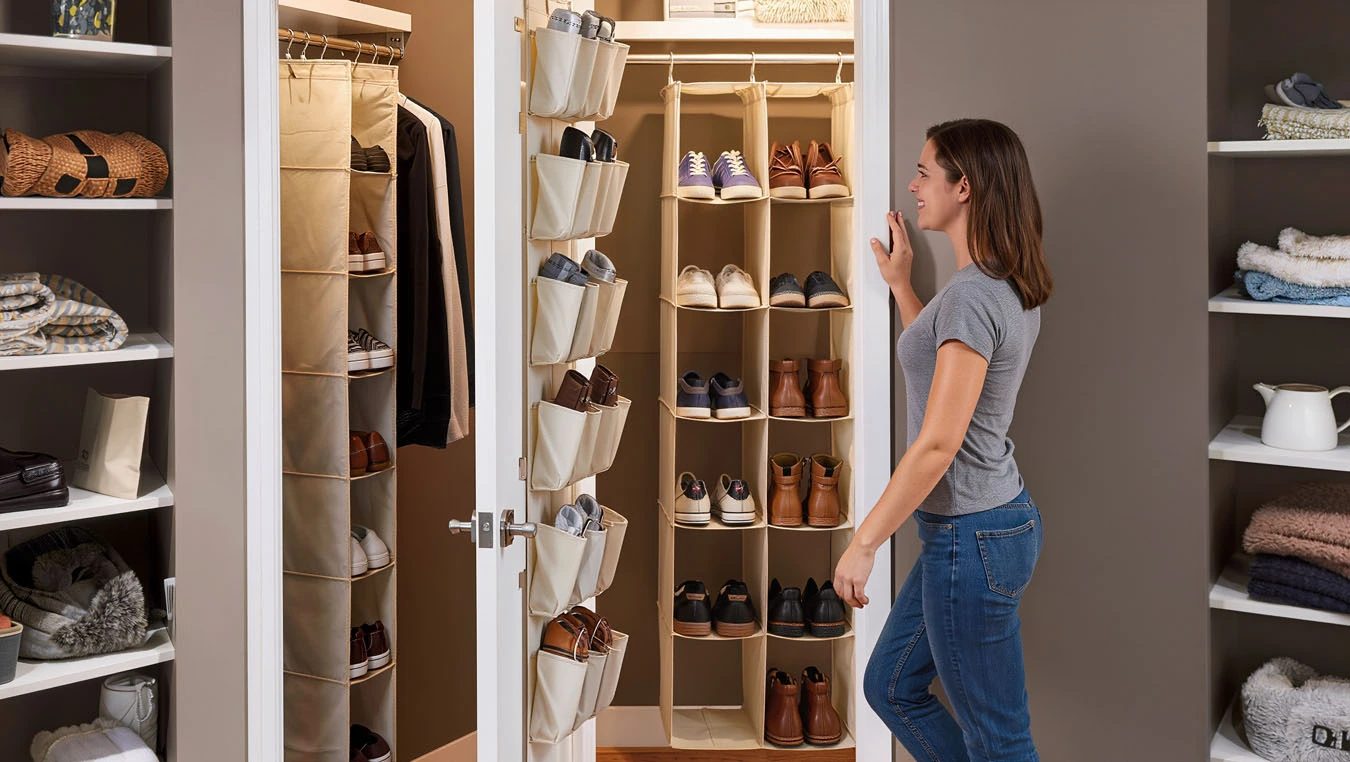
Hanging Pocket Organizer provides shoe organization system in a average 1-bedroom rental closet interior.
Closet doors are often overlooked storage surfaces in small apartments. Over-the-door shoe organizers create hidden vertical storage without consuming valuable floor space. This approach works particularly well for lightweight footwear such as sandals, flats, sneakers, and slippers that do not require deep shelving.
One major advantage of hanging systems is accessibility. Shoes remain visible and easy to retrieve without creating clutter along the bottom of the closet. This can significantly improve daily routines in apartments where multiple people share a limited closet area. Hanging organizers also help renters maintain cleaner floors, making the entire closet feel larger and more functional.
Another benefit is that over-the-door systems are usually fully renter-friendly. They require no drilling, no permanent installation, and can be removed easily during moves. This makes them ideal for apartments with strict lease restrictions. Pairing these systems with other over-the-door storage solutions for apartments can create additional storage opportunities beyond footwear alone.
For renters dealing with extremely limited closet dimensions, combining door storage with narrow floor racks often provides the best balance between accessibility and capacity. Using both vertical surfaces and floor space strategically helps prevent overcrowding while maximizing every available inch inside the closet.
Related Storage Ideas:
- Vertical Shoe Storage for Apartments
- Small Closet Organization Systems
- Small Bedroom Closet Organization
Store Seasonal Shoes Separately to Reduce Closet Clutter
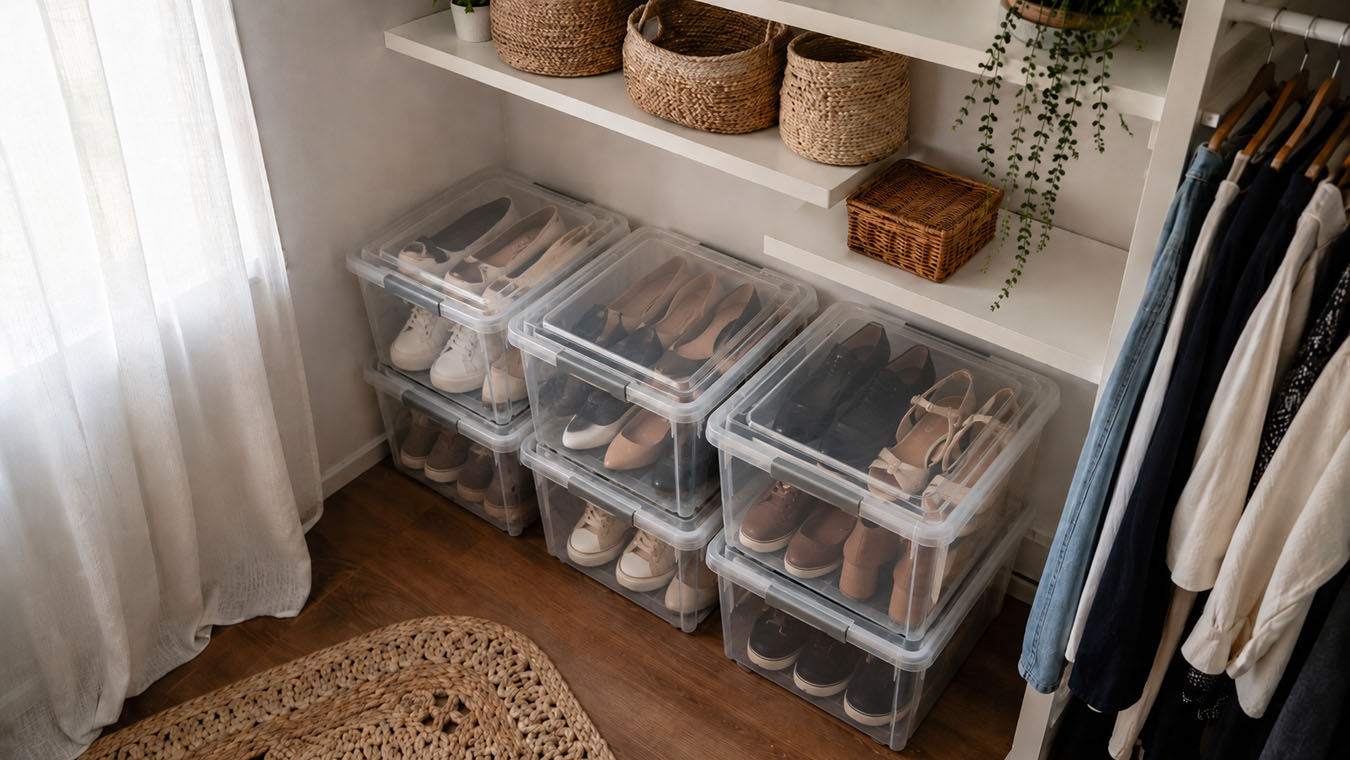
One of the simplest ways to improve closet organization is to stop storing every pair of shoes in the active closet area year-round. Seasonal rotation reduces visual clutter and frees up valuable space for footwear that is actually being used regularly. Winter boots, heavy hiking shoes, and summer sandals do not all need immediate daily access at the same time.
Upper closet shelves are ideal for off-season shoe storage because they use otherwise underutilized vertical space. Clear storage boxes work especially well because they allow visibility without requiring labels or constant searching. This helps maintain organization over long periods while protecting shoes from dust and damage.
Seasonal rotation systems also encourage renters to evaluate how much footwear they realistically use. Many small apartment closets become overcrowded simply because old or rarely worn shoes continue taking up premium storage space. Creating a rotating system naturally improves organization efficiency while making everyday closet access easier.
Renters looking to build a more complete organization strategy may also benefit from combining shoe rotation with seasonal closet rotation systems for apartments. Coordinating clothing and footwear rotation together creates a much more manageable small-space wardrobe system overall.
Use Under-Bed Shoe Storage for Overflow Footwear
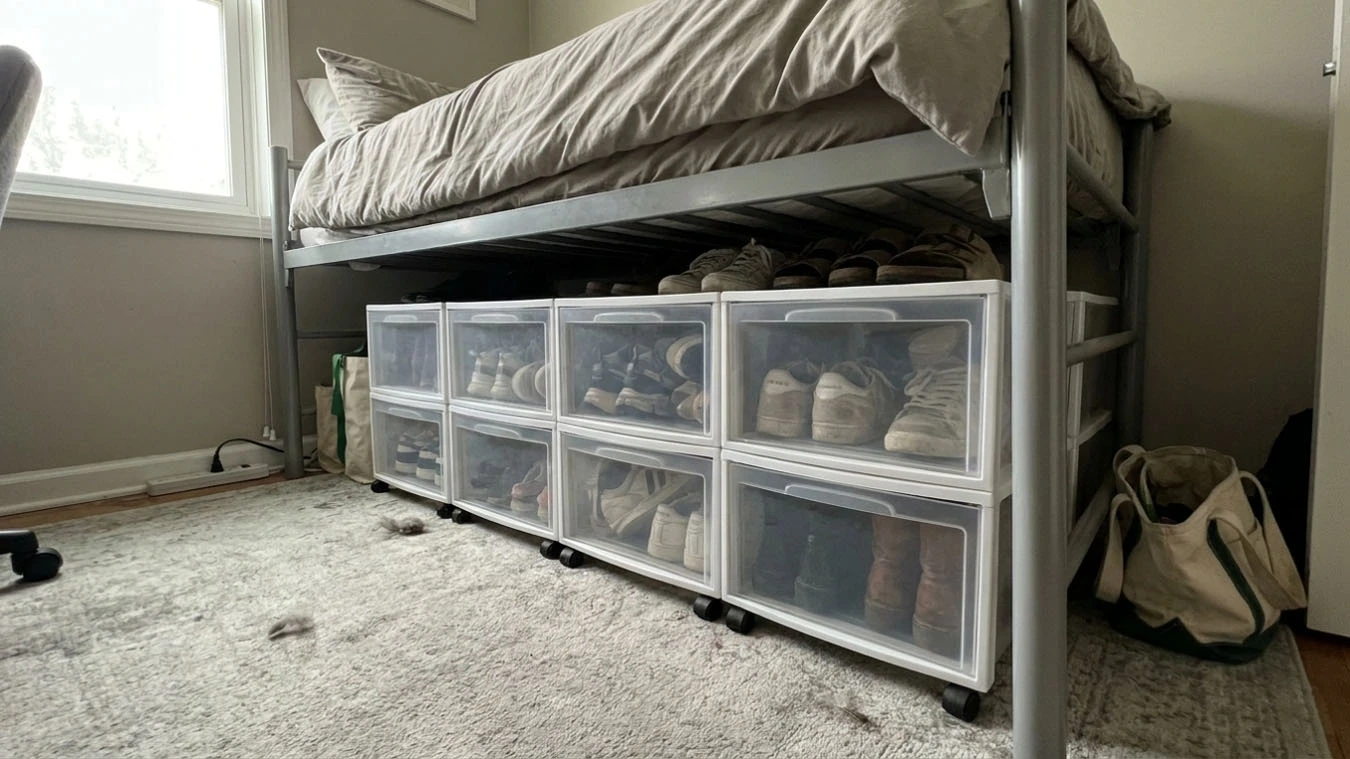
Rolling Drawers provide shoe organization system in a small studio apartment under-bed.
When closet space becomes completely saturated, under-bed storage often provides the next best solution for shoe organization. Many apartment renters overlook the large amount of unused space beneath beds, especially in studio apartments where storage options are extremely limited.
Rolling drawers and low-profile storage bins make it easy to store less frequently used shoes without sacrificing accessibility. Unlike deep storage containers, rolling systems allow shoes to remain visible and easier to retrieve. This is particularly helpful for apartments where there is no secondary closet or hallway storage area available.
Under-bed shoe storage also helps reduce visual clutter in small bedrooms. Shoes that would normally accumulate near entryways or closet floors can be hidden neatly while still remaining organized. Clear bins work especially well because renters can identify contents quickly without pulling out every container.
For maximum efficiency, under-bed shoe storage should complement the main closet system rather than replace it entirely. Everyday footwear should remain easily accessible, while occasional-use shoes can move into secondary storage zones. Combining this strategy with other under-bed storage ideas for apartments can significantly improve total storage capacity in smaller living spaces.
Keep Shared Apartment Shoe Storage Organized and Functional
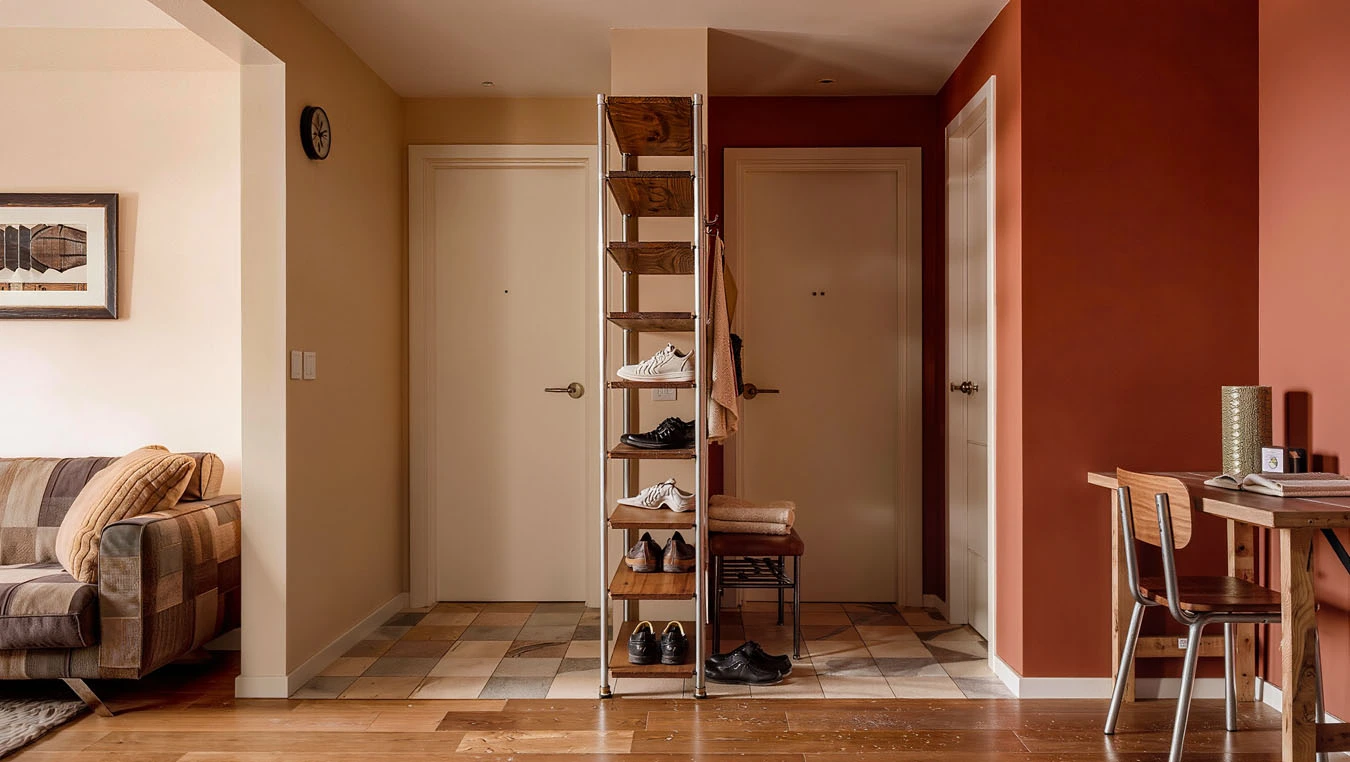
Freestanding Vertical Shelving provides shoe organization system in a average 1-bedroom rental entryway / hallway.
Shared apartments introduce another layer of complexity to shoe organization. Without designated storage zones, entryways and closets can quickly become overcrowded with multiple people’s footwear. Creating individual storage sections helps prevent confusion while keeping the apartment visually cleaner and easier to maintain.
Freestanding shelving systems work particularly well for roommates because they can divide footwear vertically while allowing each person dedicated space. Narrow shelving positioned near entryways often reduces closet pressure significantly by keeping everyday shoes accessible outside the bedroom storage area.
Communication and consistency also play an important role in shared apartment organization. Simple agreements regarding seasonal rotation, overflow storage, and shoe limits can help maintain order long term. Even the best storage system becomes ineffective if clutter accumulates faster than the system can handle.
For renters living with roommates, combining footwear organization with broader shared apartment storage strategies can improve overall functionality throughout the apartment. Organizing collectively rather than individually often creates more efficient use of limited shared space.
Create a Long-Term Shoe Organization System That Stays Manageable
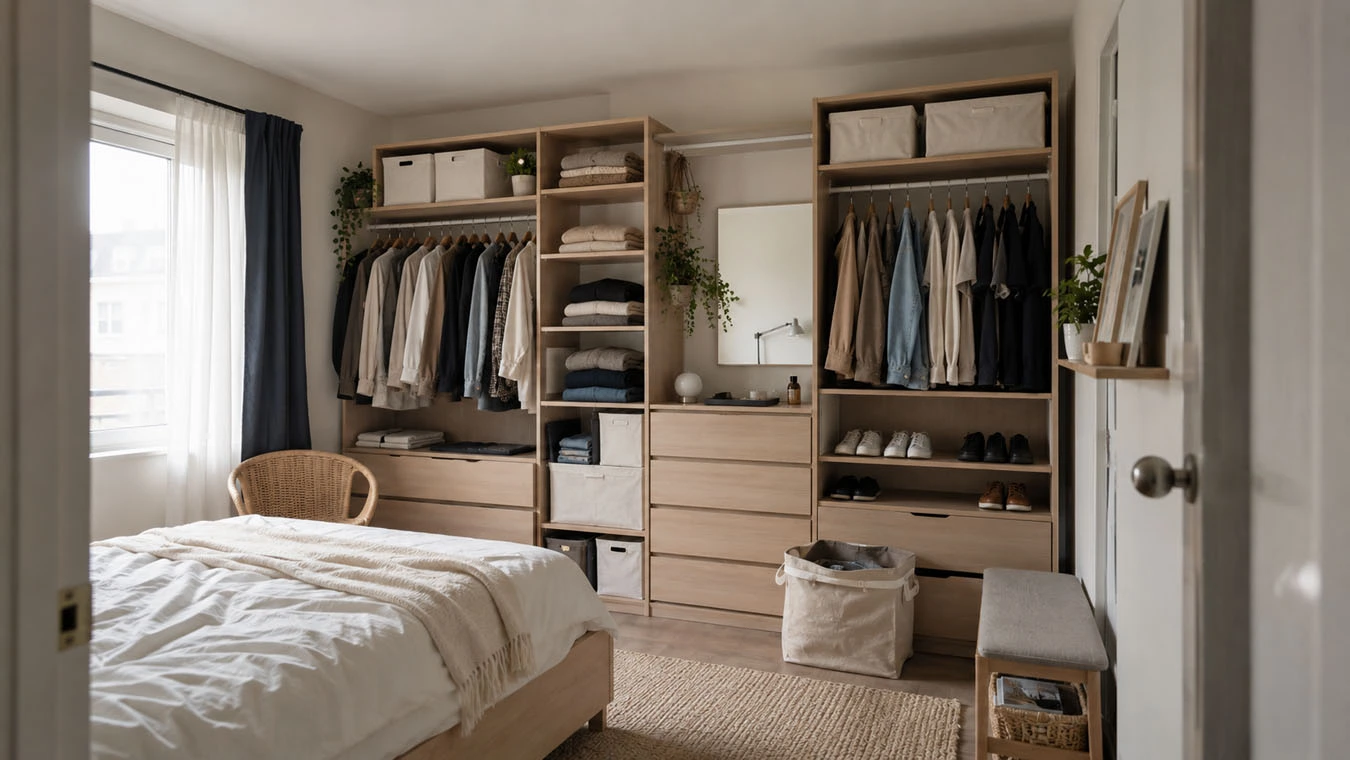
Mixed Modular System (open + Closed) provides clothing & wardrobe overflow in a open-concept small apartment open closet / wardrobe wall.
The most effective shoe organization systems are the ones that remain sustainable over time. Many renters start with highly organized closets that slowly become cluttered again because the system is too complicated or unrealistic for daily routines. Simplicity and accessibility are essential for long-term success.
One helpful strategy is maintaining a balance between open storage and concealed storage. Everyday footwear should remain easy to access, while less frequently used items can move into bins or secondary storage zones. This prevents the closet from feeling visually chaotic while maintaining practicality.
Regular decluttering is also important. Small apartment closets have very little margin for unnecessary items. Reviewing footwear every season helps prevent accumulation while maintaining available space for items that are actually worn regularly. This process becomes easier when shoes already have designated storage zones.
Building a complete organization strategy often involves integrating shoes into a broader apartment storage system. Combining footwear organization with small apartment storage solutions and renter-friendly closet systems creates a more functional living environment overall. The goal is not perfection, but a manageable system that supports everyday apartment living.
Conclusion
Creating an efficient shoe storage small closet system requires more than simply adding another rack to an overcrowded space. The best apartment storage strategies combine vertical organization, modular layouts, seasonal rotation, and renter-friendly solutions that adapt to real apartment limitations. By using hidden storage zones, maximizing vertical space, and organizing shoes according to daily use, even compact closets can become significantly more functional.
Effective apartment shoe organization also improves the overall feel of a small apartment. When shoes are properly organized, closets become easier to maintain, bedrooms feel less cluttered, and shared spaces remain cleaner. Whether you choose modular cube systems, hanging organizers, or under-bed storage, the key is creating a practical setup that remains easy to maintain long term.
For renters working with especially limited storage, combining a closet shoe rack small space system with broader apartment organization strategies often produces the best results. Small improvements in storage efficiency can dramatically improve comfort and functionality in everyday apartment living.
For a complete system, explore closet wardrobe optimization for small apartments, or continue with vertical shoe storage ideas and small closet organization systems.
Looking for more renter-friendly organization ideas? Explore additional small apartment storage guides and practical closet solutions designed to help maximize limited space without damaging walls or requiring permanent renovations.


