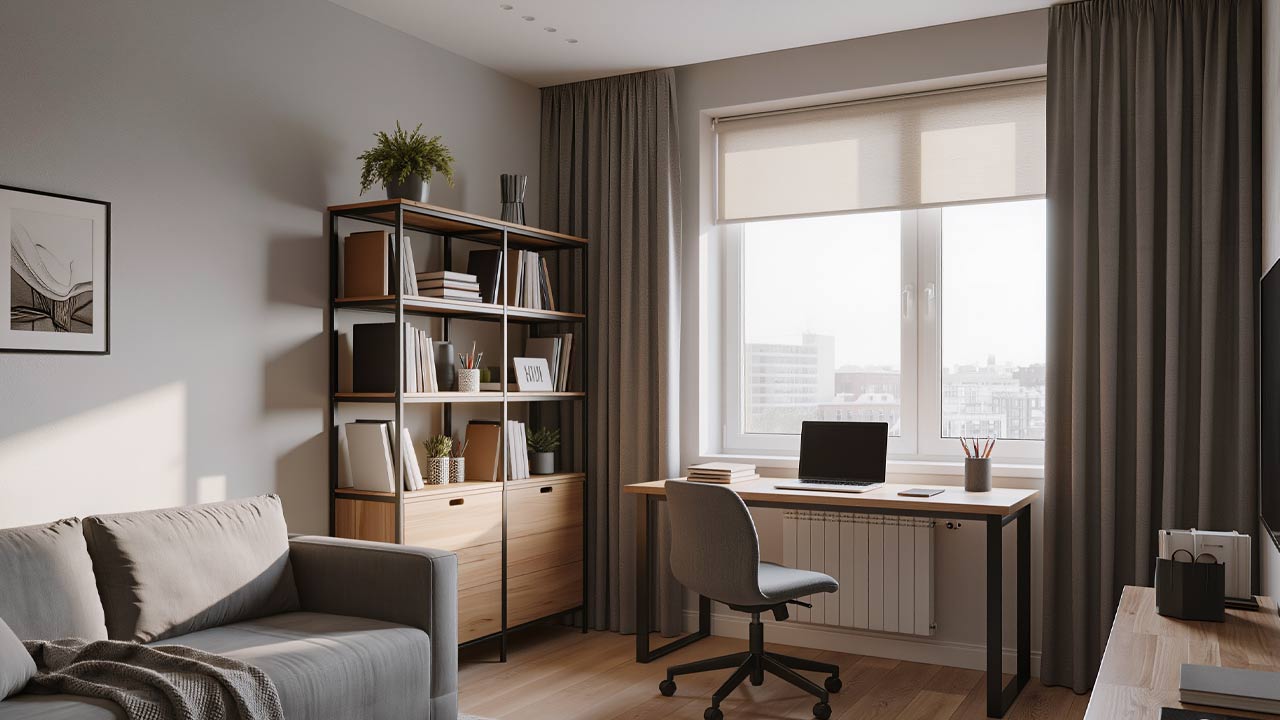
Small Apartment Storage for Remote Work
Working from home sounds simple until your laptop, charger, files, notebooks, headset, and office supplies start spreading across the same rooms where you eat, relax, and sleep. In many rentals, there is no dedicated office, no extra closet, and no built-in storage designed for work gear. That is why small apartment home office storage matters so much. A good system does more than hide clutter. It helps you stay focused during the day and reclaim your living space when work is over.
Many renters are looking for remote work storage solutions that fit real apartments, not oversized staged homes. A desk in the living room, a compact workstation in the bedroom, or a laptop setup at a dining corner all require smart storage that feels organized without overwhelming the room. The best strategies are flexible, renter-friendly, and easy to adapt as your schedule or layout changes.
This guide explains how to create practical storage for work tools in a small apartment, even if you have limited square footage, shared rooms, or landlord restrictions. You will learn how to zone a workspace, use height instead of floor area, choose movable storage, and keep everyday items accessible without making the room feel crowded.
Create a Clear Work Zone Before You Add Storage
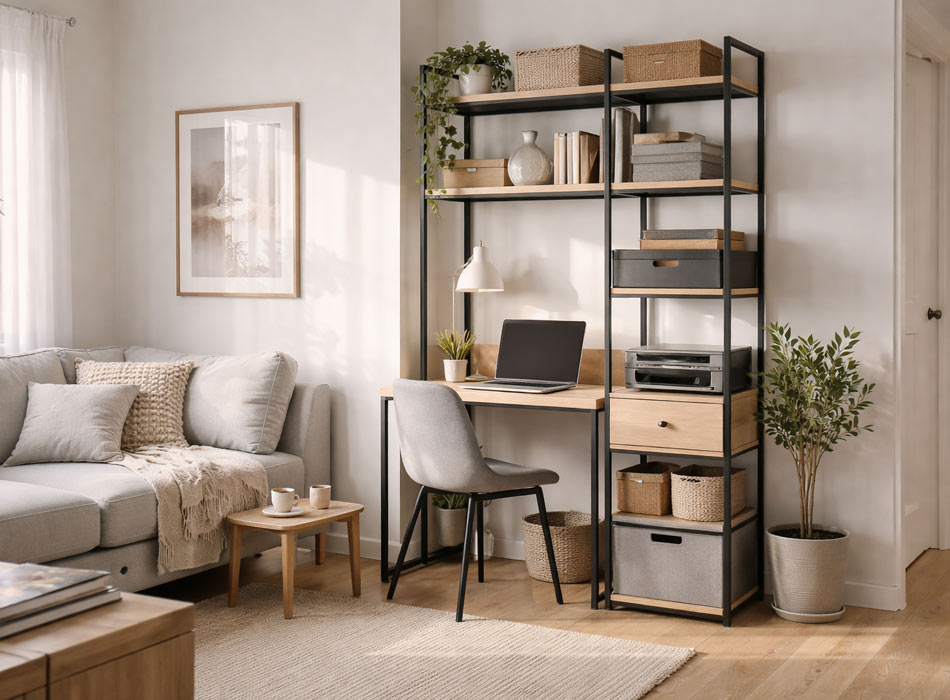
One of the biggest mistakes in a small apartment is buying storage before deciding where work will actually happen. Remote work becomes harder to manage when supplies are spread across multiple surfaces with no clear base. A better approach is to define one primary work zone first, even if it is only a corner of the living room or a section of the bedroom. Once that zone is set, every storage choice becomes more useful because it supports a specific daily routine instead of adding random containers to the room.
In practical terms, a work zone should hold your essential tools within arm’s reach while keeping non-work items outside the immediate area. That might mean placing a compact desk beside a window, using a narrow shelving unit next to a chair, or creating a workstation at the end of a sofa wall. In a rental, this kind of layout is especially effective because it respects existing architecture and avoids permanent changes. You are organizing around the apartment as it is, not as you wish it were.
This is also where small workspace organization begins to improve your focus. When your work materials have one designated area, you spend less time hunting for chargers, papers, and headphones. You also reduce the visual stress that comes from seeing work items scattered across the apartment. If your current setup feels chaotic, start by identifying the work boundary first, then layer storage into that footprint instead of trying to store everything everywhere.
For a broader framework on organizing every room around storage zones, explore small apartment organization strategies that make limited space easier to manage.
Use Vertical Storage to Keep the Floor Open
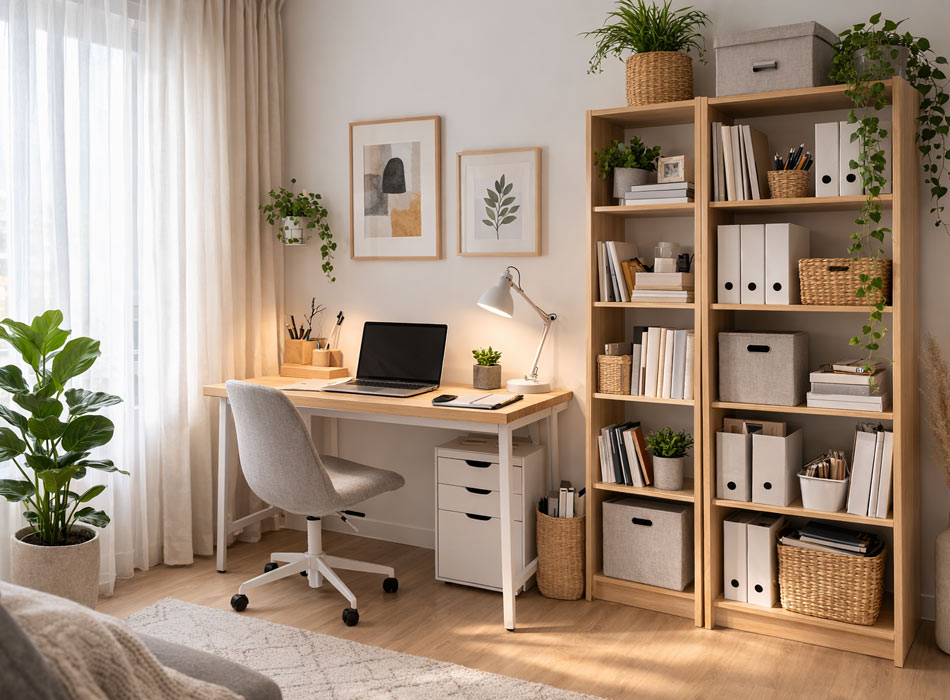
Floor space disappears quickly in an apartment workspace. A desk, chair, lamp, and waste bin already take up more room than most renters expect, which is why vertical storage is often the difference between a functional setup and a cramped one. Instead of relying on wide furniture, look upward. Tall bookcases, open shelving with fabric bins, and narrow tower units can hold office supplies, reference materials, and small tech accessories without expanding the workspace footprint across the room.
Vertical systems work especially well in apartments because they create structure without requiring a separate office. A tall shelving unit near a desk can hold work essentials on middle shelves, less-used supplies up high, and decorative elements or storage boxes below. This makes the workstation feel intentional rather than temporary. It also prevents your desktop from becoming the default landing place for everything from sticky notes to printers to unopened mail.
For renters, the smartest vertical storage choices are freestanding or modular. They are easier to move, easier to reconfigure, and better suited to changing layouts. If you eventually shift your desk from a bedroom wall to a living room corner, the same shelving can move with you. That flexibility matters in small homes where one piece often has to serve multiple purposes over time.
If you want more ways to use wall height and narrow footprints effectively, see vertical storage ideas for small apartments and modular storage systems that adapt to changing layouts.
Choose Storage That Can Move With Your Workday
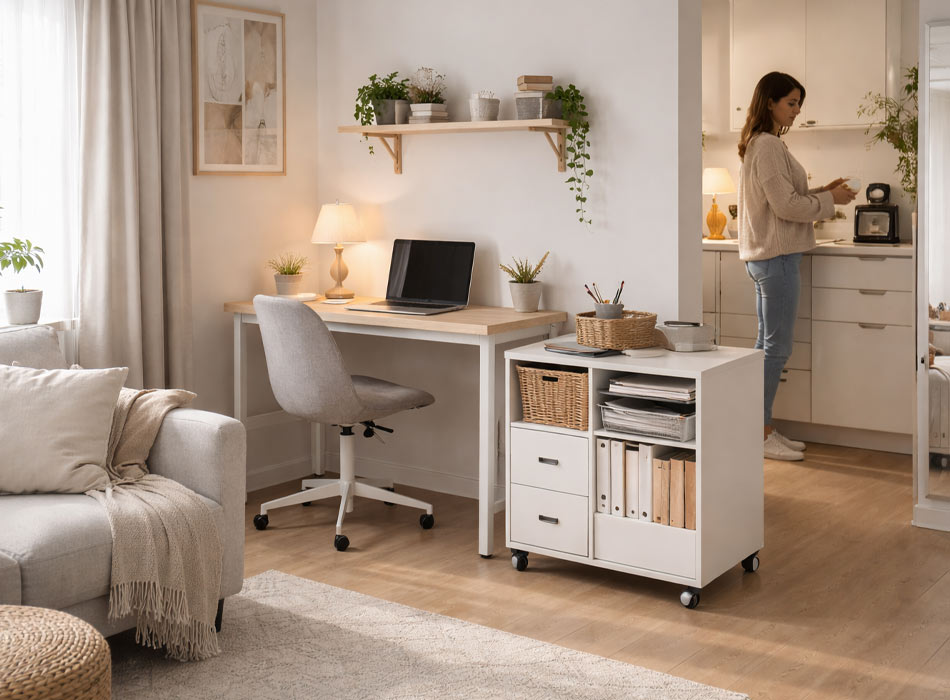
Remote work in a small apartment is rarely static. Some people work at a desk in the morning, move to a dining corner for calls, and pack everything away before dinner. Others share space with a partner, roommate, or family member and need their office setup to shrink at the end of the day. In these situations, movable storage is often more effective than fixed furniture. Rolling modular storage units, slim carts, and drawer blocks let you keep work tools together without locking them into one rigid layout.
This strategy is especially useful when your workspace overlaps with daily living. A rolling cart can hold your laptop stand, notebook, pens, chargers, and small supplies during working hours, then slide beside a console or into a closet area when the workday ends. That makes the apartment feel less like a full-time office while still keeping everything accessible. It also reduces the mental clutter that comes from seeing unfinished work in your line of sight during personal time.
Movable storage also supports seasonal changes and shifting priorities. During busy months, you may need more paperwork, extra lighting, or video call accessories. At other times, your setup may be almost entirely digital. A modular system makes it easier to add or remove pieces without redesigning the room. That is one reason so many effective remote work storage solutions rely on carts, stackable drawers, and reconfigurable shelves rather than oversized office furniture.
Store Tech, Paper, and Daily Tools by Frequency of Use
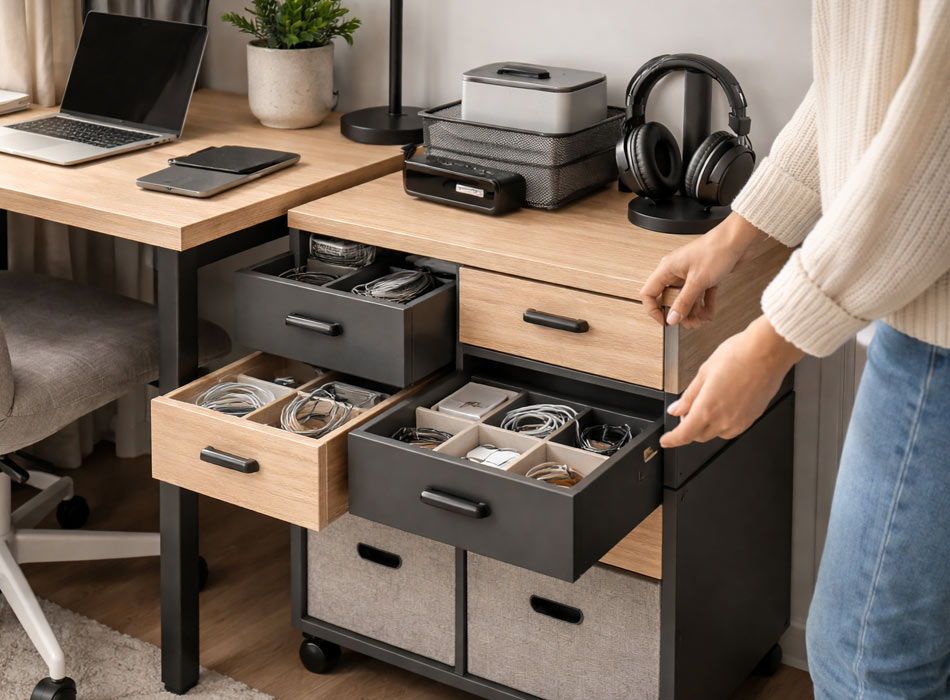
Many small apartment offices feel disorganized not because they lack storage, but because everything is stored with equal priority. Daily items end up buried in boxes, while rarely used objects stay on the desk. A better system is to organize work materials by frequency of use. Keep high-use items such as chargers, pens, notebooks, and headphones within immediate reach. Place weekly-use items like extra cables, mail supplies, and portable drives in nearby drawers or bins. Archive less-used documents and bulky equipment farther away.
This layered approach keeps your desk cleaner and makes work feel more manageable. For example, a modular drawer block can hold your everyday tools in the top section, while lower drawers store paper supplies, extra batteries, or adapters. Open shelving with labeled bins can house backup items without crowding the primary work surface. In a small apartment, that kind of hierarchy matters because every visible object affects how spacious or cramped the room feels.
Paper storage deserves special attention in remote work setups. Even mostly digital jobs tend to generate receipts, notes, printouts, and documents that accumulate quickly. If you do not assign paper a home, it will spread across tables and countertops. Use slim vertical sorters, file boxes inside shelving units, or one drawer dedicated to active paperwork. The goal is not to create a corporate filing system. It is to prevent paper from becoming the clutter that slowly takes over your workspace.
Related Storage Ideas:
- Storage solutions for small apartments that save space
- Living room storage ideas for apartments with multi-use spaces
- Studio apartment storage ideas for flexible everyday living
Blend Work Storage Into Living Spaces Without Making the Room Feel Corporate
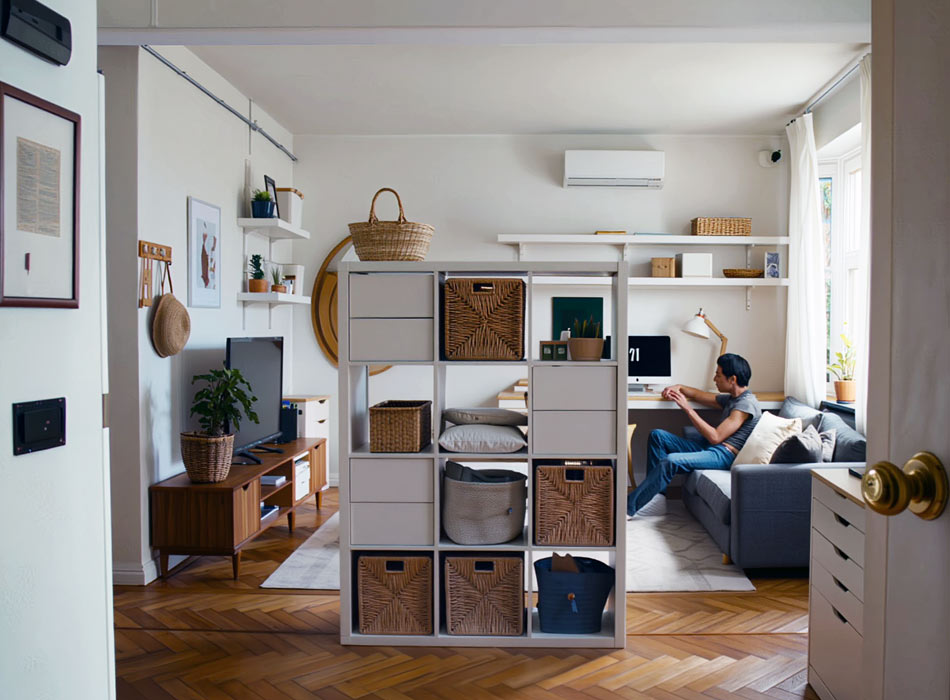
In most apartments, remote work happens in shared visual space. Your desk may be visible from the sofa, the dining area, or even the bed. That means storage has to do two jobs at once. It must function well for work, but it also has to feel appropriate in a home. Open shelving with fabric bins, mixed modular systems, and bookcases with closed lower storage can help office supplies blend into living areas more naturally than standard office furniture does.
This does not mean hiding every sign of work. It means reducing visual noise. A few matching bins, a drawer unit that aligns with surrounding furniture, or a shelf system that mixes books and office essentials can make a workstation feel integrated rather than intrusive. For renters who care about style, this is often the key to maintaining comfort in a small home. You still have a productive setup, but the room does not feel like a cubicle after hours.
The most successful apartments often use storage pieces that can evolve with the room. A tall bookcase might hold work baskets on one shelf, decor on another, and household items below. A room divider with shelving can separate a desk area from a seating area while adding storage on both sides. These hybrid pieces are ideal for remote workers because they solve both organization and layout challenges at the same time.
If your workstation shares space with seating, entertainment, or daily traffic, ideas from living room storage for small apartments can help you create a cleaner visual transition.
Use Renter-Friendly Solutions for Tight Corners and Temporary Setups
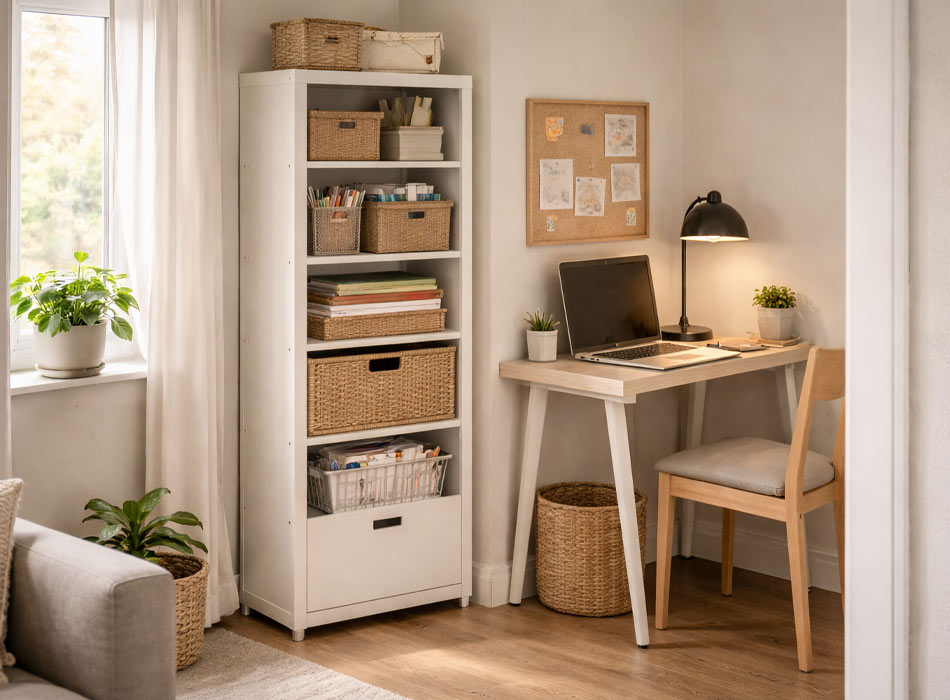
Not every apartment has room for a proper desk wall. Sometimes the only realistic office area is a narrow transition space, an underused corner, or a small section beside a bed. In those cases, renter-friendly storage becomes even more important because you need solutions that are compact, removable, and physically plausible in a lease-controlled environment. Freestanding shelves, pegboards that lean or attach safely, over-the-door systems, and narrow vertical units are often more realistic than bulky furniture.
The goal in a temporary setup is not to copy a full home office. It is to support the tools you actually use each day while keeping the footprint disciplined. A narrow tower unit can hold notebooks, devices, and office supplies in a corner that would otherwise go wasted. A small dresser or rolling drawers beside a compact desk can replace the need for a larger filing cabinet. Even a bar cart used as storage can work in apartments where your office has to appear and disappear with minimal effort.
Renter constraints should shape your choices from the beginning. Avoid anything that depends on custom built-ins or permanent alteration. Prioritize pieces that can move out with you, shift to another room later, or serve a second purpose if your work routine changes. That kind of flexibility is practical, cost-conscious, and far more sustainable for apartment living than buying specialized office furniture that fits only one layout.
Build an End-of-Day Reset System So Work Does Not Take Over the Apartment
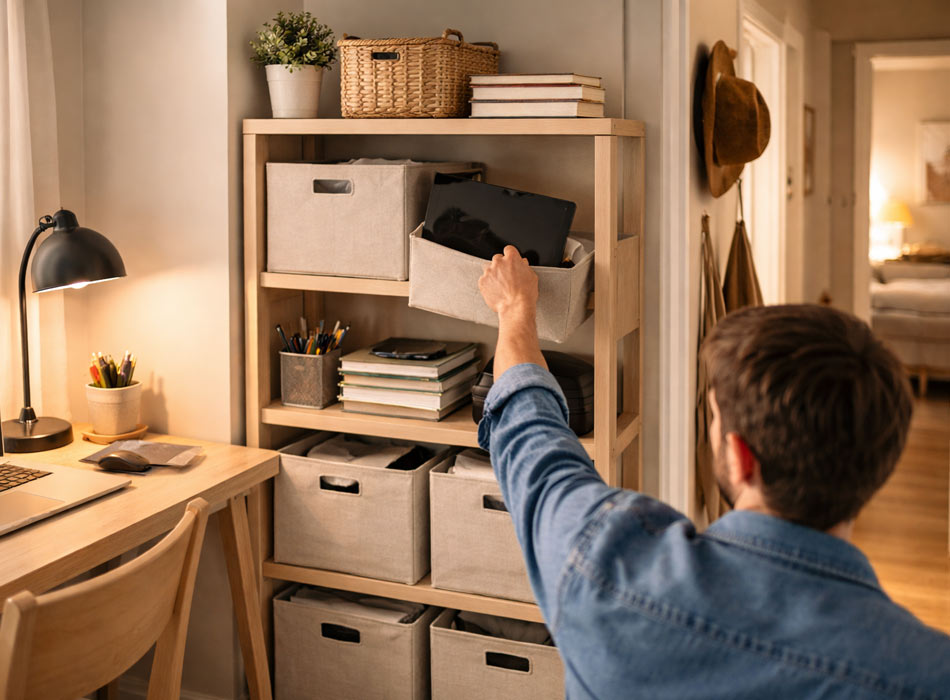
One of the best storage strategies for remote workers is not a product but a routine. Small apartments feel cluttered faster because work is often visible long after the workday ends. Without a reset system, supplies remain on the table, chargers stay plugged in, and unfinished tasks keep the room mentally active. Storage becomes much more effective when it supports a five-minute shutdown process at the end of the day.
An end-of-day reset usually means assigning every work item a closing position. Your laptop goes into a shelf slot or drawer, your notebook returns to one basket, your charger wraps into a cable box, and loose papers go into one tray for tomorrow. This routine reduces both physical clutter and decision fatigue. The next morning starts with a cleaner surface and a clearer mind, which is especially helpful for people working in living rooms, bedrooms, or open-plan apartments.
The reset system also protects the apartment’s identity as a home. That matters more than many people realize. When work stays visually active all evening, it becomes harder to relax and harder to separate professional time from personal time. Small apartment home office storage should therefore support daily closure, not just daily access. The best setup helps you work efficiently when needed and disappear the evidence when the day is done.
Plan for Shared Spaces and Multi-Purpose Rooms
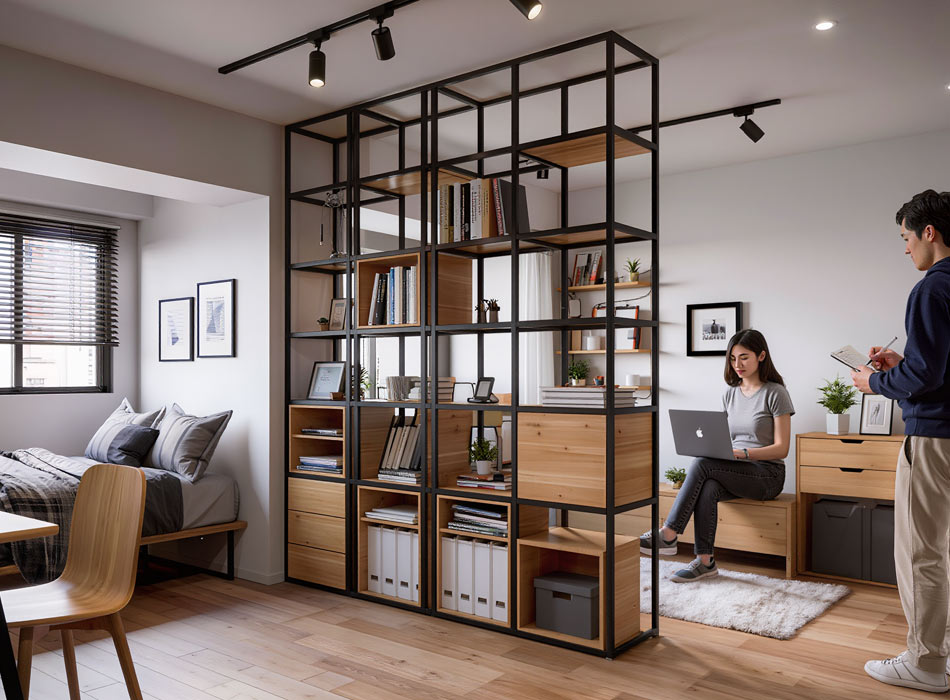
Remote work storage becomes more complicated when other people share the apartment or when one room serves several functions. A dining corner may double as a desk. A bedroom may also be a work zone. A living room may need to shift between meetings, meals, and entertainment. In these situations, successful storage depends on boundaries, not just containers. Everyone needs to understand what belongs where, what can stay visible, and what should be packed away after use.
For shared apartments, compact modular systems are usually the safest choice because they make personal work items easy to identify and easy to contain. One shelf section, one cart, or one drawer column can become your work domain without spreading into someone else’s daily space. This reduces friction and keeps the apartment more functional for everyone. It is also easier to maintain because there is less ambiguity about where tools, paperwork, and electronics belong.
In multi-purpose rooms, the best storage pieces usually perform more than one role. A room divider with shelving can separate work and living zones. A bookcase can hold office items on one side and household storage on the other. A rolling unit can move depending on who needs the room. These strategies help remote work fit into real apartment life instead of competing with it. When the apartment has to do many jobs, storage should help it switch modes smoothly.
If your work setup overlaps with shared rooms or common storage pressure, shared apartment storage ideas for roommates can help you create better boundaries without wasting space.
Conclusion
Good remote work organization in a small apartment is not about fitting a full corporate office into a rental. It is about creating a storage system that supports how you actually live. The most effective approach starts with a defined work zone, then adds vertical storage, movable pieces, and practical categories for daily tools. When everything has a place, your workspace becomes easier to use, easier to maintain, and much less likely to spill into the rest of the apartment.
The best small apartment home office storage systems are also flexible. They work whether your desk is in the living room, bedroom, studio main zone, or a compact corner near a window. They account for renter limits, shared rooms, and changing routines. That is why the strongest remote work storage solutions tend to be modular, renter-friendly, and designed around real habits instead of idealized layouts. When storage matches your routine, productivity improves naturally.
If your current setup feels crowded, start with one decision at a time. Define your work area, reduce what stays on the desktop, and choose storage that makes small workspace organization easier every day. Even modest changes can make a noticeable difference when the apartment is doing double duty as both home and office.
To build a more complete setup, continue with space-saving storage solutions for small apartments, explore modular storage ideas for flexible apartment layouts, or read vertical storage strategies that free up valuable floor space.
Want to improve your work-from-home setup without making your apartment feel crowded? Read more Smart Space Living guides to find practical, renter-friendly storage ideas that help every room work harder and feel more organized.


