In a small apartment, corners are often the most wasted square footage in the entire home. They sit empty because standard furniture doesn’t fit well, and renters often avoid wall-mounted options that require drilling. But when you approach corners strategically, they become powerful “hidden zones” for storage, style, and everyday function. The best corner storage small apartment setups are not about squeezing in bulky shelves. They’re about using vertical height, slim footprints, and modular systems to turn unused corner storage into organized capacity—without blocking traffic flow or making your space feel crowded. Whether you’re working with a studio, a compact one-bedroom, or a narrow railroad-style apartment, corners can support everything from shoes and bags to books, pantry overflow, and work-from-home supplies. This guide shares practical corner shelving ideas and renter-friendly solutions you can actually use. For the bigger framework that connects corners to the rest of your home, start with Small Apartment Organization: Space-Saving Storage Solutions. Corners are “bonus space” because they’re typically outside your main walking path. Unlike hallway walls or narrow doorways, many corners can hold storage without disrupting movement—if you choose the right footprint and height. They also support a key small-space principle: you get more storage by going up, not out. That’s why many corner storage small apartment solutions overlap with vertical planning. If your apartment feels tight, explore vertical storage ideas for small apartments and use that same mindset in every corner. Finally, corners help reduce “surface clutter.” When a corner becomes a dedicated home for items, your counters, coffee tables, and entry surfaces stay cleaner. For renters, these units are also a low-risk choice because they’re fully freestanding. You can move them, rotate them between rooms, or repurpose them when your layout changes. In living rooms, they work as media overflow, book storage, or display shelves with baskets for hidden organization. If you want a broader overview of freestanding systems that fit small layouts, see Storage Solutions for Small Apartments. Then treat the corner shelf as your “vertical anchor” for that zone. Some corners don’t have the clean geometry needed for a standard corner shelf—especially in older rentals with baseboard heaters, uneven trim, or awkward angles. That’s where modular storage works better than a single “perfect-fit” piece. Modular drawer blocks, stacked cube organizers, and mixed open/closed systems can be arranged to fit the corner’s exact shape. This also gives you more control over what stays visible versus hidden. If you want a system that can move with you from apartment to apartment, modular is often the most practical long-term investment. For ideas on building flexible layouts with modular pieces, explore Modular Storage for Small Apartments and apply those planning steps to corner zones. 2 A corner storage small apartment setup at the entrance should prioritize speed and simplicity. Use a cube organizer or narrow tower unit for shoes in rotation, and a small bin or basket zone for grab-and-go items. If your entry is tight, build the strategy using Entryway Storage Ideas, then apply it specifically to whichever corner is closest to your door. If your entry connects to a narrow hallway, be careful with depth so you don’t block traffic flow. For corridor-specific sizing and layout rules, see Narrow Hallway Storage Ideas. Bedroom corners are often wasted because people default to centering the bed and leaving corners empty. But if your closet is small—or if you don’t have one—bedroom corners can carry real storage load without making the room feel cramped. A narrow vertical tower unit in a bedroom corner can hold folded clothing, accessories, or linens. If your closet is overwhelmed, a corner shelf with baskets can function as “overflow storage” while still looking intentional. If you’re dealing with limited closet space, combine corner storage with Small Bedroom Closet Organization so the closet holds what must hang, while the corner handles foldables and accessories. If you’re working without a closet entirely, use Bedroom Storage Without a Closet and treat the corner as your primary clothing zone. Kitchen corners outside the main work triangle are perfect for overflow. This is where you store items you use weekly—not hourly. Examples include bulk dry goods, extra paper towels, backup spices, or small appliances that don’t deserve counter space every day. A corner shelving unit can behave like a mini pantry when your apartment kitchen lacks cabinets. To keep it renter-friendly and safe, avoid anything that requires wall mounting, and prioritize stable freestanding units with a compact footprint. For a complete plan that supports kitchen corner storage, see Small Kitchen Organization and use the corner as your overflow zone. Living rooms often have one corner that turns into “the pile”: cables, books, blankets, kids’ items, or tech accessories. Instead of fighting that corner, use it as a controlled storage zone. A tall bookcase or corner shelving unit can hold baskets on lower shelves (for hidden storage) and decorative items up top (to keep the space visually balanced). If the corner is beside a sofa, keep the footprint small and choose open shelving with fabric bins to soften the look. To align this with a full-room system, explore Living Room Storage Ideas and treat the corner unit as the “anchor piece” that keeps the room tidy. Related Storage Ideas: Corner shelving units can work if they’re slim and stable, but be careful not to overcrowd. The goal is to create access—not visual clutter. For structured bathroom strategies, see Small Bathroom Storage Ideas and apply them specifically to your open corner zone. When evaluating corner storage small apartment options, prioritize three things: footprint depth, height use, and flexibility. A piece that’s too deep will block pathways or make the room feel smaller. A piece that’s too short wastes vertical potential. A piece that’s too “built-in looking” might not make sense if you move often. A simple selection rule: choose tall and slim for hallways and entry corners, choose modular for awkward corners, and choose corner shelves for clean geometry corners that need vertical expansion. If you’re unsure where to start, begin by mapping your “problem corners” first: the entry clutter corner, the living room pile corner, and the bedroom overflow corner. Once those are handled, your apartment will feel significantly more organized. Corners are one of the fastest ways to add storage without adding chaos. With the right corner shelving ideas, you can convert unused corner storage into functional zones for shoes, pantry overflow, books, or clothing—while keeping your apartment open and livable. The best corner storage small apartment strategy focuses on slim footprints, vertical height, and renter-friendly flexibility. When you combine corner units with modular and vertical systems, you get a whole-home plan instead of random furniture. For a complete system, explore Small Apartment Organization: Space-Saving Storage Solutions, or continue with under-bed storage ideas to unlock more hidden space. Want your apartment to feel bigger without moving? Learn more storage strategies and start turning every unused corner into organized, usable space.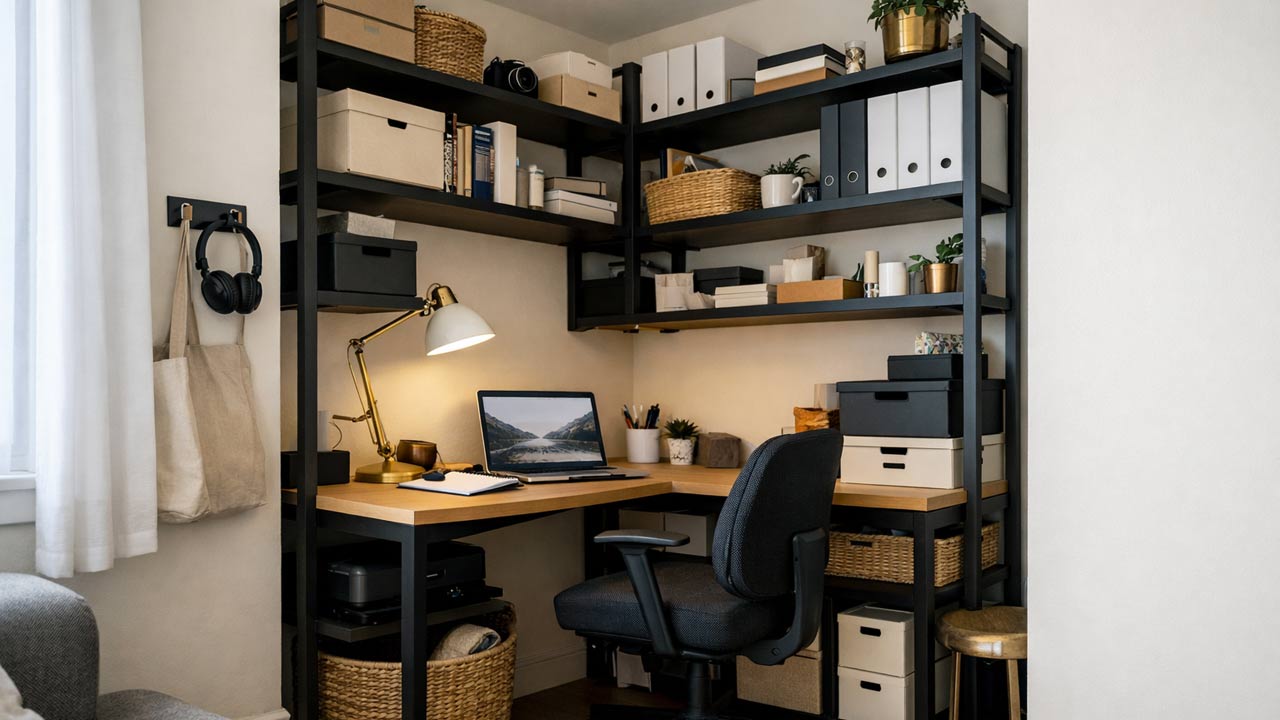
Corner Storage Ideas for Small Apartment
Why Corners Are a Storage Advantage in Small Apartments
Corner Shelving Units That Use Height Without Taking Floor Space
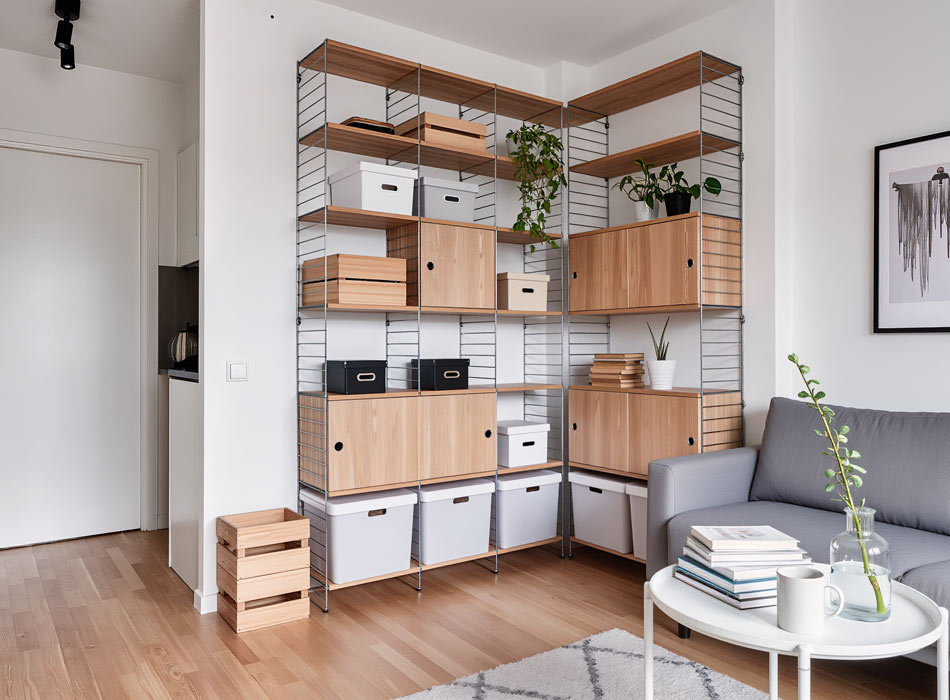
If you want maximum storage with a minimal footprint, a corner shelving unit is one of the strongest corner shelving ideas you can use. The shape is designed to sit flush into the corner, so you get vertical capacity without stealing usable floor area.Modular Corner Setups That Adapt When Your Needs Change
Corner Storage for the Entry Zone: Shoes, Bags, and Daily Drop Items
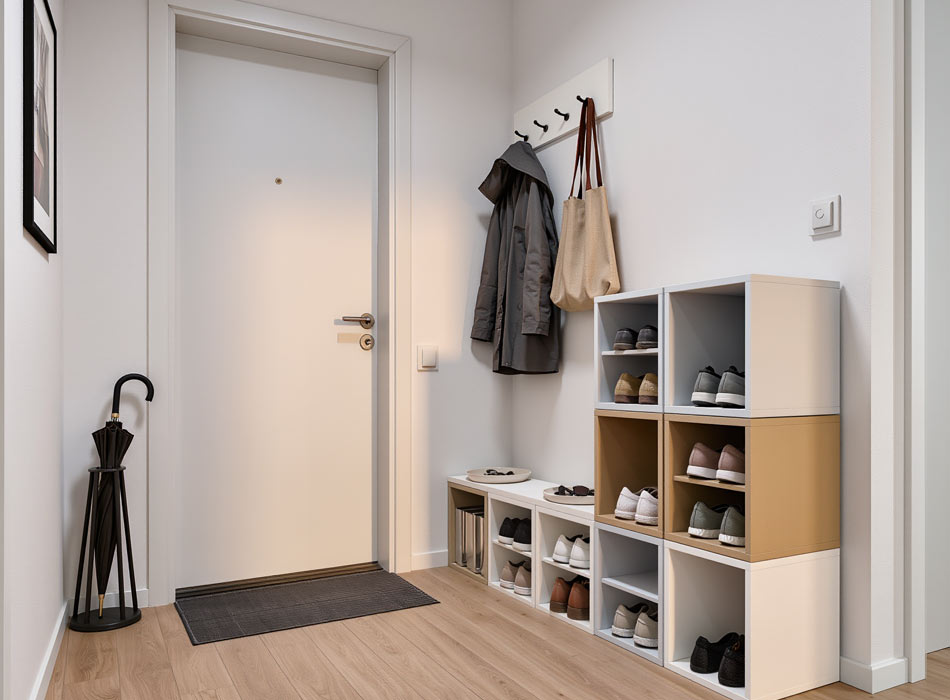
One of the most useful places to convert unused corner storage is near the entry. Many apartments have a small corner right by the front door that becomes a clutter pile—shoes, mail, bags, and random items that never find a home.Corner Storage in Bedrooms: Clothing Overflow Without a Bigger Dresser
Kitchen and Dining Corners: Pantry Overflow and Small Appliances
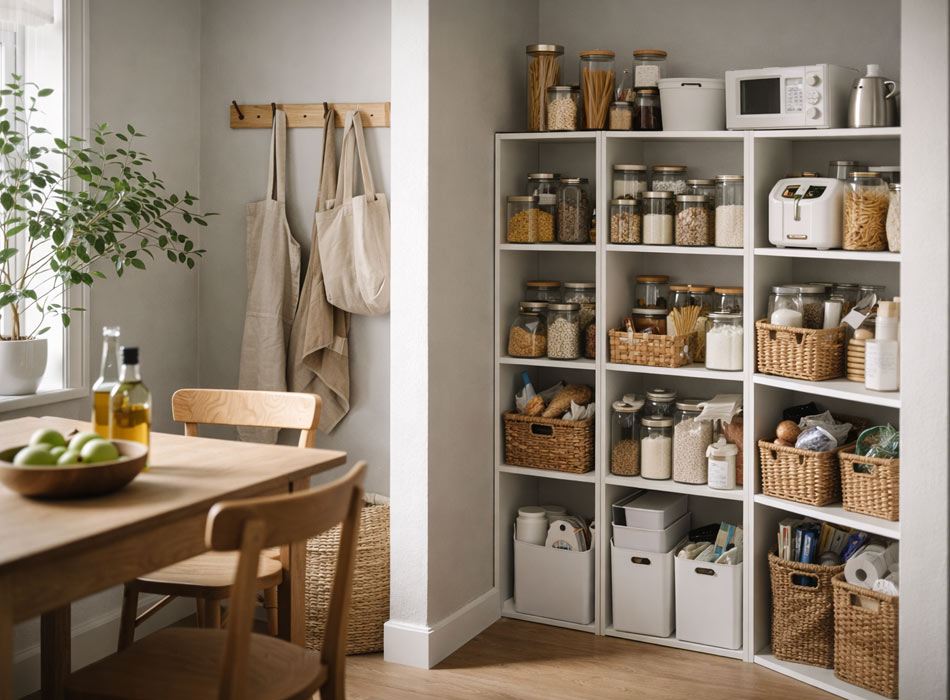
Living Room Corners: Media, Books, and Clutter Control
Small Bathroom Corners: Keep It Minimal and Moisture-Safe
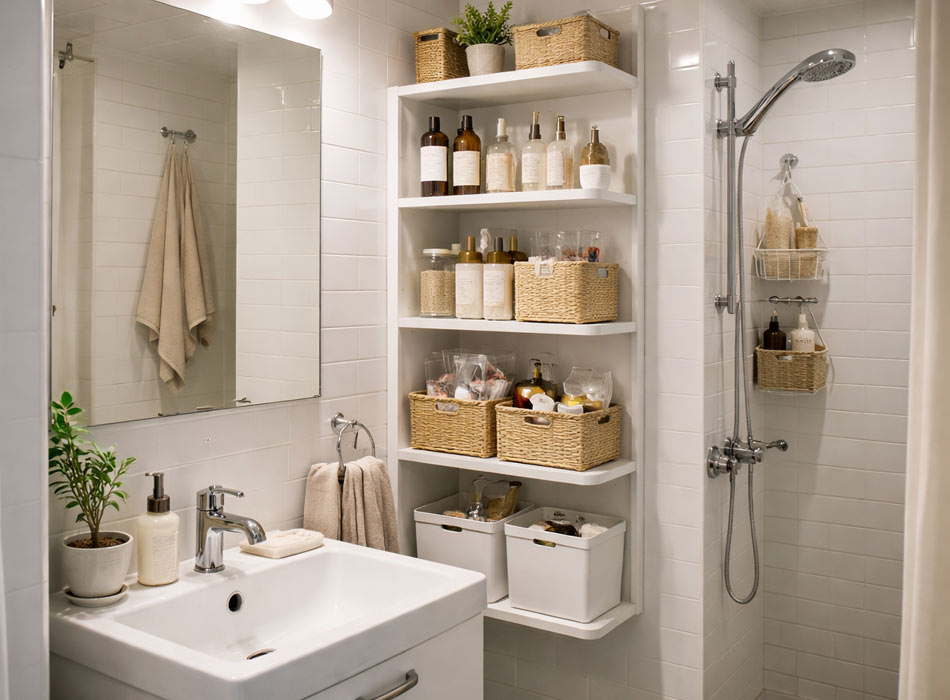
Bathroom corners can be incredibly useful, but they need the right materials and a realistic density level. Avoid soft woven baskets or fabric bins in bathrooms where moisture is present. Instead, use plastic, composite, or coated metal storage that handles humidity.How to Choose the Right Corner Storage Piece
Conclusion: Turn Unused Corners Into Real Storage


