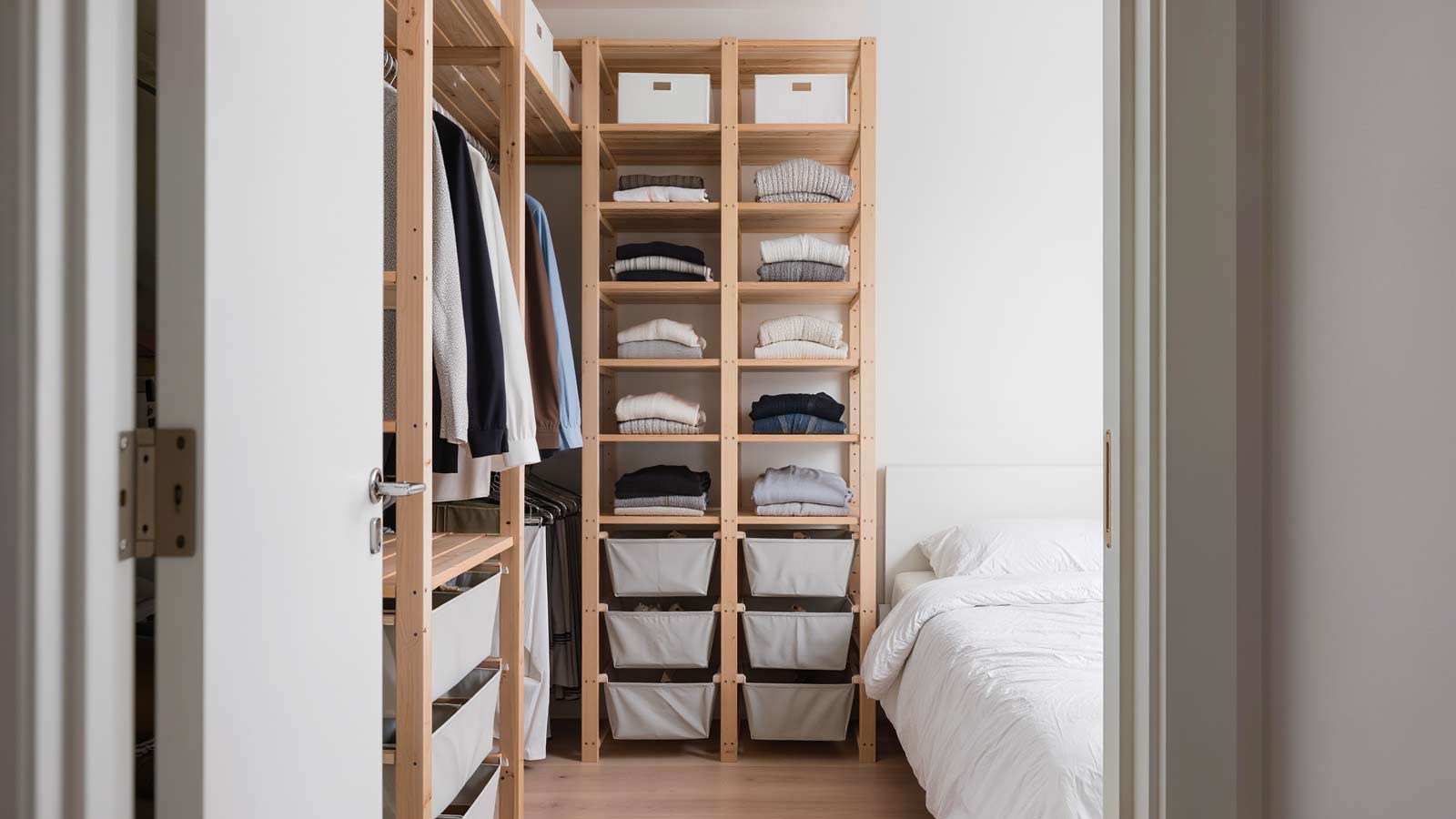
Capsule Wardrobe for Small Apartments: Smart Closet Strategies That Save Space
Living in a small apartment often means dealing with limited closet space, overflowing drawers, and clothing that never seems to stay organized for long. Many renters quickly realize that traditional wardrobe systems simply do not work well in compact apartments where every inch matters. Creating a capsule wardrobe small apartment system can dramatically reduce clutter while making daily routines simpler and more efficient.
A well-designed capsule wardrobe is not just about owning fewer clothes. It is about creating a functional system that works with your lifestyle, your storage limitations, and the realities of apartment living. When combined with proper minimalist closet small space techniques and smart small closet clothing organization strategies, even a tiny apartment closet can feel significantly more manageable.
For renters dealing with tight layouts, awkward closets, or shared living situations, simplifying your wardrobe also creates more room for seasonal storage, shoes, accessories, and daily essentials. If you are building a complete organization system, it also helps to explore closet and wardrobe optimization for small apartments to create a more efficient overall storage setup.
Why Capsule Wardrobes Work Better in Small Apartments
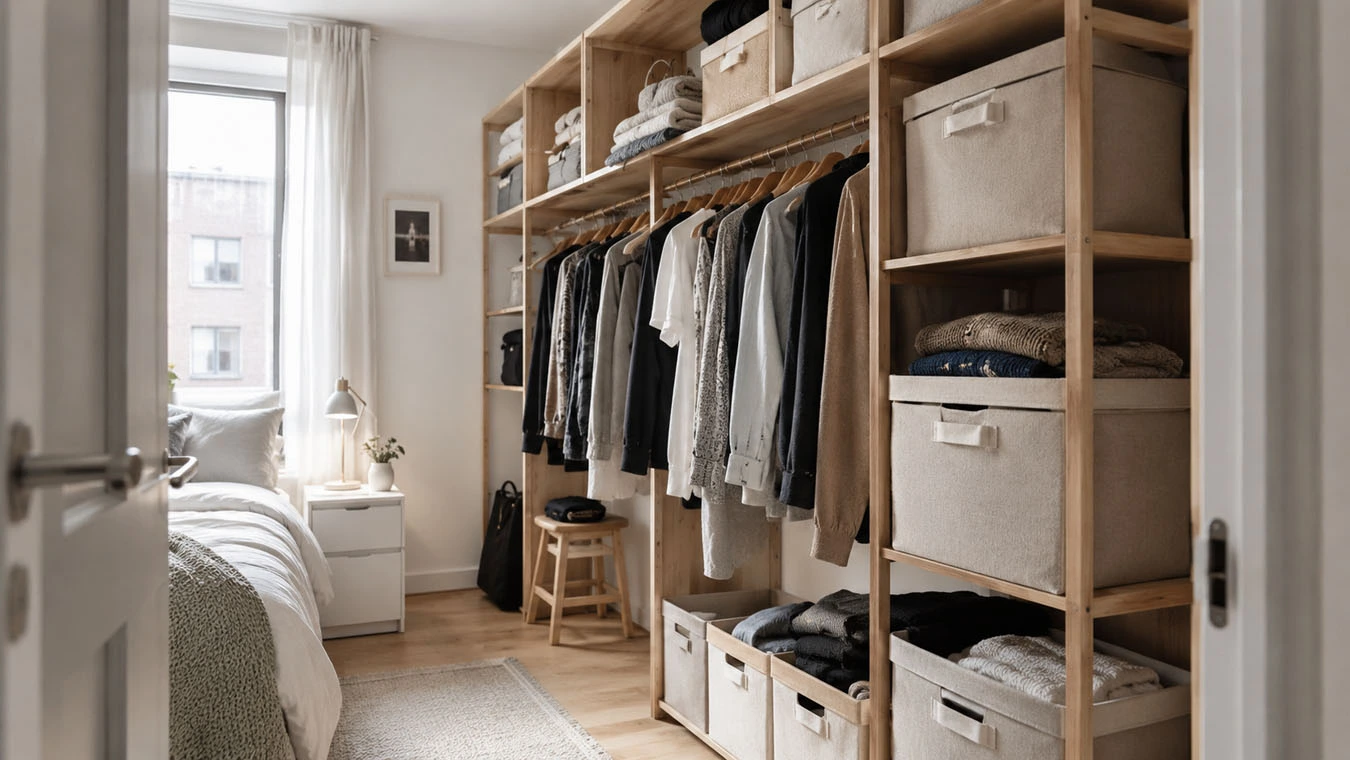
Open Shelving With Fabric Bins provide clothing & wardrobe overflow in a compact 1-bedroom apartment closet interior.
One of the biggest advantages of a capsule wardrobe is that it immediately reduces visual clutter inside a small apartment. Traditional wardrobes often become overloaded with duplicate clothing, impulse purchases, and rarely worn items that consume valuable storage space. In a compact rental, this creates unnecessary stress because every drawer and shelf quickly becomes overcrowded.
A capsule wardrobe focuses on versatile pieces that work together across multiple outfits. Instead of storing dozens of clothing combinations that are rarely used, renters can create a smaller collection built around functionality and consistency. This approach naturally improves small closet clothing organization because fewer items make it easier to maintain categories, fold clothing properly, and access daily essentials without constant reorganization.
Another major benefit is flexibility. Apartment living often involves seasonal transitions, shared closets, limited drawer space, or multifunctional rooms. A smaller wardrobe makes it easier to rotate seasonal clothing using bins or under-bed storage without overwhelming the main closet. Many renters also discover that reducing clothing volume frees up space for other apartment storage needs such as linens, office supplies, or luggage.
Capsule wardrobes also work extremely well with modular storage systems commonly used in rentals. If your apartment lacks built-in organization, combining wardrobe simplification with modular storage for small apartments can create a far more adaptable and renter-friendly setup.
How to Build a Functional Capsule Wardrobe in a Small Closet
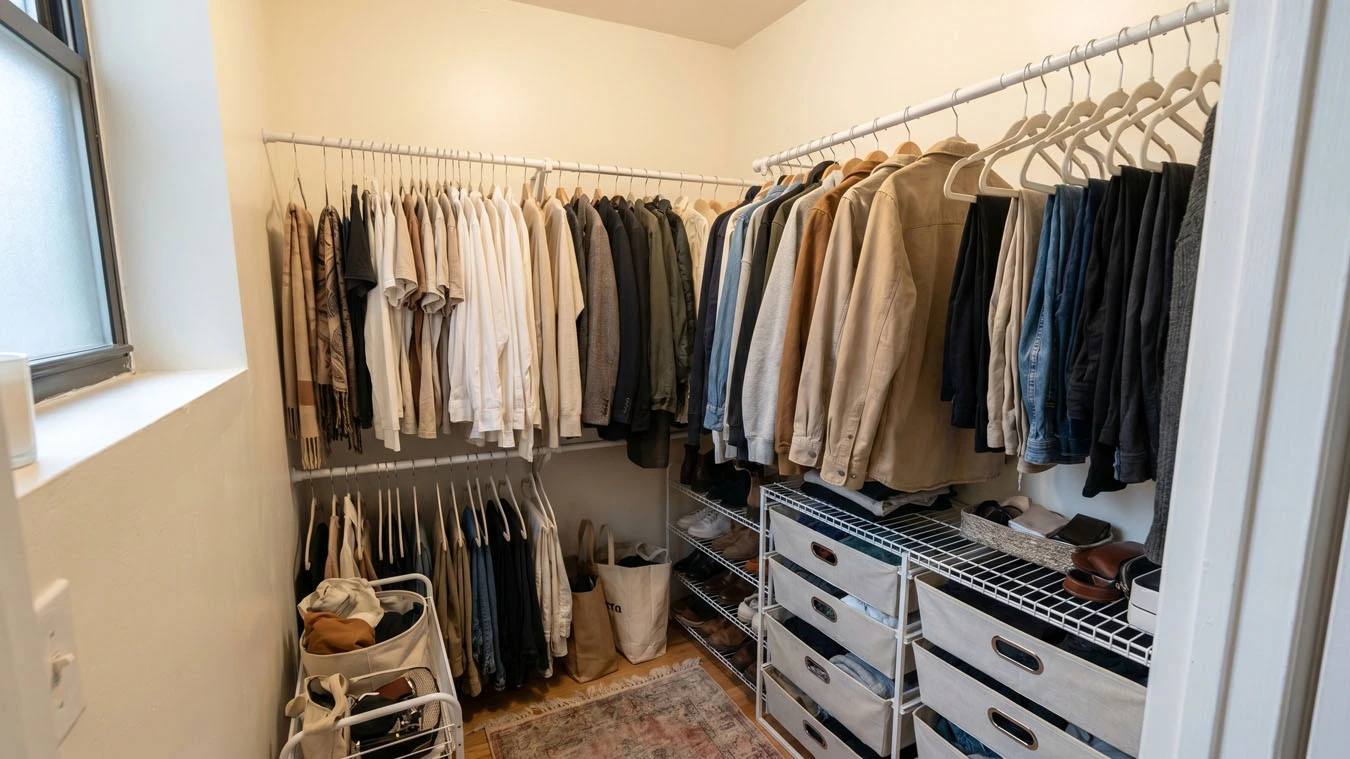
Expandable Closet Rods provide clothing & wardrobe overflow in a small studio apartment closet interior.
Building a capsule wardrobe begins with identifying the clothing you actually wear regularly. In small apartments, keeping unnecessary clothing creates long-term organizational problems because limited storage quickly becomes inefficient. Start by separating your wardrobe into core categories such as daily wear, work clothing, seasonal outerwear, and occasional-use items.
Instead of focusing only on quantity, think about functionality and compatibility. Neutral colors, interchangeable layers, and versatile shoes reduce the number of total items required while still allowing outfit variety. Many renters discover they can reduce their wardrobe significantly without sacrificing practicality once they begin prioritizing flexibility over excess.
Closet layout also plays a major role. Small closets often waste vertical space because hanging rods are poorly positioned or shelves remain underutilized. Installing renter-friendly systems such as double hanging rods, shelf dividers, or slim organizers can dramatically improve capacity without damaging walls. Solutions like closet rod extenders for small closets are especially effective when organizing shorter clothing items like shirts and folded pants.
Another helpful strategy is maintaining visual consistency. Matching hangers, clear bins, and dedicated clothing zones create a cleaner appearance while making maintenance easier. Even in older rentals with awkward closets, simplifying categories and reducing excess clothing helps the space feel larger and far more functional on a daily basis.
Using Vertical Storage to Support a Capsule Wardrobe
Expandable Closet Rods provide clothing & wardrobe overflow in a small studio apartment closet interior.
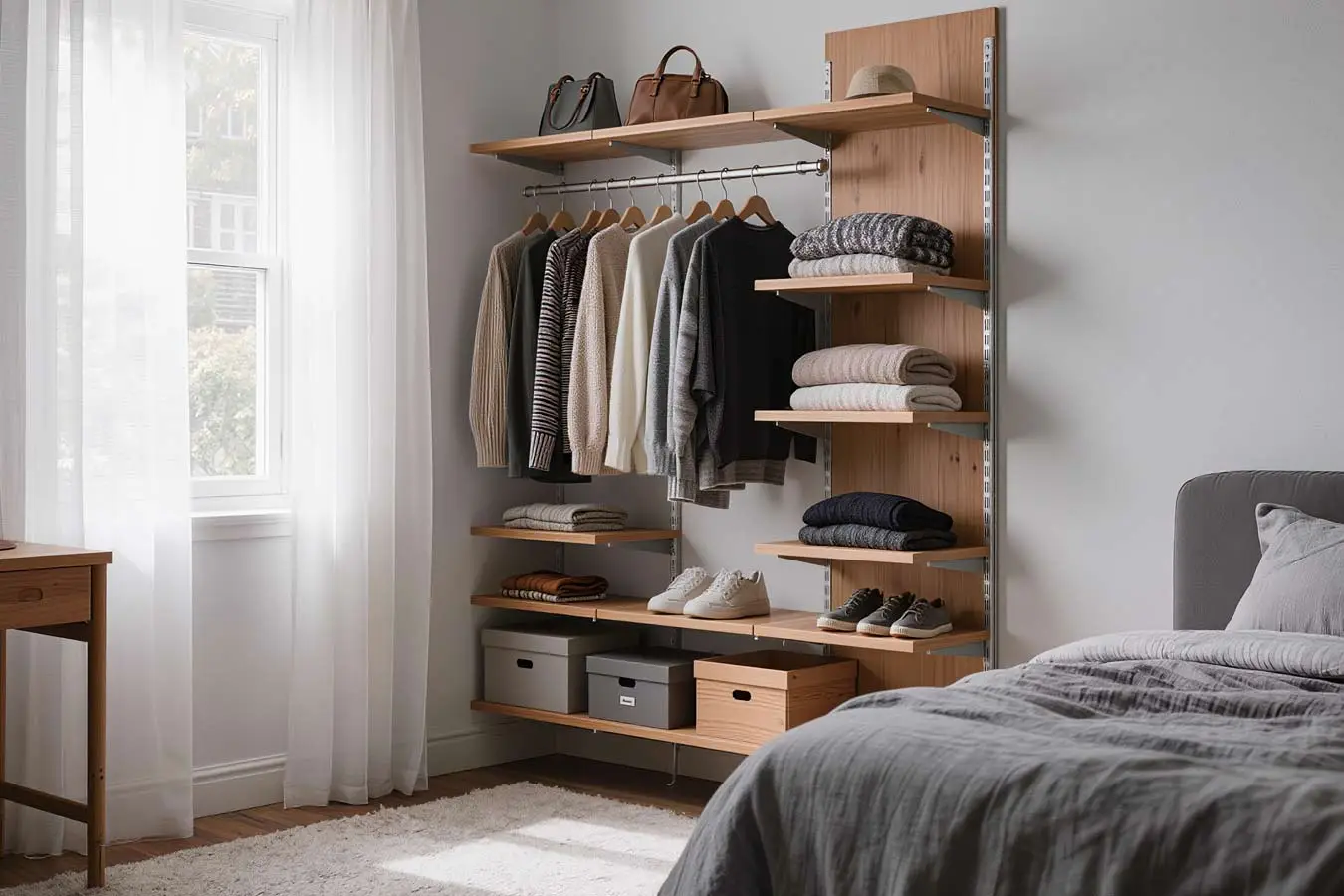
Freestanding Vertical Shelving provides vertical hanging storage in a open-concept small apartment open closet / wardrobe wall.
Vertical storage is one of the most overlooked aspects of capsule wardrobe organization in apartments. Even when renters successfully reduce clothing volume, many still fail to maximize wall height, upper shelving, and narrow vertical zones inside closets. This often results in wasted space above hanging rods or around closet corners.
Freestanding vertical shelving systems can dramatically increase storage capacity without requiring permanent installation. Tall narrow shelving units are particularly effective beside closets or near open wardrobe walls because they provide storage for folded clothing, handbags, seasonal accessories, and shoes while maintaining a relatively small footprint.
Another practical approach involves using top-shelf storage strategically. Many apartment closets contain a single upper shelf that becomes overcrowded with random items. Instead of creating a dumping zone, divide this area into categories using stackable bins or shelf dividers. Seasonal clothing, travel accessories, and less frequently used items can remain accessible without interfering with daily wardrobe access.
For renters working with especially compact apartments, combining wardrobe simplification with vertical storage ideas for small apartments creates a far more efficient overall organization system. These vertical strategies also help preserve valuable floor space in bedrooms and studio apartments where every square foot matters.
Related Storage Ideas:
- Small Closet Organization Systems for Apartments
- Vertical Shoe Storage for Apartments
- Under Bed Storage Ideas for Apartments
Managing Seasonal Clothing in a Small Apartment
Freestanding Vertical Shelving provides vertical hanging storage in a open-concept small apartment open closet / wardrobe wall.
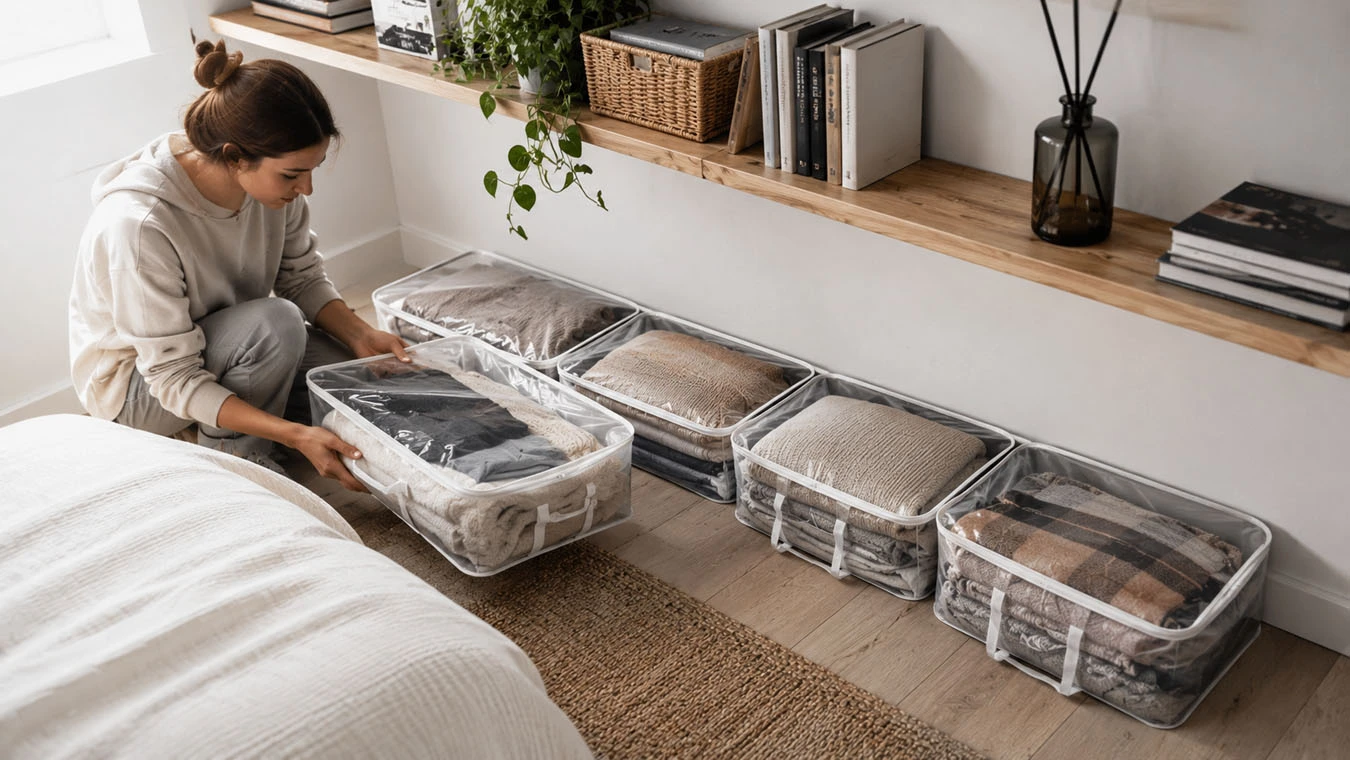
Fabric Under-Bed Storage Bags provide seasonal & bulk storage in a average 1-bedroom rental under-bed.
Seasonal clothing management is one of the biggest challenges for renters trying to maintain a capsule wardrobe. Winter coats, boots, sweaters, and cold-weather accessories consume enormous amounts of space, especially in Canadian and northern U.S. apartments where seasonal transitions are significant.
Instead of keeping every season accessible year-round, apartment renters benefit from rotating clothing collections throughout the year. Off-season items can be stored under the bed, on upper closet shelves, or inside rolling bins placed beneath furniture. Vacuum storage bags may also help reduce bulk for heavy winter items, although breathable storage options are often better for long-term fabric care.
The key is maintaining accessibility without overcrowding the active wardrobe zone. Many renters unintentionally sabotage their capsule wardrobe by keeping every seasonal item visible at all times. This creates unnecessary visual clutter and reduces the effectiveness of minimalist closet systems. By limiting active wardrobe access to current-season essentials, closets remain easier to organize and maintain.
Seasonal rotation also creates opportunities to reassess clothing habits regularly. Items that remain unused across multiple seasons may no longer deserve valuable storage space inside a compact apartment. Pairing seasonal rotation with smart storage solutions for small apartments helps maintain organization long term while preventing clutter from slowly returning.
Creating a Minimalist Closet Small Space Layout
Fabric Under-Bed Storage Bags provide seasonal & bulk storage in a average 1-bedroom rental under-bed.
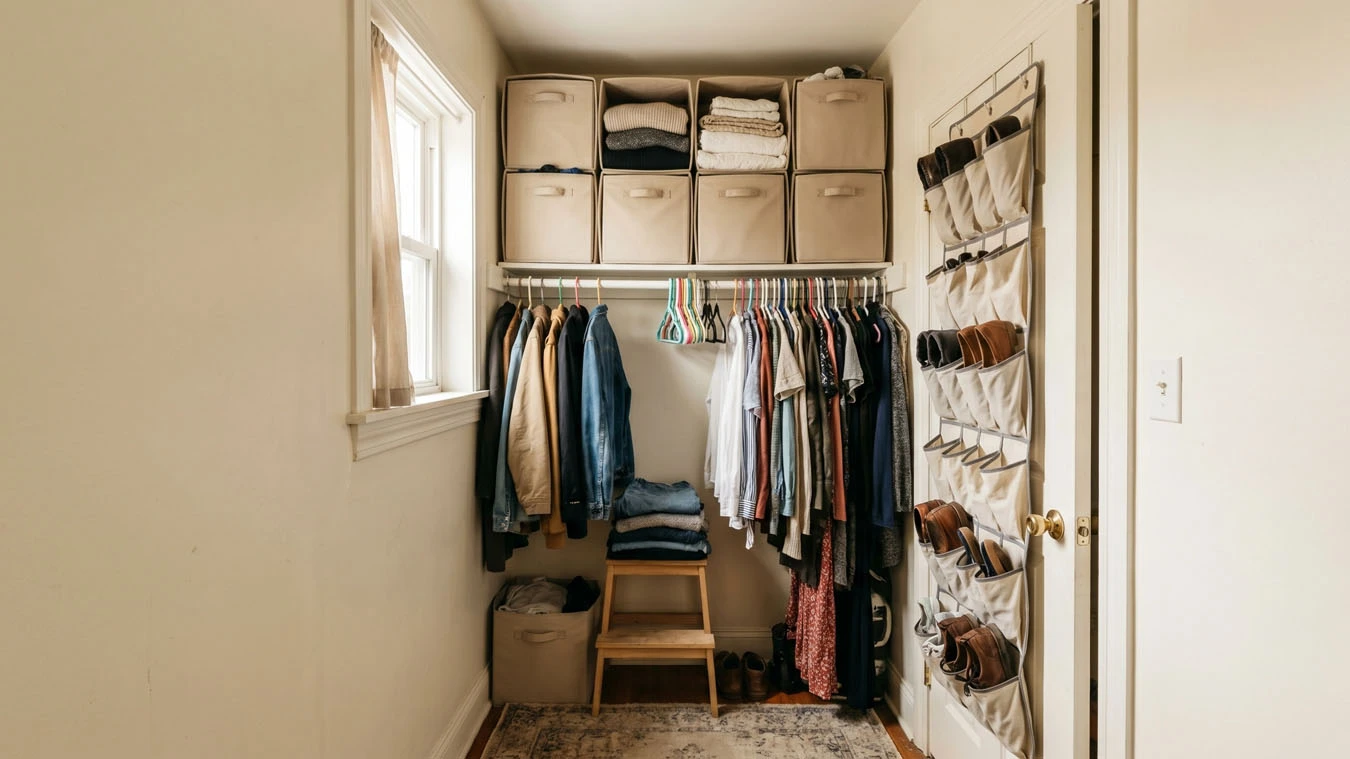
Closet Top-Shelf Storage Bins provide clothing & wardrobe overflow in a older rental with limited storage closet interior.
A minimalist closet layout is not about creating an empty showroom aesthetic. In real apartments, closets need to remain functional, practical, and adaptable to daily life. The goal is creating a system where everything has a designated place and visual clutter remains manageable.
Start by dividing the closet into zones. Hanging space should prioritize daily-use clothing, while folded shelves can store jeans, sweaters, and accessories. Upper shelves work best for infrequently used items, while lower sections should remain accessible for shoes or storage baskets. Zoning prevents categories from blending together and makes maintenance significantly easier over time.
One of the most effective ways to maintain a minimalist closet small space setup is limiting overflow. Clothing should never extend beyond designated storage areas because this quickly creates clutter throughout the apartment. If drawers no longer close properly or shelves become unstable, it is usually a sign that the wardrobe system requires adjustment.
Renters dealing with difficult layouts or shallow closets may also benefit from combining open storage with closed storage systems. Open shelving provides quick access for frequently used items, while closed bins reduce visual noise. Apartment-friendly solutions like closet shelf dividers for apartments can help maintain neat categories while preventing stacked clothing from collapsing into disorganized piles.
Open Wardrobe Systems for Apartments Without Proper Closets
Closet Top-Shelf Storage Bins provide clothing & wardrobe overflow in a older rental with limited storage closet interior.
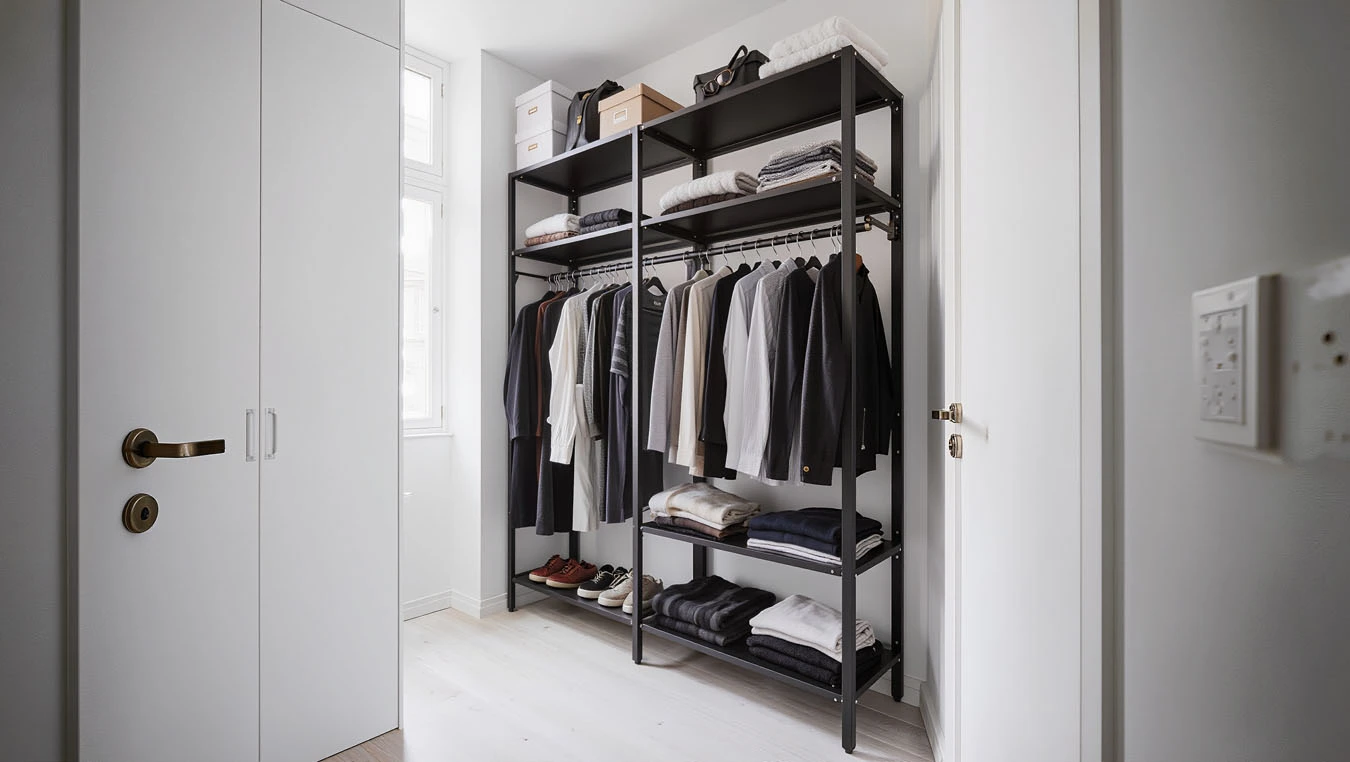
Freestanding Garment Rack With Shelves provide clothing & wardrobe overflow in a micro-studio (very compact, tight layout) open closet / wardrobe wall.
Many apartments, particularly studios and older rentals, simply do not provide adequate closet space. In these situations, open wardrobe systems often become the most realistic solution. While some renters initially resist visible clothing storage, a properly designed open wardrobe can actually improve both organization and room functionality.
Freestanding garment racks with integrated shelving work especially well in compact apartments because they combine hanging storage with folded clothing organization. Unlike bulky dressers, these systems maintain a lighter visual appearance while providing vertical storage opportunities. They also avoid permanent installation, making them ideal for renters.
The success of an open wardrobe depends heavily on maintaining wardrobe discipline. Capsule wardrobe systems work particularly well here because fewer clothing items prevent the rack from appearing overcrowded or chaotic. Coordinated color palettes and consistent hangers also create a cleaner appearance that blends more naturally with apartment décor.
For renters struggling with nonexistent or inadequate closets, exploring wardrobe alternatives for small apartments can provide additional ideas for creating practical clothing storage systems without relying on traditional built-in closets.
Maintaining Your Capsule Wardrobe Long Term
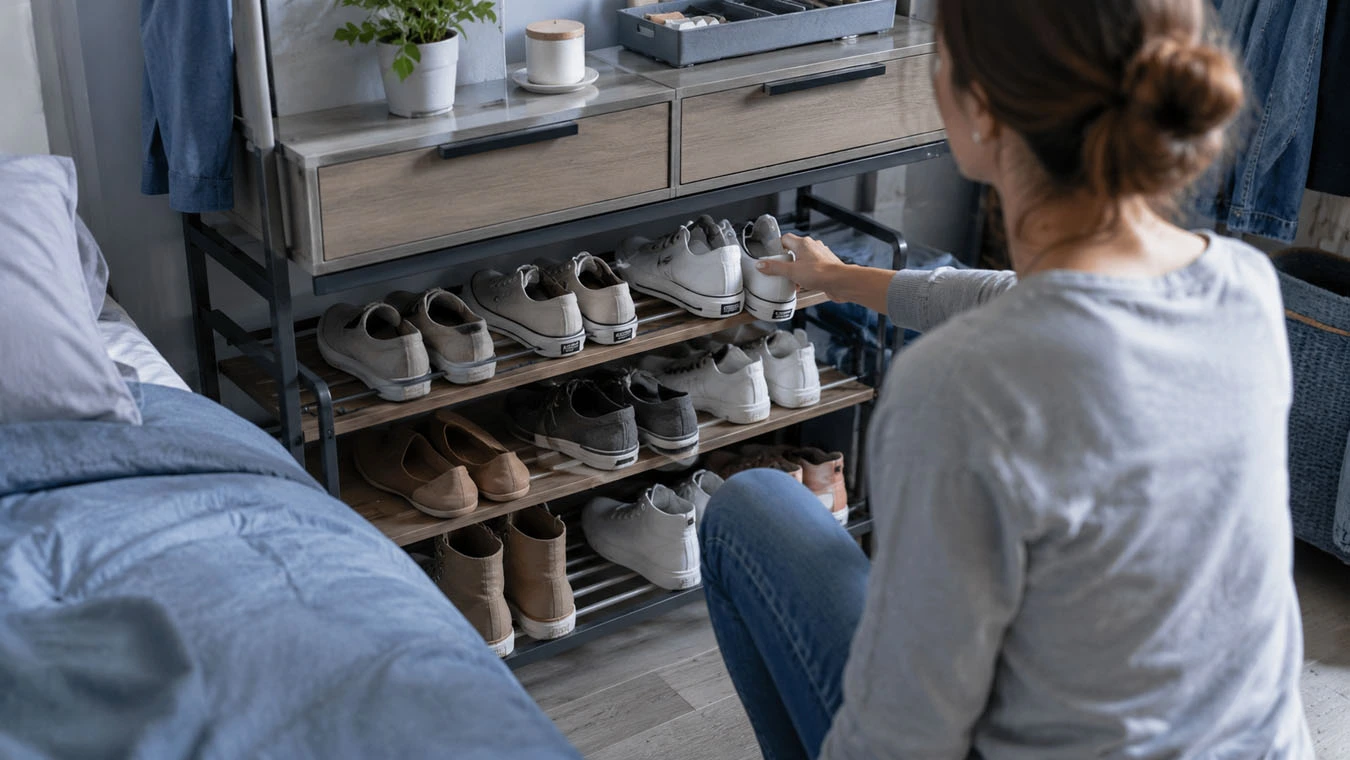
Tiered Shoe Rack provides shoe organization system in a compact 1-bedroom apartment bedroom.
Creating a capsule wardrobe is relatively straightforward compared to maintaining it long term. Many renters successfully declutter initially but slowly allow excess clothing to return over time. Without consistent habits, even well-organized closets eventually become overcrowded again.
One of the most effective maintenance strategies is implementing a replacement mindset instead of constant accumulation. When new clothing enters the apartment, older or unused items should ideally leave. This helps maintain storage balance while preventing gradual clutter buildup inside drawers and shelves.
Another helpful habit involves regular seasonal reviews. Every few months, reassess which clothing items are actually being worn. Apartment storage capacity is limited, so keeping unused clothing indefinitely often creates unnecessary organizational problems. Donating or rotating underused items helps preserve closet efficiency while making daily outfit selection simpler.
Long-term organization also depends on maintaining realistic systems. Overly complicated folding methods or rigid aesthetic rules rarely survive busy daily routines. Instead, focus on creating sustainable habits that support functionality. Combining wardrobe simplicity with broader small apartment organization strategies creates a more manageable living environment overall.
Conclusion
Building a successful capsule wardrobe small apartment system is not about strict minimalism or sacrificing personal style. It is about creating a practical, organized wardrobe that supports daily life while working within the limitations of apartment living. By reducing excess clothing, improving storage zoning, and using renter-friendly organization systems, even compact closets can become significantly more functional.
When combined with smart, minimalist closet design for small spaces and realistic small-closet clothing organization strategies, capsule wardrobes help reduce visual clutter, simplify routines, and maximize valuable apartment storage space. The key is to create systems that remain sustainable over time rather than temporary organizational resets.
For renters with limited closet space, awkward layouts, or open wardrobe setups, simplifying clothing storage often creates a noticeable improvement throughout the apartment. A cleaner wardrobe system usually leads to a cleaner and more organized living space overall.
For a complete system, explore closet wardrobe optimization for small apartments, or continue with more apartment storage ideas that actually work.
Looking for more renter-friendly storage solutions? Continue exploring practical apartment organization ideas designed specifically for compact living spaces, small closets, and realistic everyday apartment layouts.


