Wardrobe Alternatives for Apartments: Smart No-Closet Storage Solutions That Work
If you’re living in a small apartment without a built-in closet, you’ve probably experienced the frustration of trying to manage clothing with limited storage. Finding effective wardrobe alternatives apartment solutions becomes essential, especially when traditional closets simply don’t exist or aren’t functional. This is a common challenge in studios, older rentals, and compact one-bedroom units across the USA and Canada.
Many renters turn to no closet storage solutions that are flexible, affordable, and landlord-friendly. The goal isn’t just to store clothes—it’s to create a system that keeps everything organized, accessible, and visually clean without damaging walls or investing in permanent installations. With the right approach, even a small space can feel structured and efficient.
In this guide, you’ll learn how to build a functional wardrobe system using smart alternatives like modular units, garment racks, and vertical storage strategies. For a complete foundation, explore closet wardrobe optimization for small apartments, which complements the strategies covered here.
Freestanding Garment Racks for Flexible Wardrobe Storage
Wardrobe Alternatives for Apartments: Smart No-Closet Storage Solutions That Work
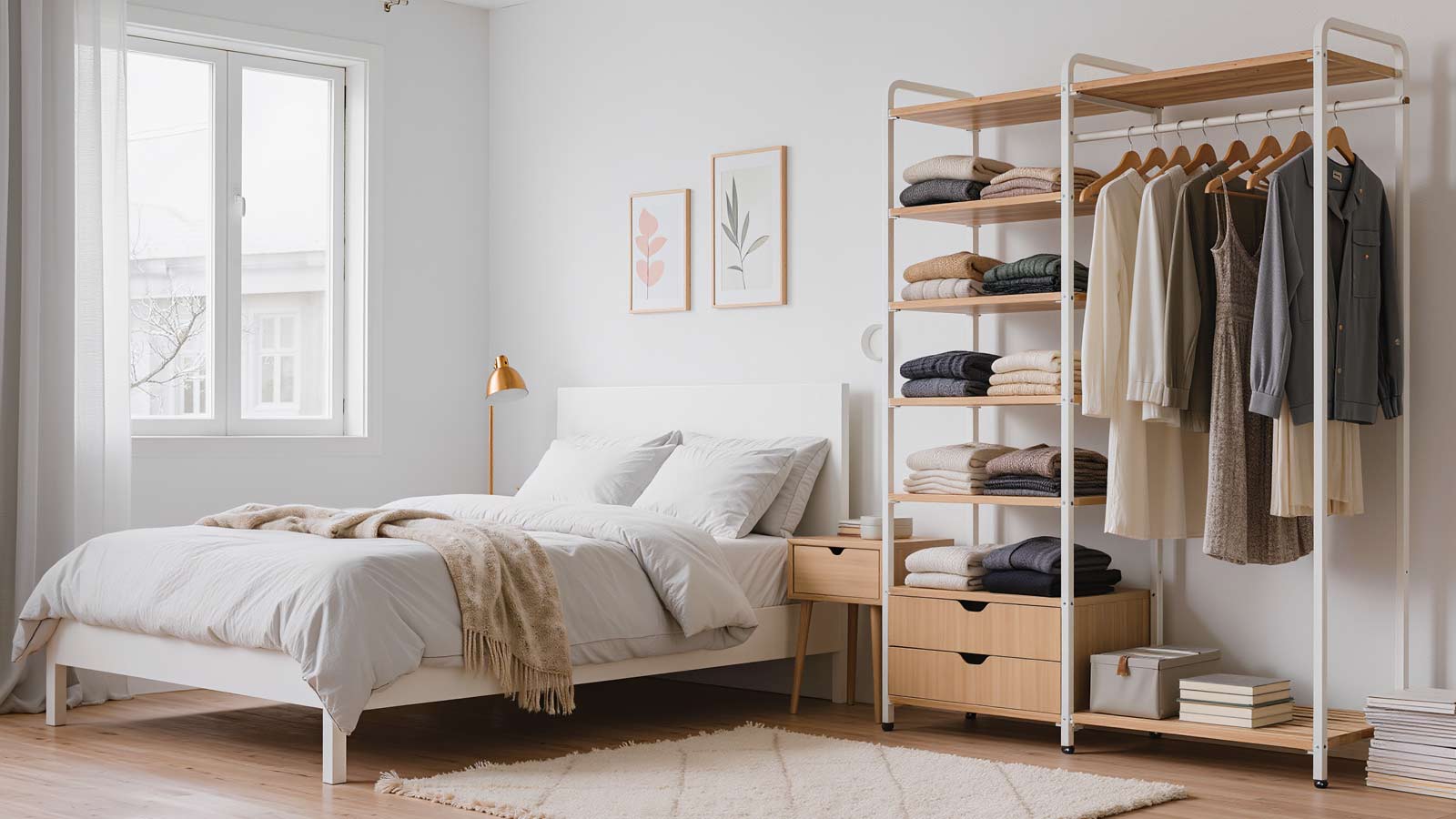
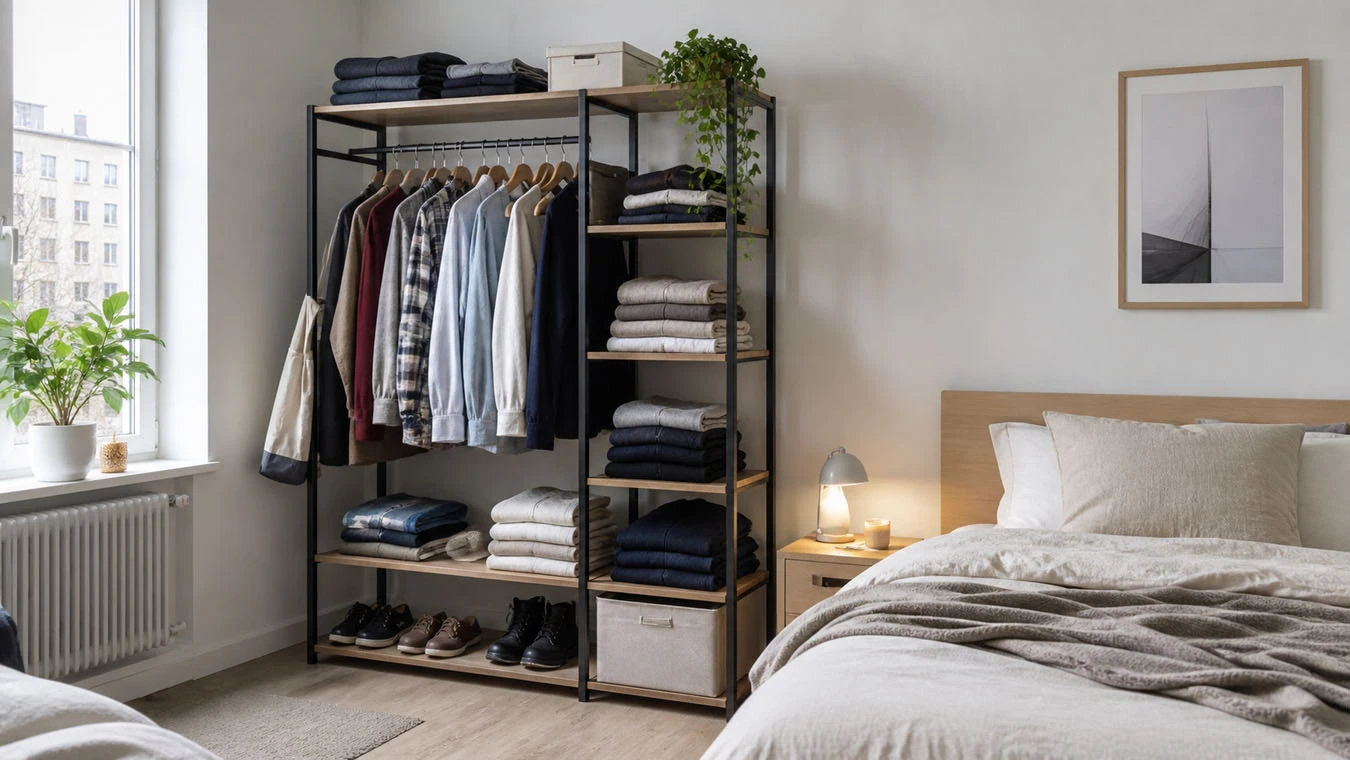
Freestanding garment racks are one of the most popular portable wardrobe apartment solutions because they require no installation and can adapt to any layout. These racks typically include a hanging bar for clothing and additional shelves for folded items, shoes, or bins. They’re especially useful in studio apartments where every square foot matters.
One of the biggest advantages of garment racks is flexibility. You can reposition them as needed, whether you’re reorganizing your layout or moving apartments. Unlike built-in closets, they allow you to design your wardrobe system around your space rather than forcing your space to adapt to fixed storage.
To keep the setup visually clean, consider grouping clothing by type or color. Adding matching storage bins or baskets on lower shelves helps reduce clutter while maintaining accessibility. This approach transforms a simple rack into a cohesive wardrobe system that feels intentional rather than temporary.
Garment racks also work well when paired with other systems, such as under-bed storage or vertical shelving. Together, they create a complete wardrobe solution that handles both hanging and folded items efficiently.
Modular Storage Units as Closet Replacements
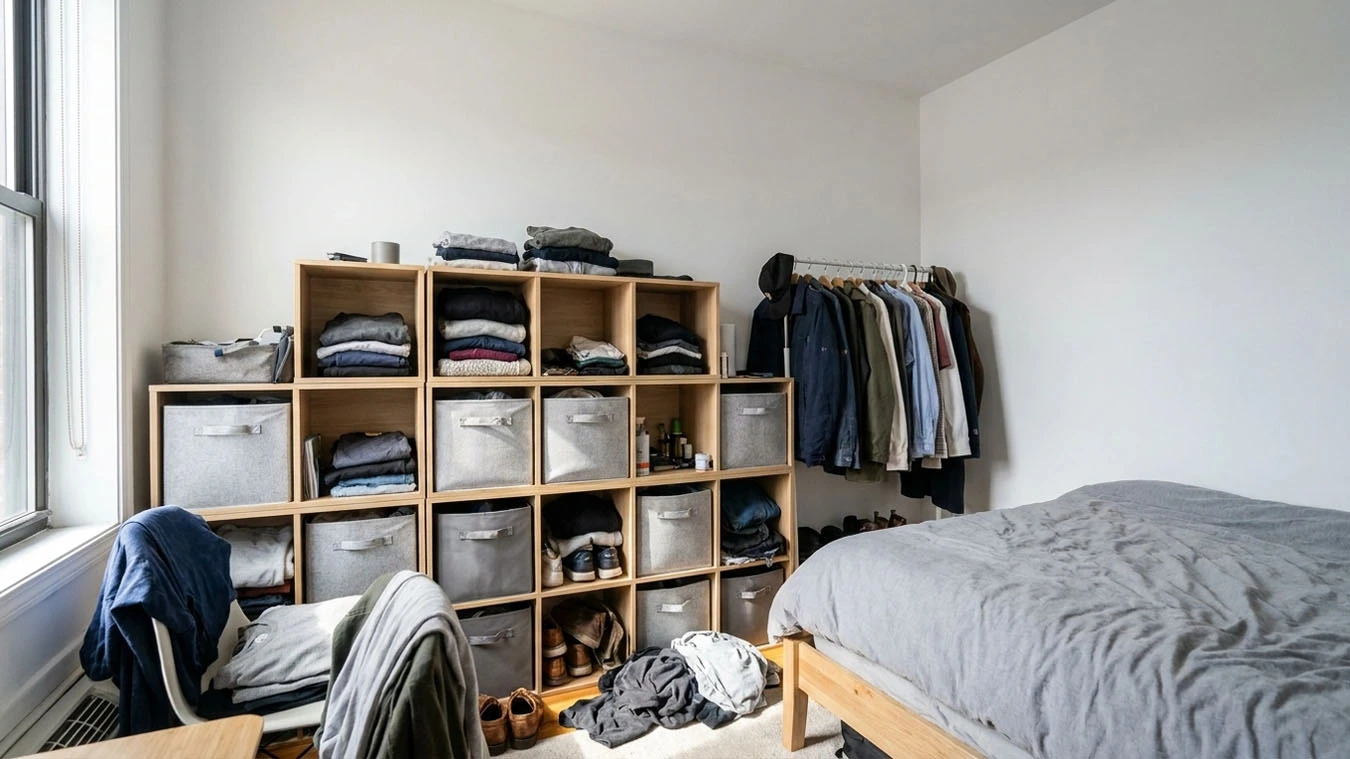
Stackable Cube Units provide clothing & wardrobe overflow in a compact 1-bedroom apartment bedroom.
Modular storage systems offer a more structured alternative to traditional wardrobes. These systems typically consist of stackable cubes, drawers, and shelves that can be arranged to fit your space. They are ideal for renters who want a semi-permanent solution without committing to built-in furniture.
One of the key benefits of modular units is customization. You can combine open shelving for folded clothes with closed bins for items you want to keep out of sight. This balance helps maintain a clean look while maximizing storage capacity.
Modular systems are especially effective in awkward layouts where standard furniture doesn’t fit. If you’re dealing with tight corners or unusual wall dimensions, combining different module sizes allows you to build a wardrobe system that fits perfectly.
For more adaptable systems, explore modular storage solutions for small apartments, which expand on how these setups can evolve with your needs.
Vertical Storage Systems to Maximize Wall Space
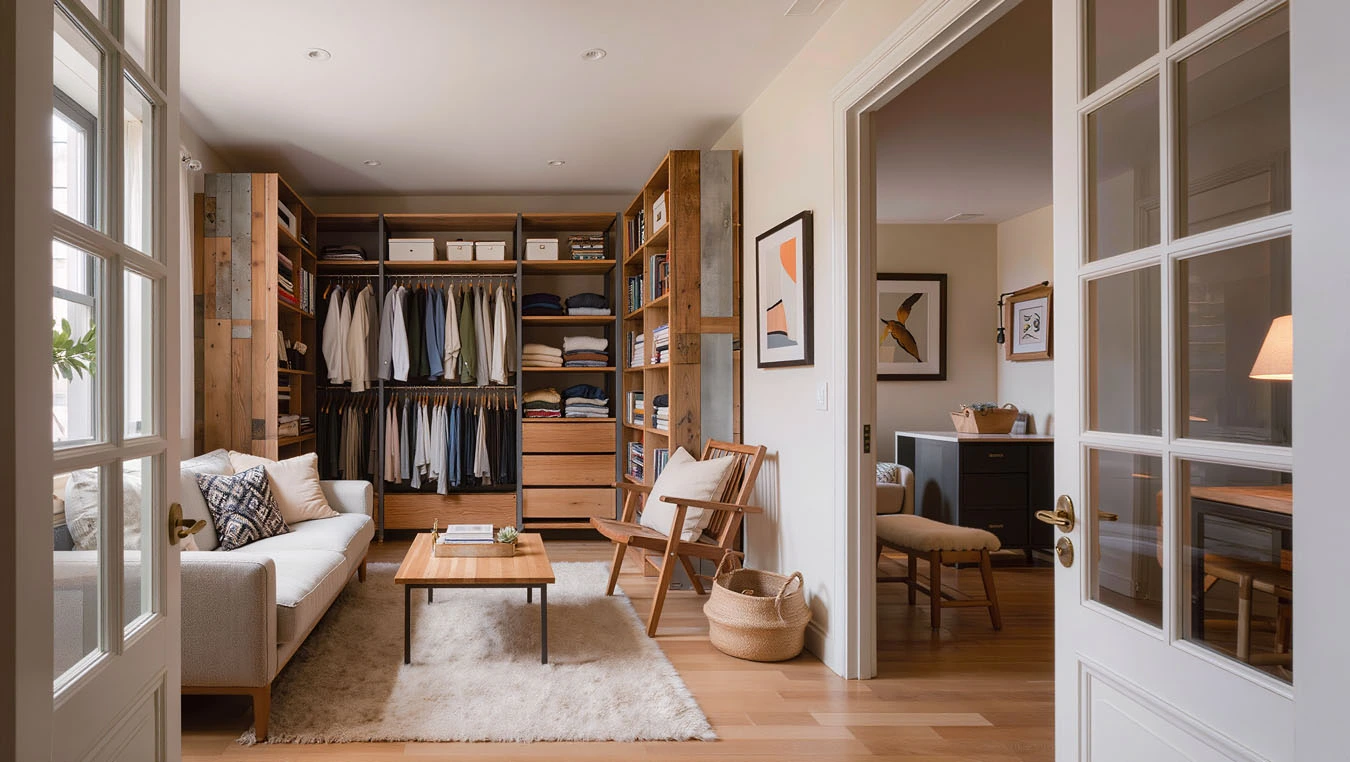
Tall Bookcases provide clothing & wardrobe overflow in a open-concept small apartment living room.
When floor space is limited, vertical storage becomes essential. Tall shelving units or storage towers allow you to store clothing upward rather than outward, making them perfect for small apartments without closets. This approach maximizes every inch of available space.
Vertical systems are particularly useful for folded items such as sweaters, jeans, and seasonal clothing. By organizing items in labeled bins or stacked sections, you can maintain easy access without sacrificing order.
These systems also pair well with hanging solutions like garment racks. While racks handle hanging clothes, vertical shelving can store everything else, creating a balanced and complete wardrobe setup.
For more strategies on using height effectively, check out vertical storage ideas for small apartments, which dive deeper into maximizing vertical space.
Room Divider Wardrobes for Studio Apartments
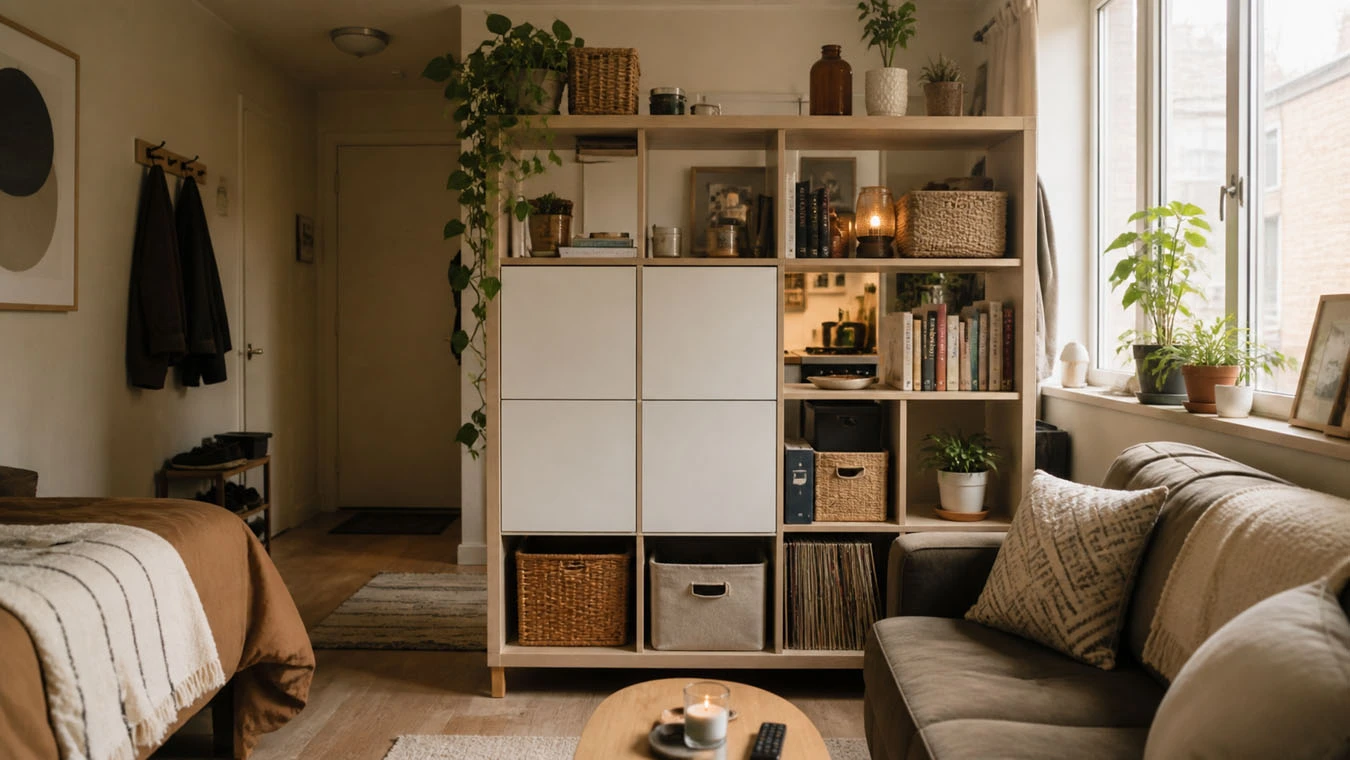
Mixed Modular System (open + Closed) provides room divider + storage in a micro-studio (very compact, tight layout) studio apartment main.
In studio apartments, wardrobe alternatives can serve more than one purpose. Storage units that act as room dividers are an excellent way to separate sleeping and living areas while also providing clothing storage.
These systems often combine open shelving with closed compartments, allowing you to store both visible and hidden items. By placing the unit strategically, you create a defined wardrobe zone without sacrificing valuable space.
Room divider wardrobes are especially useful for renters who want to create structure in open layouts. Instead of relying on walls, these systems define zones while remaining flexible and movable.
This dual-purpose approach is ideal for maximizing efficiency in small apartments where every piece of furniture must serve multiple functions.
Under-Bed Storage for Seasonal Clothing
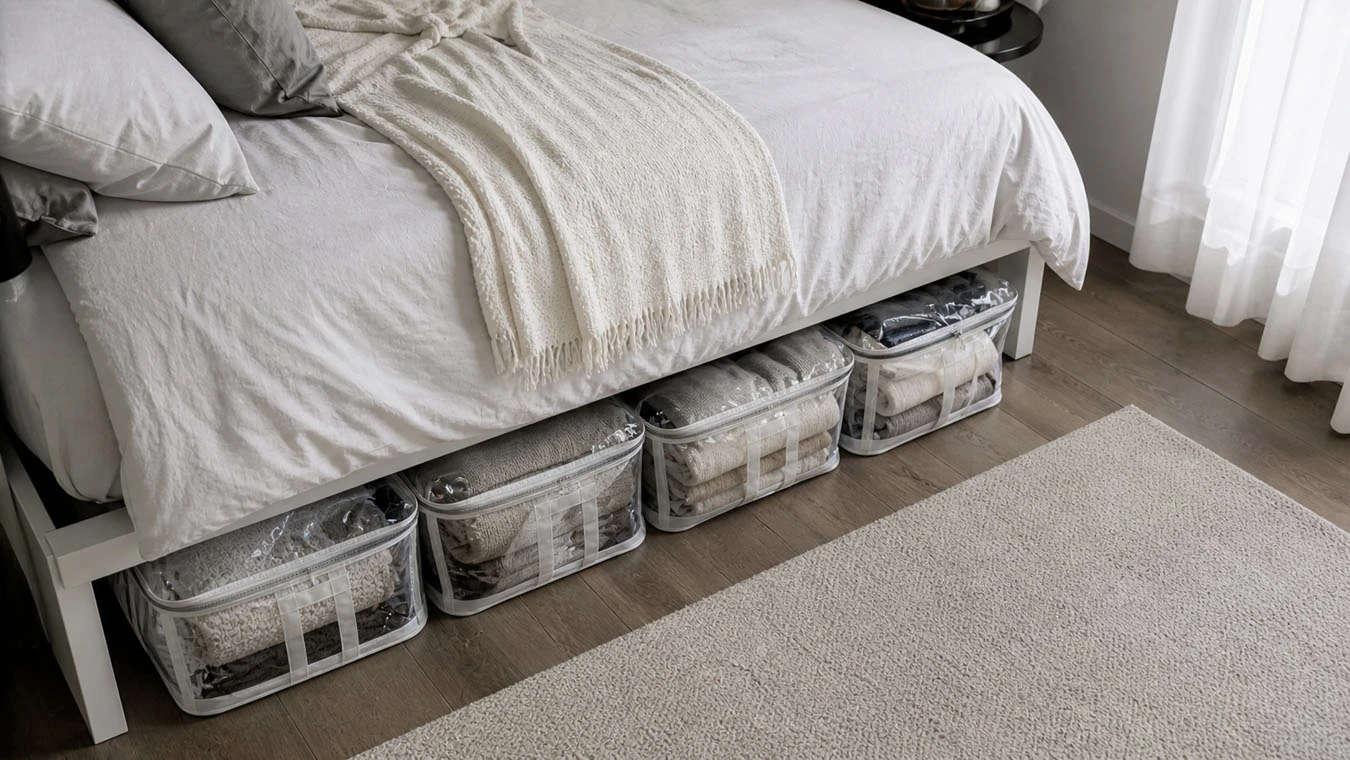
Fabric Under-Bed Storage Bags provide seasonal & bulk storage in a compact 1-bedroom apartment under-bed.
\Under-bed storage is one of the most overlooked wardrobe alternatives, yet it plays a critical role in maintaining a clutter-free space. This solution is perfect for storing off-season clothing, extra linens, or items you don’t need daily access to.
Using low-profile bins or fabric storage bags allows you to utilize otherwise wasted space. Transparent containers can make it easier to identify contents, while labeled bins help maintain organization.
This strategy works best when combined with other wardrobe systems. By offloading seasonal items under the bed, you free up space in your primary storage areas, making everyday clothing easier to manage.
For more ideas on maximizing hidden storage, explore under-bed storage ideas that expand on this concept.
Open Closet Walls for Minimalist Wardrobe Setups
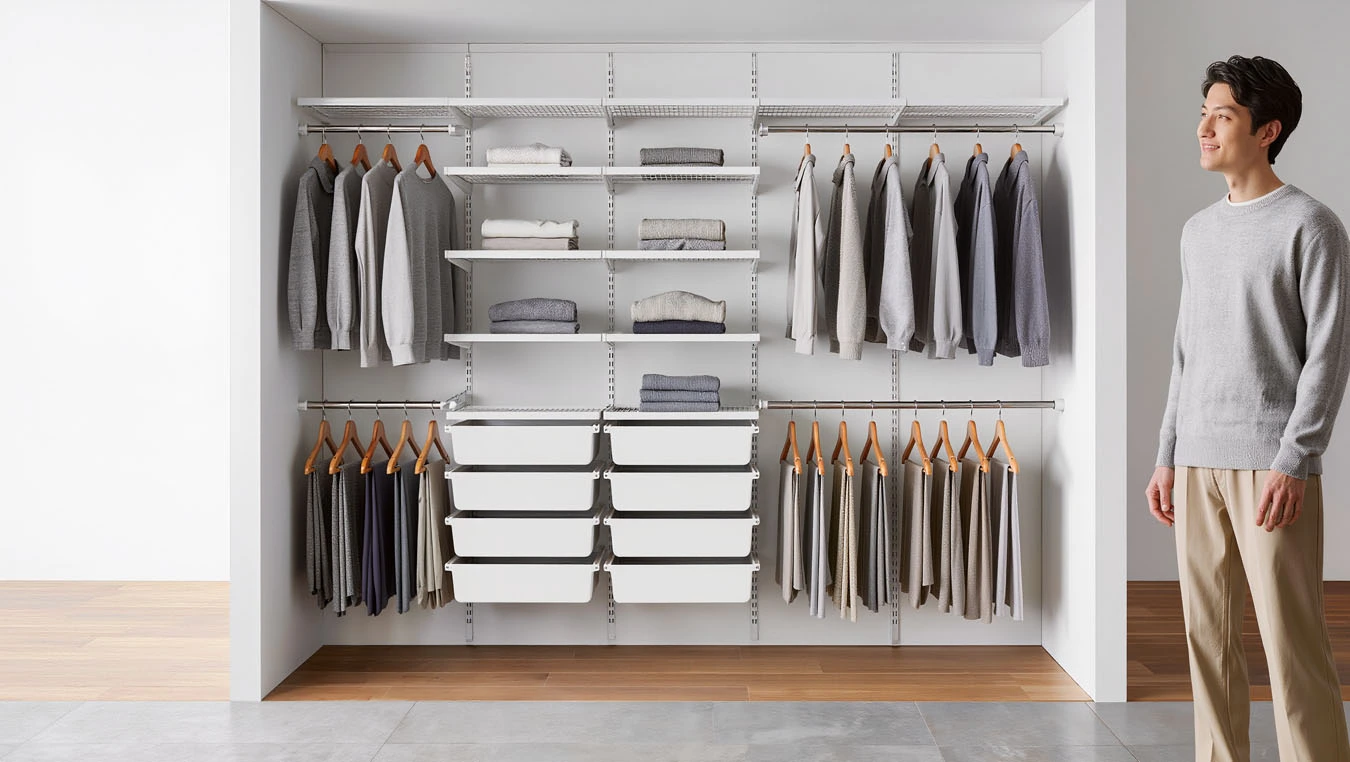
Expandable Closet Rods provide clothing & wardrobe overflow in a small studio apartment open closet / wardrobe wall.
An open closet wall is a minimalist approach to wardrobe storage that works well in small apartments. By combining rods, shelves, and a few key storage elements, you can create a clean and functional wardrobe without enclosing it.
This setup encourages intentional organization. Since everything is visible, it becomes easier to maintain order and avoid over-accumulating clothing. It also allows you to design your wardrobe system in a way that complements your interior style.
Open closet systems are particularly useful in bedrooms where space is limited but wall area is available. They create a dedicated wardrobe zone without requiring bulky furniture.
If you’re looking for more ways to organize without a traditional closet, check out bedroom storage ideas without a closet for additional inspiration.
Related Storage Ideas:
- Tall Storage Towers for Small Apartments
- Ladder Shelving Ideas for Small Apartments
- Wall Storage Ideas for Small Apartment Bedrooms
Portable Wardrobes for Temporary and Rental Flexibility
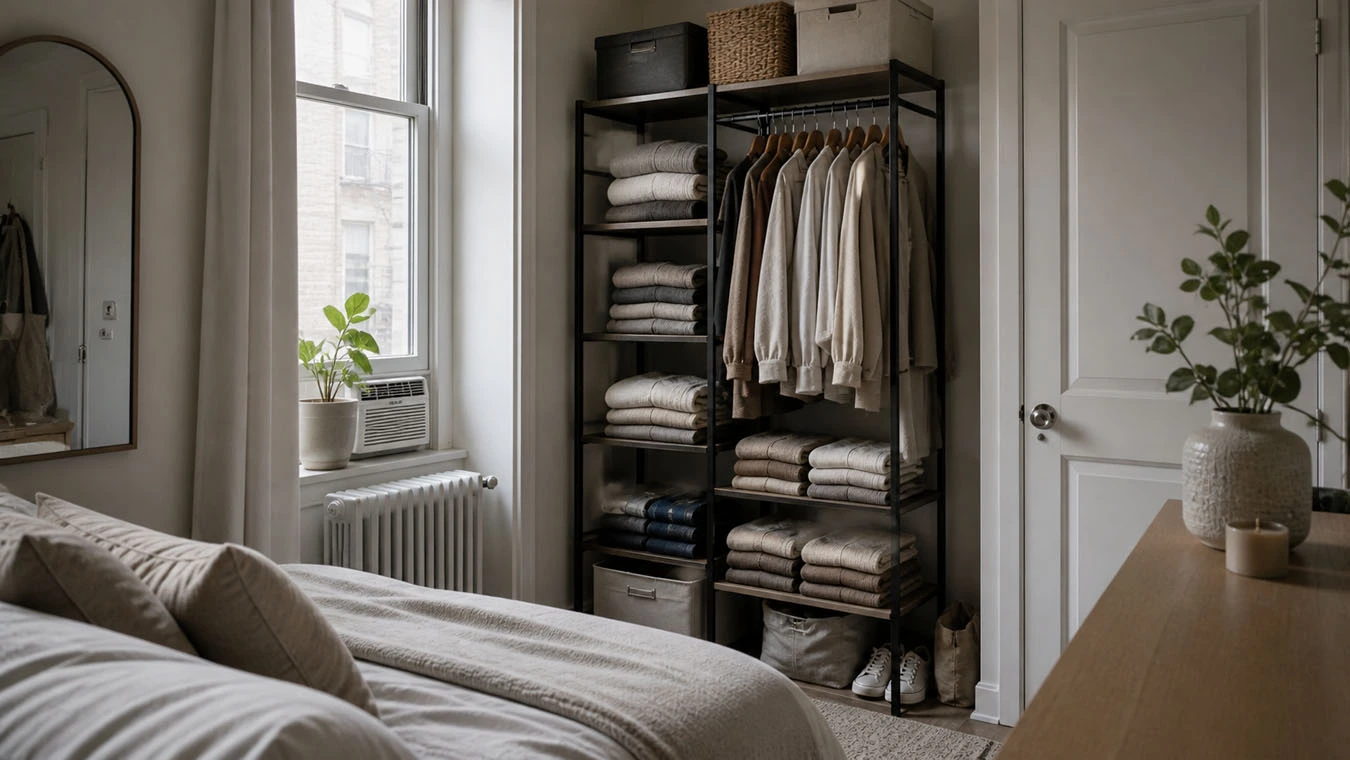
Freestanding Vertical Shelving provides clothing & wardrobe overflow in a average 1-bedroom rental bedroom.
Portable wardrobes are an excellent option for renters who need a temporary yet functional storage solution. These units often feature a lightweight frame with a fabric cover, offering both hanging and shelving space.
The main advantage of portable wardrobes is their ease of assembly and mobility. They can be set up quickly and moved or disassembled when needed, making them ideal for short-term living situations or frequent relocations.
While they may not have the durability of permanent furniture, they provide a practical solution for managing clothing without a built-in closet. Choosing a neutral design can help them blend seamlessly into your space.
These systems are particularly useful when combined with other storage strategies, ensuring that your wardrobe remains functional and adaptable over time.
Conclusion: Building a Functional Wardrobe Without a Closet
Finding effective wardrobe alternatives apartment solutions is not about replacing a closet—it’s about creating a system that works better for your space and lifestyle. From freestanding garment racks to modular storage units and vertical systems, there are countless ways to design a wardrobe setup that is both practical and visually organized.
The key is combining multiple solutions to cover different storage needs. Hanging clothes, folded items, and seasonal storage all require different approaches. By layering these systems together, you can create a complete wardrobe solution even in the smallest apartment.
Whether you’re using no closet storage solutions or experimenting with a portable wardrobe apartment setup, the goal is to build a flexible, renter-friendly system that adapts to your space without compromising functionality.
For a complete system, explore closet wardrobe optimization for small apartments, or continue with space-saving storage solutions for renters.
Ready to transform your apartment storage? Start implementing these wardrobe alternatives today and create a system that works for your space—without relying on a traditional closet.


